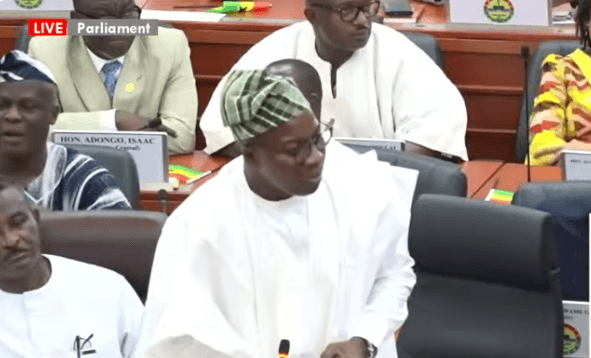
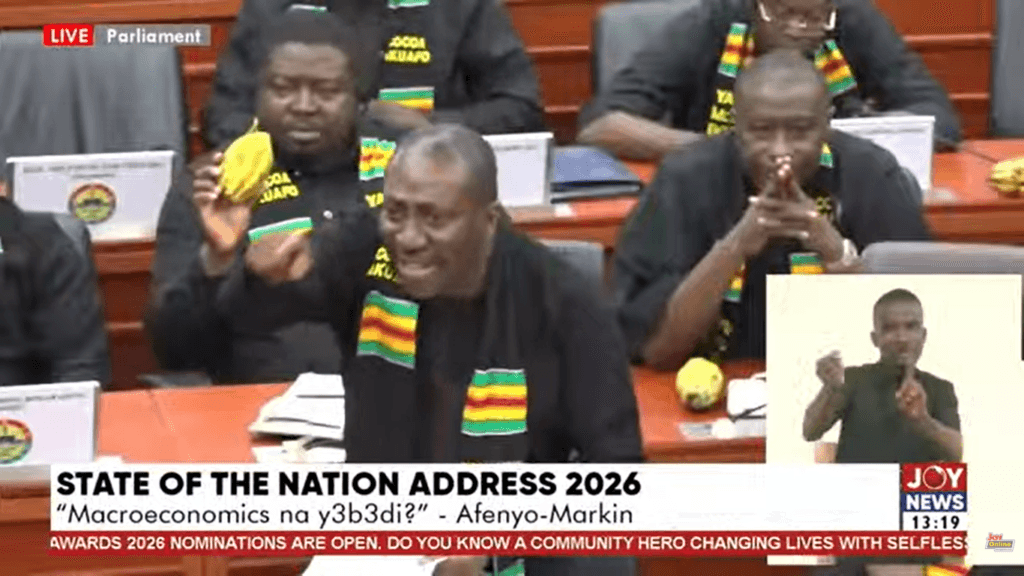
The critique, coming as the administration concludes its first year, highlighted what the opposition leader described as a significant disconnect between government rhetoric and on-theground realities. Afenyo-Markin's comments underscore growing political tensions and set a combative tone for parliamentary discourse and public debate surrounding the government's performance.
Accusations of Unfulfilled Promises
Afenyo-Markin, a prominent voice for the opposition, did not mince words in his assessment of President Mahama's initial 12 months. He argued that promises of economic stabilization, job creation, and improved social services have largely evaporated, replaced by catchy phrases that offer little comfort to the populace.
"One year into this administration, what we have witnessed is a cascade of eloquent speeches and attractive slogans, but very little in terms of real, impactful change for the ordinary Ghanaian," Afenyo-Markin stated emphatically. "Where are the jobs promised? Where is the stabilization of our currency? Where is the relief from the crushing cost of living? All we hear are grand pronouncements that fail to translate into food on the table, affordable fuel, or accessible healthcare."
He cited specific areas of concern, including persistent inflation, a depreciating currency, and perceived stagnation in key economic sectors. According to the Minority Leader, these indicators paint a stark picture of an economy struggling to find its footing despite the government's assurances. He suggested that the administration's communication strategy focused more on projecting an image of progress than on implementing concrete solutions.
Government Responds: "Unfair and Premature"
In a swift rebuttal, the government dismissed Afenyo-Markin's criticisms as "unfair, premature, and politically motivated." Dr. Kwame Nkrumah-Acheampong, the Deputy Minister for Information, countered that the administration had inherited significant challenges and was diligently working to lay a strong foundation for sustainable growth.
"It is disingenuous for the Minority Leader to expect miracles within just one year, especially given the global economic headwinds and the foundational issues we are actively addressing," Dr. Nkrumah-Acheampong told journalists. "President Mahama's government has initiated several critical reforms and projects, many of which require time to mature and yield tangible results. We are not about quick fixes; we are about sustainable development."
The Deputy Minister highlighted initiatives such as ongoing investments in digital infrastructure, agricultural modernization programs, and efforts to streamline government expenditure. He urged patience and cooperation, emphasizing that nation-building was a collective responsibility that transcended partisan politics.
Expert Weighs In: A Test of Communication and Delivery
Political analysts suggest that Afenyo-Markin's critique highlights the perennial challenge faced by new administrations in managing public expectations while confronting complex realities. Dr. Ama Kwarteng, a Senior Lecturer in Political Science at the University of Ghana, noted that the first year often serves as a crucial period for setting the tone and demonstrating commitment.
"The 'slogans versus results' debate is a classic political narrative, especially after a new government's honeymoon period," Dr. Kwarteng explained. "For the opposition, it's an opportune moment to hold the government accountable and expose any perceived gaps between promise and performance. For the government, it's a test of its communication strategy and its ability to demonstrate progress, even if incremental."
Dr. Kwarteng further elaborated that public perception is heavily influenced by immediate economic conditions. If citizens do not feel an improvement in their daily lives, even well-intentioned policies can be dismissed as mere rhetoric. She advised both sides to focus on constructive engagement and evidence-based arguments.
Impact on Struggling Ghanaians
The core of Afenyo-Markin's argument rests on the plight of "struggling Ghanaians." He painted a vivid picture of families enduring high food prices, increasing transportation costs, and a lack of secure employment opportunities. These challenges, he argued, are exacerbated when government messaging does not align with the lived experiences of the people.
The Minority Leader challenged the government to move beyond what he termed "PR exercises" and focus on practical interventions that would genuinely alleviate hardship. He called for greater transparency in the implementation of public projects and a more direct engagement with the concerns of citizens.
As President Mahama's administration navigates its second year, the pressure to demonstrate concrete achievements will undoubtedly intensify. Afenyo-Markin's early and forceful critique signals a robust opposition determined to scrutinize every policy and promise, ensuring that the debate over governance performance remains at the forefront of the national conversation.