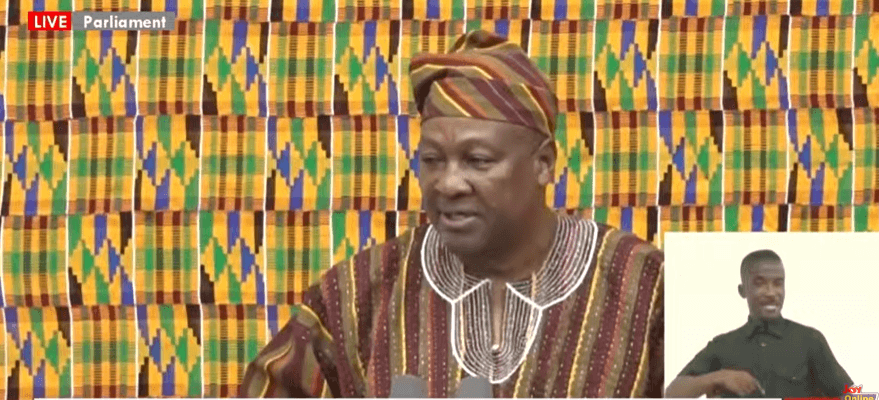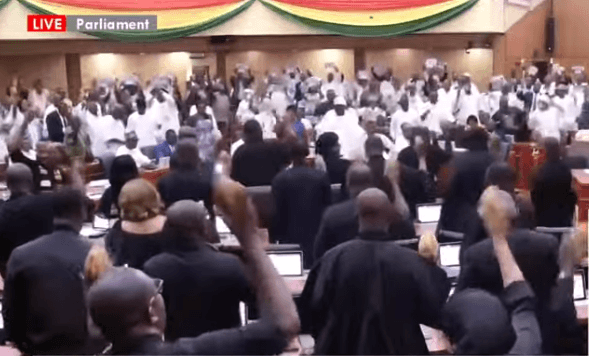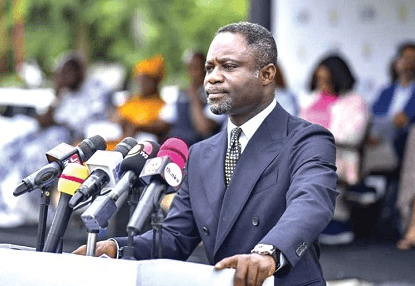
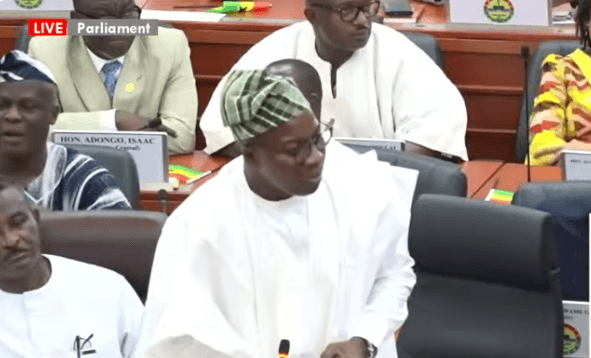
Accra, Ghana – In a strong endorsement of President John Dramani Mahama’s tenure, Majority Leader Mahama Ayariga declared that the President had transformed Ghana from a state of considerable challenges into a nation brimming with promise. Ayariga’s commendation, delivered shortly after President Mahama presented the State of the Nation Address (SONA) in Parliament, lauded the President’s leadership with the resonant words:
“You inherited a dark Ghana, today it is bright.”
The Majority Leader's remarks underscored a narrative of significant national progress, portraying President Mahama as a leader who navigated the country through turbulent times to a period of stability and growth. Ayariga’s statement highlighted a perceived dramatic shift in the nation’s fortunes, from what he characterized as a difficult past to a more optimistic present, attributing this transformation directly to the President's vision and policies.
A Vision of Progress Unveiled in SONA
President Mahama’s State of the Nation Address, the final of his term, detailed a comprehensive overview of the government’s achievements across various sectors. The President meticulously outlined progress in infrastructure development, economic stabilization efforts, improvements in the energy sector, and advancements in healthcare and education. He presented statistics and showcased completed projects, painting a picture of a nation on an upward trajectory despite global economic headwinds.
Ayariga's praise resonated with specific points raised in the SONA, particularly the government's efforts to address the persistent energy crisis, known locally as 'dumsor,' which had plagued the nation for years. The President highlighted the addition of significant generation capacity and the stabilization of power supply as a key victory. Furthermore, the construction of new roads, hospitals, and educational facilities across the country formed a central part of the government's narrative of development, which Ayariga evidently embraced as evidence of a brightening Ghana.
Infrastructure and Economic Strides
The government's focus on infrastructure development was a prominent feature of both the SONA and Ayariga's subsequent remarks. Major road networks, interchanges, and expansions of airports and seaports were cited as crucial investments aimed at bolstering economic activity and improving the quality of life for Ghanaians. President Mahama emphasized the strategic importance of these projects in positioning Ghana as a hub for trade and investment within the West African sub-region.
Economically, the President spoke of efforts to diversify the economy, stabilize the cedi, and attract foreign direct investment. While acknowledging ongoing challenges, he pointed to a resilient economy that had withstood external shocks and was poised for further growth. Ayariga's "bright Ghana" assertion thus appears to be rooted in these tangible developments and the perceived improvement in economic indicators, even if some sectors continue to face headwinds.
Diverse Reactions and Critical Perspectives
While Ayariga's praise was effusive, reactions from other political camps and independent analysts presented a more nuanced view of the nation's progress. Opposition parties, particularly the New Patriotic Party (NPP), quickly challenged the "bright Ghana" narrative, arguing that many Ghanaians still grapple with economic hardship, unemployment, and high cost of living.
Dr. Kwasi Adu-Mensa, a spokesperson for the main opposition party, offered a contrasting perspective:
"While we acknowledge that some projects have been undertaken, the claim of inheriting a 'dark Ghana' and turning it into a 'bright' one overlooks the significant challenges that persist. Many citizens are still struggling with joblessness, high utility tariffs, and a national debt burden that continues to grow. A true assessment must consider the everyday realities of the average Ghanaian, not just a select few projects."
Similarly, independent political analysts called for a balanced appraisal. Professor Ama Serwaa Botwe, a political economy expert at the University of Ghana, noted the dual nature of development:
"It is undeniable that the Mahama administration has initiated and completed several significant infrastructure projects. The energy sector, for instance, has seen considerable investment. However, a holistic view must also factor in the socio-economic conditions of the broader population. The 'bright Ghana' narrative, while inspiring, needs to be tempered with an understanding of the structural issues that still require long-term solutions, such as youth unemployment and income inequality."
The Road Ahead
As Ghana approaches a crucial election period, the contrasting narratives surrounding the nation's progress will undoubtedly dominate political discourse. The government's proponents will leverage the achievements highlighted in the SONA and echoed by leaders like Ayariga, emphasizing stability and development. Conversely, the opposition will focus on persistent challenges and perceived governance gaps, painting a picture of unfulfilled promises and economic strain.
The coming months will see an intensified debate over the true state of the nation, with citizens ultimately weighing the evidence and their personal experiences to decide which vision of Ghana resonates most accurately. Ayariga's powerful statement sets a definitive tone for the government's campaign, framing President Mahama's legacy as one of profound transformation from adversity to enlightenment.