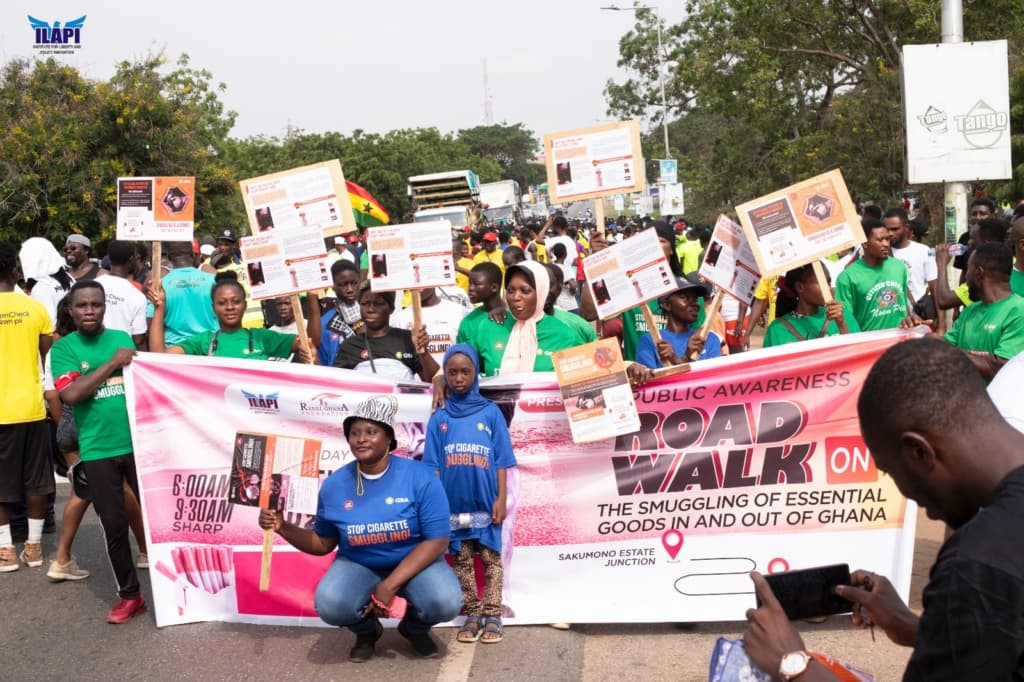
Accra, Ghana – The Institute for Liberty and Policy Innovation (ILAPI), in a concerted effort with government agencies and civil society partners, has concluded a comprehensive Nationwide Anti-Illicit Trade Road Walk Awareness and Education Campaign across three major regions of Ghana. The initiative, recently wrapped up, directly addresses the escalating threat of smuggling and illicit trade, which continues to erode national revenue, compromise public safety, and undermine legitimate businesses across the country.
The campaign, a multi-stakeholder undertaking, mobilized communities, traders, and various enforcement bodies to highlight the severe economic and social repercussions of the illicit trade economy. This concerted push comes at a critical time for Ghana, as declining government revenue poses significant challenges to public service provision and national development initiatives.
Combating Economic Sabotage and Public Safety Risks
Illicit trade, encompassing smuggling, counterfeiting, piracy, and tax evasion, drains billions of Ghana Cedis from the national economy annually. These funds, which would otherwise contribute to public services such as healthcare, education, and infrastructure development, instead fuel criminal networks and distort market dynamics. The widespread availability of unregulated goods also presents grave public health and safety concerns, as consumers are often exposed to substandard, counterfeit, or hazardous products.
"The menace of illicit trade is not merely an economic issue; it is a profound threat to national security and the well-being of every Ghanaian," stated Mr. Peter Bismark Kwofie, Executive Director of ILAPI, during a post-campaign briefing. "Our road walk campaign was designed to ignite a national conversation, making every citizen aware of their role in combating this shadow economy. When we choose to buy smuggled or counterfeit goods, we are inadvertently funding criminal enterprises and denying our nation the resources it desperately needs for progress."
The campaign targeted key commercial hubs and border communities within the selected regions, utilizing road walks, public durbars, stakeholder forums, and educational materials to engage a broad spectrum of the populace. Emphasis was placed on educating traders about the legal implications of dealing in illicit goods and empowering consumers to identify and report suspicious products.
Multi-Agency Collaboration for Greater Impact
A distinctive feature of ILAPI's campaign was its robust collaborative framework. Partnering directly with critical government bodies such as the Ghana Revenue Authority (GRA) — particularly its Customs Division — the National Security Ministry, the Ghana Police Service, and the Ministry of Trade and Industry, the initiative underscored the necessity of a unified front against illicit trade. Civil society organizations, local government authorities, and traditional leaders also played pivotal roles in mobilizing community participation and ensuring the campaign's messages resonated locally.
"The Ghana Revenue Authority loses substantial revenue each year to smuggling and under-declaration of goods," explained Madam Akosua Mensah, Deputy Commissioner of Customs in charge of Policy and Programs, whose office supported the campaign. "This directly impacts our ability to meet revenue targets, which in turn affects the government’s capacity to fund essential public services. Campaigns like ILAPI’s are crucial because they foster a sense of shared responsibility. Enforcement alone cannot solve this problem; public awareness and cooperation are paramount."
Discussions during the campaign highlighted the sophisticated nature of illicit trade networks, which often exploit porous borders and complex supply chains. Participants were educated on how to distinguish genuine products from counterfeits, the importance of demanding receipts, and the channels available for reporting illicit trade activities to relevant authorities.
Protecting Public Health and Legitimate Businesses
Beyond the fiscal implications, the campaign also shone a spotlight on the severe health and safety risks associated with illicit goods. Counterfeit pharmaceuticals, uncertified electrical appliances, and unwholesome food products pose immediate dangers to consumers, often leading to serious health complications or even fatalities.
"From fake medicines that fail to treat illnesses to substandard car parts that endanger lives on our roads, the public health and safety implications of illicit trade are terrifying," remarked Dr. Ama Serwaa, a public health advocate who participated in the campaign in one of the regions. "Consumers must understand that the seemingly cheaper price of an illicit product often comes at an immeasurable cost to their health and safety. We commend ILAPI and its partners for bringing this critical issue to the forefront and empowering citizens to make informed choices."
Legitimate businesses, both local and international, also suffer immensely from illicit trade. They face unfair competition from traders who evade taxes and regulatory compliance, leading to reduced sales, job losses, and disincentives for investment. The campaign emphasized that supporting legitimate businesses strengthens the national economy and creates sustainable employment opportunities.
Looking Ahead: Sustained Vigilance and Policy Action
While the road walk awareness campaign has concluded, ILAPI and its partners stressed that this is merely a significant step in a long-term battle against illicit trade. The insights gained and the networks established during the campaign will inform future advocacy efforts and policy recommendations aimed at strengthening enforcement mechanisms, enhancing cross-border cooperation, and improving public education initiatives.
The challenge remains substantial, but the collaborative spirit and heightened awareness generated by the campaign offer a promising foundation. Sustained vigilance from both authorities and citizens, coupled with robust policy frameworks and effective enforcement, will be critical in safeguarding Ghana’s revenue streams, protecting its citizens, and fostering an environment where legitimate businesses can thrive.