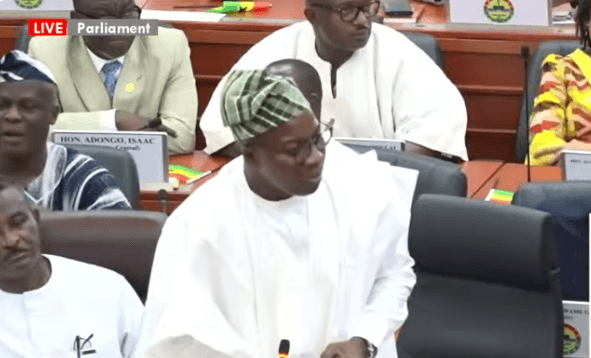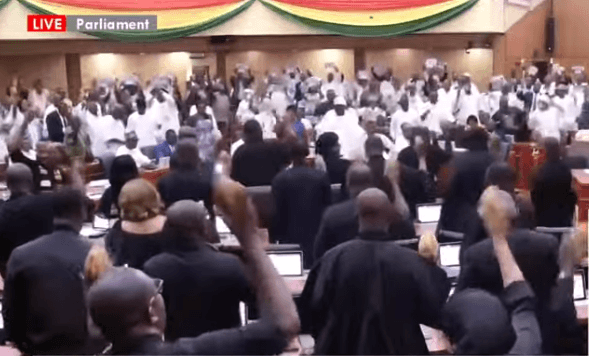
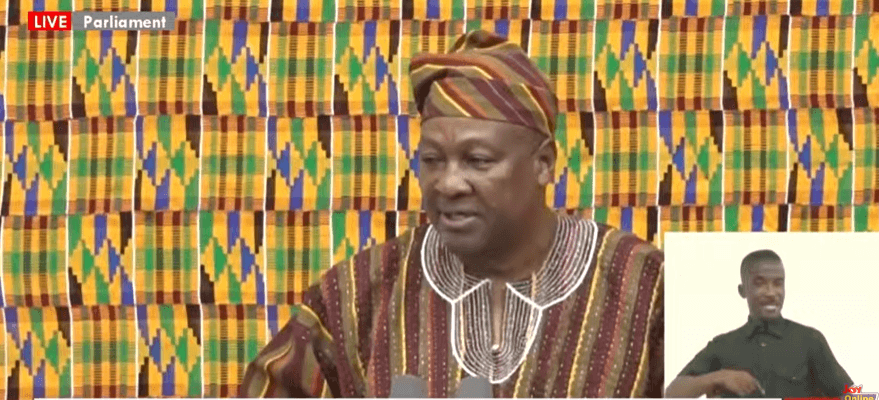
The President's address, delivered before a joint session of Parliament, painted a vision of a prosperous Ghana, achievable only through a unified national effort. He highlighted various sectors – from economic productivity and local governance to environmental stewardship and social cohesion – as crucial areas where individual and community contributions are indispensable. This fervent call comes at a time when Ghana is navigating complex economic challenges and striving for sustainable growth, making citizen engagement more critical than ever.
A Shared Responsibility for Nation-Building
"The government can lay the groundwork, provide the policies, and create the enabling environment," President Mahama stated emphatically. "But the true architects of our progress are the farmers in their fields, the teachers in their classrooms, the entrepreneurs launching new ventures, and every citizen upholding their civic duties. Our destiny is not solely in the hands of a few; it is woven into the fabric of every Ghanaian's commitment."
He further elaborated on the symbiotic relationship between leadership and citizenry, stressing that accountability from the top must be met with active participation from below.
"We often look to leadership for solutions, and rightly so, for we are accountable. However, let us not forget that the strength of a nation is ultimately derived from the resilience, innovation, and patriotism of its people. Every act of diligence, every commitment to community, every adherence to law, builds a stronger Ghana."President Mahama emphasized that nation-building is a continuous process, demanding sustained effort and a sense of collective ownership from every individual.
Expert Perspectives on Citizen Engagement
The President's message resonated with experts who have long advocated for greater public involvement in national affairs.
Dr. Ama Nkrumah, a Senior Economic Analyst at the Institute for Fiscal Policy, echoed President Mahama's sentiments, emphasizing the economic multiplier effect of citizen engagement.
"When citizens actively participate, whether through supporting local businesses, paying taxes diligently, or innovating in their respective fields, it directly translates into economic growth and stability," Dr. Nkrumah explained. "A culture of contribution fosters greater productivity, reduces reliance on external aid, and builds a robust domestic economy capable of withstanding global shocks. It's about empowering individuals to be economic agents, not just beneficiaries."
From a social perspective, Professor Kwesi Mensah, Head of Sociology at the University of Ghana, noted the importance of the President's message for fostering national unity.
"President Mahama's call is a powerful reminder that nation-building isn't just about grand projects; it's about the daily choices we make as individuals and communities," Professor Mensah commented. "It encourages a sense of shared ownership and responsibility, which is vital for social cohesion and addressing grassroots issues. When people feel they are part of the solution, trust in institutions grows, and community development accelerates. This fosters a sense of national pride and collective purpose."
Implementing the Vision: Government and Citizen Roles
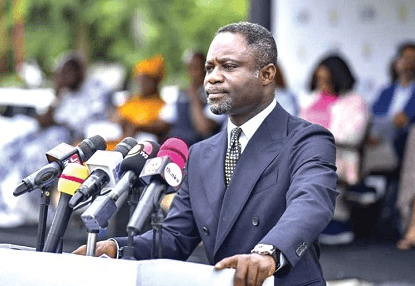
Mr. Albert Boafo, Minister for National Planning, detailed how the government is working to facilitate this citizen involvement and create an enabling environment for contributions.
"Our development agenda is inherently participatory," Mr. Boafo stated. "We are investing in digital infrastructure to improve service delivery and transparency, empowering local government structures, and launching initiatives to encourage volunteerism and entrepreneurship. The President's vision is a call to action that we, as a government, are committed to supporting by creating accessible avenues for every Ghanaian to contribute meaningfully, ensuring that no one is left behind in our national journey."
The concept of citizen participation in national development is not new to Ghana, a nation with a rich history of communal self-help and volunteerism, often embodied in traditional practices like 'nnoboa.' However, President Mahama's address sought to re-energize this spirit, particularly in an era marked by rapid urbanization, technological advancement, and evolving socio-economic landscapes. He highlighted the need for vigilance against corruption, promotion of quality education, responsible environmental practices, and active participation in democratic processes as tangible ways citizens can contribute. The address served as a potent reminder that the onus of building a resilient, prosperous, and equitable Ghana rests on the shoulders of every individual, transcending political affiliations and socio-economic strata. It emphasized that true progress stems from a collective determination to overcome challenges and leverage opportunities for the common good.
As Ghana looks towards solidifying its position as a beacon of democracy and development in Africa, President Mahama's message serves as a foundational principle for national progress. It underscores the belief that the nation's aspirations for sustained growth, improved living standards, and a vibrant society are not merely governmental mandates but a collective covenant, requiring sustained effort and unwavering commitment from every Ghanaian citizen. The path forward, as articulated by the President, is one of shared responsibility and collaborative action, paving the way for a future built by all, for all.