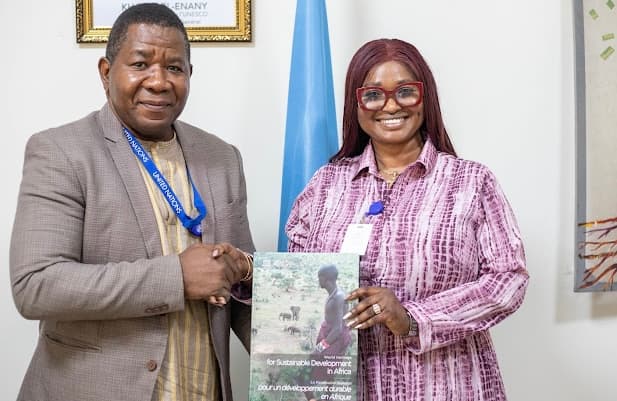
The high-level talks between GTA and UNESCO are a strategic move to leverage the strengths of both organizations and create a synergistic approach to promoting Ghana's rich cultural heritage and natural attractions. According to Maame Efua Houadjeto, "Our goal is to create a unique and immersive experience for tourists, showcasing the best of Ghana's culture, history, and natural beauty, while also embracing the latest technologies, including AI, to enhance the visitor experience." This vision is shared by Edmond Moukala, who emphasized that "UNESCO is committed to supporting Ghana in preserving its cultural heritage and promoting sustainable tourism practices, and we believe that AI can play a significant role in achieving these objectives."
Collaboration and Knowledge Sharing
The collaboration between GTA and UNESCO is expected to facilitate knowledge sharing and capacity building in areas such as cultural tourism, heritage management, and digital technologies. Dr. Kodjo Adovor, a tourism expert and lecturer at the University of Ghana, notes that "the partnership will enable GTA to tap into UNESCO's global network and expertise, while also providing an opportunity for Ghana to share its own best practices and success stories with the international community." He further adds that "the use of AI in tourism can help to enhance the visitor experience, improve destination management, and provide valuable insights for tourism development." As Dr. Adovor puts it, "AI can help us to better understand tourist behavior, preferences, and patterns, allowing us to create more tailored and personalized experiences that meet the needs of our visitors."
Cultural Heritage and AI
The integration of AI in cultural heritage management is a key area of focus for the GTA-UNESCO collaboration. Edmond Moukala explains that "UNESCO has been working with various countries to develop AI-powered tools for cultural heritage preservation and promotion, and we are excited to explore similar initiatives with Ghana." He cites the example of AI-powered chatbots that can provide tourists with personalized information and recommendations on cultural attractions, as well as virtual reality experiences that can transport visitors to historical sites and landmarks. Maame Efua Houadjeto adds that "Ghana has a rich cultural heritage, with many historical sites and landmarks that can be showcased using AI-powered technologies, and we are eager to explore the potential of these technologies to enhance the tourist experience and promote our cultural heritage."
"The use of AI in tourism is not just about technology; it's about creating a more immersive and engaging experience for visitors, while also promoting sustainable tourism practices and supporting local communities." - Edmond Moukala
Education and Capacity Building
Education and capacity building are critical components of the GTA-UNESCO collaboration. The two organizations plan to work together to develop training programs and workshops for tourism stakeholders, including tour operators, hoteliers, and local community members. Dr. Ama Pomaa-Bruce, a tourism educator and researcher, notes that "capacity building is essential for the tourism industry, as it enables stakeholders to develop the skills and knowledge needed to adapt to changing market trends and consumer preferences." She adds that "the integration of AI and other digital technologies in tourism education can help to prepare the next generation of tourism professionals for the challenges and opportunities of the digital age."
The GTA-UNESCO collaboration is a significant development for Ghana's tourism sector, and it is expected to have a positive impact on the country's economy. As Maame Efua Houadjeto puts it, "our goal is to make Ghana a leading tourist destination in West Africa, and we believe that the partnership with UNESCO will help us to achieve this objective." With the support of UNESCO and the use of AI and other digital technologies, Ghana is poised to take its tourism industry to the next level, offering visitors a unique and unforgettable experience that showcases the best of the country's culture, history, and natural beauty.
In conclusion, the partnership between GTA and UNESCO is a strategic move to leverage the potential of culture and AI for tourism growth in Ghana. As the country continues to develop its tourism industry, it is clear that the collaboration between these two organizations will play a critical role in shaping the future of tourism in Ghana. With its rich cultural heritage, stunning natural attractions, and commitment to sustainable tourism practices, Ghana is an exciting destination for tourists, and the use of AI and other digital technologies is expected to enhance the visitor experience and promote the country's tourism sector. As Edmond Moukala notes, "the future of tourism is digital, and Ghana is well-positioned to take advantage of the opportunities presented by AI and other technologies to promote its tourism sector and support sustainable development."