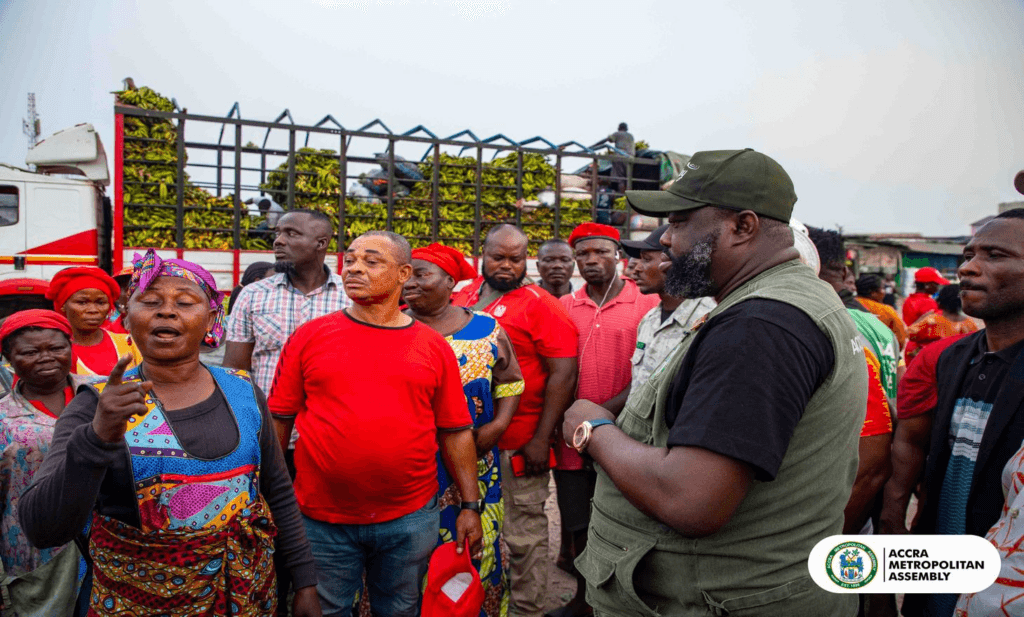
The announcement was made following a series of meetings between the AMA and representatives of the traders, during which the vendors expressed their strong opposition to the proposed rent hike and the additional charge. According to Dr. Josephine Akosua Owusu-Banahene, a market analyst, "the traders were facing significant financial pressure due to the rising cost of goods and services, and the proposed rent increase would have exacerbated the situation, potentially leading to a decline in business activity and economic instability in the area." The AMA's decision to engage in negotiations with the facility's managers is seen as a pragmatic approach to finding a mutually beneficial solution, taking into account the interests of both the traders and the market's administrators.
Background to the Dispute
The controversy surrounding the Makola No. 2 Market began several months ago, when the facility's managers announced plans to increase the rent and introduce a 20 per cent charge on all transactions conducted within the market. The traders, who are predominantly small-scale entrepreneurs, argued that the proposed increases were excessive and would have a devastating impact on their businesses.
"We are not opposed to paying rent or charges, but we believe that any increases should be reasonable and reflect the current economic realities,"said Madam Ama Owusu, a trader at the market. The traders also expressed concerns about the lack of transparency in the management of the market, alleging that the facility's administrators had failed to provide adequate services and maintenance, despite collecting significant revenues from the vendors.
Negotiations and the Way Forward
The negotiations between the AMA and the facility's managers are expected to be intense, with both parties seeking to find a compromise that addresses the concerns of the traders while also ensuring the long-term sustainability of the market. According to Mr. Kwame Osei, a spokesperson for the AMA, "the Assembly is committed to finding a solution that works for everyone involved, and we are confident that through dialogue and cooperation, we can resolve this issue and create a more favorable business environment for the traders." The traders, on the other hand, are cautiously optimistic about the outcome of the negotiations, with some expressing hope that the AMA's intervention will lead to a more equitable and sustainable arrangement.
"We are willing to work with the AMA and the facility's managers to find a solution, but we will not accept any proposal that does not take into account our concerns and the realities of our businesses,"said Mr. Kofi Mensah, a representative of the traders.
The situation at the Makola No. 2 Market is being closely watched by other trader associations and market administrators across the city, who are keen to see how the negotiations play out and what lessons can be learned from the experience. As Dr. Owusu-Banahene noted, "the outcome of this dispute will have significant implications for the future of market administration in Accra, and it is essential that all parties involved work together to find a solution that promotes fairness, transparency, and economic sustainability." The AMA's decision to engage in negotiations with the facility's managers is a positive step towards resolving the dispute, and it remains to be seen whether the parties can reach a mutually beneficial agreement that addresses the concerns of all stakeholders.
In conclusion, the temporary halt to the proposed rent increase and the disputed 20 per cent charge at the Makola No. 2 Market provides a welcome reprieve to the traders, who can now focus on their businesses without the uncertainty and financial pressure caused by the proposed increases. As the negotiations between the AMA and the facility's managers continue, it is essential that all parties remain committed to finding a solution that works for everyone involved, and that prioritizes the long-term sustainability and development of the market. The outcome of this dispute will have far-reaching implications for the city's market ecosystem, and it is crucial that the parties involved work together to create a more equitable, transparent, and prosperous business environment for all stakeholders.