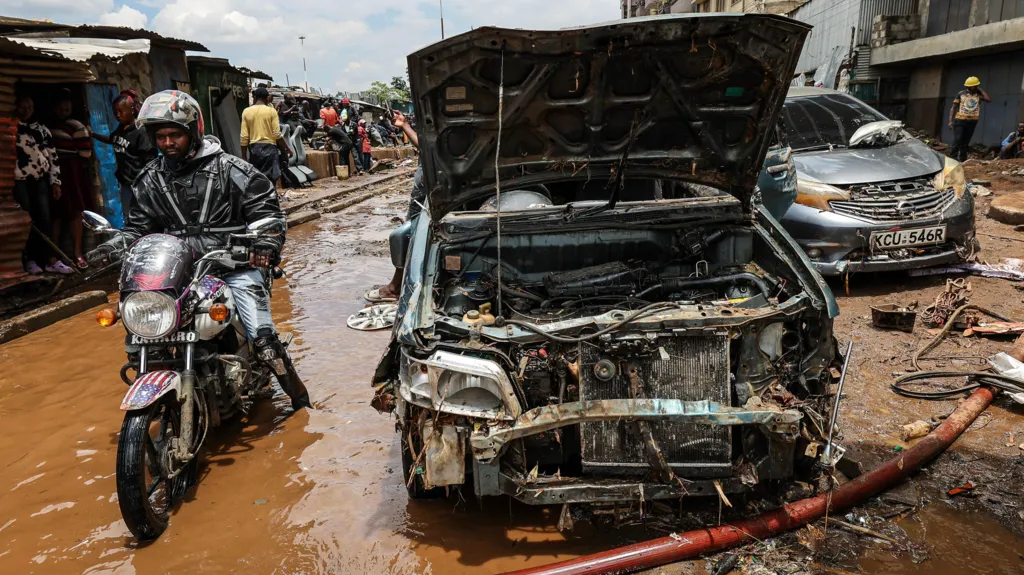
The death toll in Kenya has risen to 62 after a week of heavy rains that have caused widespread flooding across the country, according to the authorities. The severe flooding has left a trail of destruction, with thousands of people displaced and many more affected by the disaster. The Kenyan government has declared a state of emergency in the affected areas, as rescue efforts continue to evacuate those stranded by the floodwaters.
The flooding has been particularly severe in the western and central regions of Kenya, where the heavy rains have caused rivers to burst their banks, sweeping away homes, businesses, and crops. The authorities have warned that the situation is likely to worsen, as more heavy rains are forecast for the coming days. Dr. Jane Kabugi, a climate expert at the University of Nairobi, said that the heavy rains are part of a larger trend of climate change, which is having a devastating impact on communities across Kenya. "We are seeing more frequent and intense rainfall events, which are having a disproportionate impact on vulnerable communities," she said.
Emergency Response Efforts
The Kenyan government has deployed emergency response teams to the affected areas, including the Kenya Red Cross, which is providing humanitarian assistance to those displaced by the flooding. Abbas Gullet, the Secretary General of the Kenya Red Cross, said that the organization is working closely with the government and other partners to provide shelter, food, and medical care to those in need. "We are doing everything we can to support the affected communities, but the situation is challenging, and we need more resources to respond effectively," he said.
The authorities have also set up evacuation centers for those displaced by the flooding, where they are providing basic necessities such as food, water, and shelter. However, many of those affected by the flooding are still stranded, and rescue efforts are being hampered by the difficult terrain and poor weather conditions.
"The situation is dire, and we are doing everything we can to reach those in need, but it's a complex and challenging operation," said Colonel James Mwaura, who is leading the rescue efforts.
Climate Change and Flooding
The severe flooding in Kenya is part of a larger trend of climate-related disasters that are affecting countries across Africa. Climate change is having a devastating impact on communities, with more frequent and intense rainfall events, droughts, and heatwaves. Dr. Kabugi said that Kenya is particularly vulnerable to the impacts of climate change, due to its geographical location and limited resources. "We need to take urgent action to address the root causes of climate change, and to support communities that are already being affected by its impacts," she said.
The Kenyan government has pledged to take action to address the impacts of climate change, including investing in climate-resilient infrastructure and supporting climate-smart agriculture. However, more needs to be done to support communities that are already being affected by climate-related disasters. International organizations such as the United Nations are calling for greater support for countries like Kenya, which are on the frontlines of the climate crisis.
Humanitarian Crisis
The flooding in Kenya has created a humanitarian crisis, with thousands of people in need of assistance. The authorities are working to provide emergency aid, but the situation is challenging, and more resources are needed to respond effectively. Ms. Fatuma Ali, a resident of one of the affected areas, said that the situation is desperate, and that many people are in need of help.
"We have lost everything, our homes, our crops, our livestock. We need help to survive, and we need it now," she said.
The international community is being called upon to provide support to Kenya, as the country responds to the humanitarian crisis. The United Nations has launched an appeal for funds to support the relief efforts, and countries such as the United States, the United Kingdom, and China have pledged to provide assistance.
In conclusion, the severe flooding in Kenya has created a devastating humanitarian crisis, with 62 people killed and thousands more affected. The situation is likely to worsen, as more heavy rains are forecast for the coming days. The authorities, with the support of the international community, must take urgent action to respond to the crisis, and to support communities that are already being affected by the impacts of climate change. As Dr. Kabugi said, "We must act now to address the root causes of climate change, and to support communities that are already being affected by its impacts. The future of our planet depends on it."