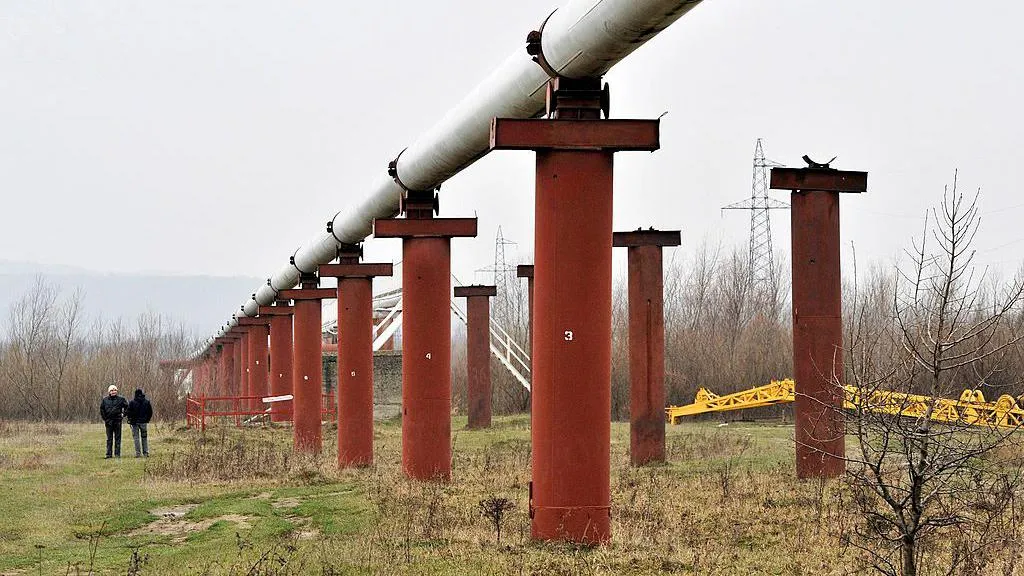
The diplomatic relationship between Ukraine and its European allies has reached a boiling point, with Ukrainian President Volodymyr Zelensky accusing several EU countries of attempting to "blackmail" Kyiv into reopening a crucial oil pipeline. The pipeline in question, which transports Russian oil to Hungary and Slovakia, has been a point of contention between Ukraine and its allies, with Zelensky's administration insisting that reopening the pipeline would be a betrayal of Ukraine's national interests.
At the heart of the dispute is the fact that the pipeline, known as the Druzhba pipeline, is a major artery for Russian oil exports to Europe. Ukraine, which has been embroiled in a conflict with Russian-backed separatists in the eastern part of the country, has been keen to limit Russia's ability to export oil through its territory. However, Hungary and Slovakia, which are heavily reliant on Russian oil, have been pushing for the pipeline to be reopened, citing concerns over energy security and the potential economic impacts of a prolonged closure.
Accusations of Blackmail
According to Zelensky, several EU countries, including Hungary and Slovakia, have been using "blackmail" tactics to try to force Ukraine to reopen the pipeline. Zelensky's comments have sparked a heated debate within the EU, with some countries expressing support for Ukraine's position and others arguing that the pipeline should be reopened in the interests of energy security. As
"We will not be intimidated or blackmailed into doing something that goes against our national interests,"Zelensky said in a statement,
"The EU should be supporting us in our efforts to limit Russia's ability to export oil, not trying to force us to reopen a pipeline that would only serve to benefit Moscow."
Experts say that the row over the oil pipeline is just the latest example of the complex and often fraught relationship between Ukraine and its European allies. Dr. Maria Koval, a senior researcher at the Ukrainian Institute of International Relations, notes that
"Ukraine has long been seeking to integrate more closely with the EU, but the relationship has been complicated by issues such as energy security and the ongoing conflict with Russian-backed separatists."According to Koval,
"The EU has been trying to balance its own energy security needs with its support for Ukraine, but the situation is delicate and requires careful diplomacy to resolve."
Economic Implications
The economic implications of the pipeline's closure are significant, with Hungary and Slovakia facing potential shortages and price increases if the pipeline remains closed. Hungarian Prime Minister Viktor Orban has been vocal in his criticism of Ukraine's decision to close the pipeline, arguing that it would have severe economic consequences for his country.
"We cannot accept a situation in which our energy security is put at risk by the actions of another country,"Orban said in a recent statement,
"We urge Ukraine to reconsider its decision and reopen the pipeline as soon as possible."
However, others argue that the economic implications of reopening the pipeline would be far more severe for Ukraine, which has been struggling to recover from the economic impacts of the conflict with Russian-backed separatists. According to Andriy Yermak, the head of the Ukrainian presidential administration,
"Reopening the pipeline would be a betrayal of our national interests and would only serve to benefit Russia,"Yermak said,
"We will not be swayed by threats or blackmail, and we will continue to prioritize the security and well-being of our citizens."
Diplomatic Fallout
The diplomatic fallout from the row over the oil pipeline has been significant, with several EU countries expressing support for Ukraine's position and others arguing that the pipeline should be reopened. The European Commission has sought to mediate the dispute, with officials urging calm and restraint on all sides. However, the situation remains volatile, with no clear resolution in sight.
As the situation continues to unfold, one thing is clear: the row over the oil pipeline has exposed deep divisions within the EU and has highlighted the complex and often fraught relationship between Ukraine and its European allies. According to Dr. Koval,
"The EU needs to find a way to balance its own energy security needs with its support for Ukraine, and to prioritize the security and well-being of all its member states."As the diplomatic row continues to escalate, it remains to be seen whether a resolution can be found that satisfies all parties involved.
In conclusion, the dispute over the oil pipeline has brought to the forefront the intricate and delicate nature of the relationship between Ukraine and its European allies. As the situation continues to evolve, it is essential for all parties involved to engage in constructive dialogue and to prioritize the security and well-being of all nations involved. The coming days and weeks will be crucial in determining the outcome of this diplomatic row, and it remains to be seen whether a resolution can be found that satisfies the interests of all parties involved.