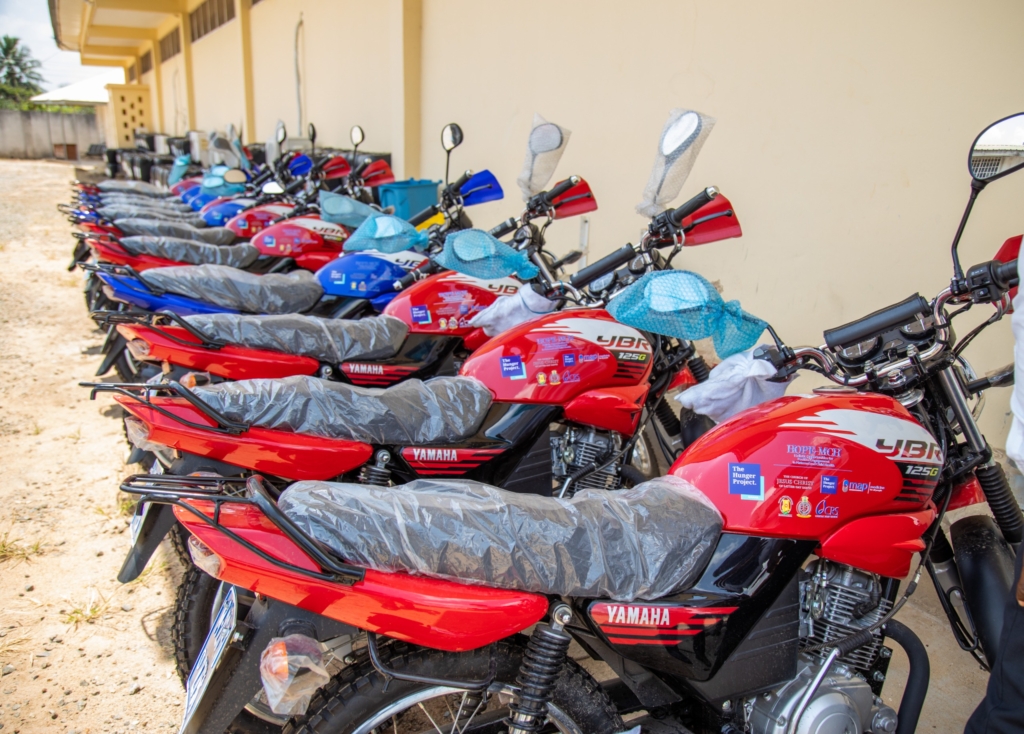
The Hunger Project-Ghana, in collaboration with The Church of Jesus Christ of Latter-day Saints, has taken a significant step towards enhancing maternal and child healthcare in the country by donating eleven motorcycles to the Ghana Health Service. This donation is expected to improve the mobility of health workers, enabling them to reach remote communities and provide essential healthcare services to those in need. According to Dr. Emmanuel Ayim-Darke, Director of Family Health at the Ghana Health Service, "The lack of transportation has been a major challenge for our health workers, hindering their ability to deliver timely and effective healthcare services to rural areas. We are grateful for this donation, which will undoubtedly strengthen our efforts to reduce maternal and child mortality rates."
Addressing the Challenges of Rural Healthcare
Access to quality healthcare is a significant challenge in many rural areas of Ghana, where the lack of transportation infrastructure and limited resources often hinder the delivery of essential health services. The donated motorcycles will be distributed across several districts and municipalities, where health workers will use them to traverse difficult terrain and reach isolated communities. Ms. Akua Agyeiwaa, Country Director of The Hunger Project-Ghana, noted, "Our organization is committed to empowering health workers and improving access to healthcare services, particularly in rural areas where the need is greatest. We believe that this donation will have a positive impact on the lives of thousands of women and children, and we look forward to continuing our partnership with the Ghana Health Service to achieve our shared goals."
The motorcycles are equipped with safety features and will be maintained by the Ghana Health Service to ensure their longevity and effectiveness. Health workers will undergo training on the safe operation and maintenance of the vehicles, as well as the use of GPS technology to navigate and track their routes. This will enable them to respond quickly to emergencies and provide timely healthcare services to those in need. As Dr. Kwame Amponsa-Achiano, a public health expert, pointed out, "The use of technology, such as GPS, will not only improve the efficiency of health workers but also enhance the overall quality of care provided to patients. This is a significant step forward in the quest to achieve universal health coverage in Ghana."
A Partnership for Progress
The partnership between The Hunger Project-Ghana and The Church of Jesus Christ of Latter-day Saints is a testament to the power of collaboration in achieving common goals. The donation of motorcycles is a result of a joint effort to strengthen maternal and child healthcare services in Ghana, and it demonstrates the commitment of both organizations to improving the lives of vulnerable populations. As Bishop John Mensah, a representative of The Church of Jesus Christ of Latter-day Saints, stated, "We are proud to be part of this initiative, which aligns with our values of compassion, service, and self-reliance. We believe that by working together, we can make a meaningful difference in the lives of others and create a brighter future for generations to come."
The Ghana Health Service has welcomed the donation, citing the critical role that transportation plays in the delivery of healthcare services. Mr. Kwabena Boadu Oku-Afari, Deputy Director-General of the Ghana Health Service, said, "We are grateful for the support of our partners, who have helped us to address one of the major challenges facing our health workers. The motorcycles will enable us to expand our reach, improve our response times, and provide better care to our patients. This is a significant milestone in our efforts to achieve the Sustainable Development Goals, particularly Goal 3, which focuses on good health and well-being."
A New Era in Healthcare Delivery
The donation of motorcycles marks the beginning of a new era in healthcare delivery in Ghana, where technology, innovation, and partnerships are being harnessed to improve access to quality healthcare services. As the country continues to strive towards achieving universal health coverage, initiatives like this will play a critical role in reducing health inequities and improving health outcomes.
"The future of healthcare in Ghana is bright, and we are excited to be part of this journey. We will continue to work with our partners to identify areas of need and develop innovative solutions to address them,"said Ms. Agyeiwaa. The success of this initiative will depend on the continued collaboration and commitment of all stakeholders, including the Ghana Health Service, The Hunger Project-Ghana, and The Church of Jesus Christ of Latter-day Saints.
In conclusion, the donation of motorcycles to the Ghana Health Service by The Hunger Project-Ghana, with support from The Church of Jesus Christ of Latter-day Saints, is a significant step towards strengthening maternal and child healthcare services in Ghana. As the country looks to the future, it is clear that partnerships, innovation, and a commitment to improving the lives of others will be essential in achieving the goal of universal health coverage. With the wheels of progress in motion, Ghana is poised to make significant strides in reducing health inequities and improving health outcomes, and the impact of this donation will be felt for generations to come.