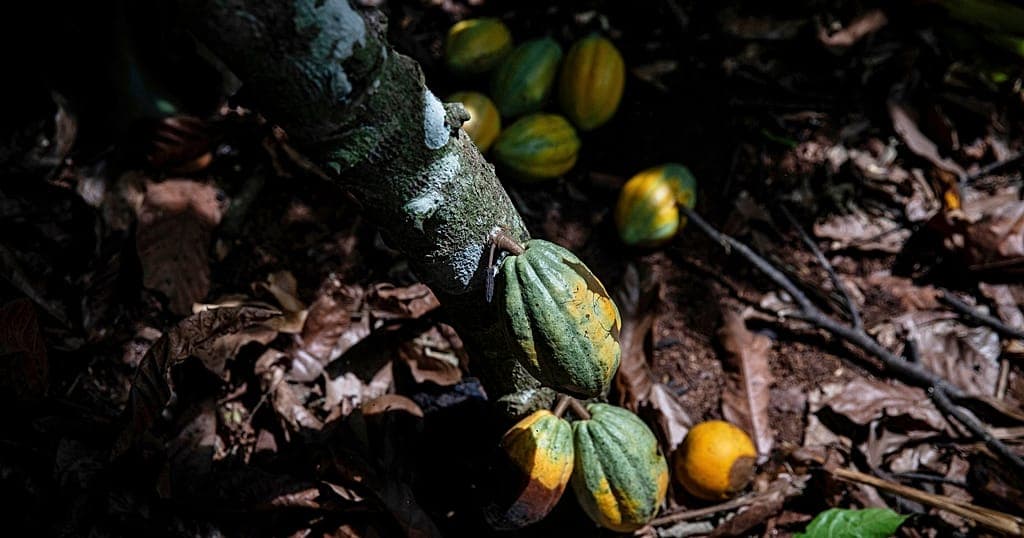
ABIDJAN – Ivory Coast is reportedly considering a significant reduction in the price paid to its cocoa farmers, a move that would mirror a recent decision by neighboring Ghana and signal a concerted effort by the world's top producers to navigate a challenging global market. Reuters reported Thursday, citing government sources, that discussions are underway for Abidjan to emulate Accra's recent cut, potentially impacting the livelihoods of millions of Ivorian farmers.
The potential price cut comes amidst a backdrop of falling international cocoa prices, exacerbated by a projected global surplus for the current crop year. Both Ivory Coast and Ghana, which together account for over 70% of the world's cocoa supply, have been grappling with the dual challenge of ensuring fair compensation for farmers while maintaining their competitive edge in a volatile market. The decision, if implemented, would represent a critical juncture for the West African cocoa industry, with profound implications for agricultural policy and farmer welfare across the region.
Ghana's Precedent
Ghana, the world's second-largest cocoa producer, set a precedent earlier this week by announcing a 10.5% cut in the farmgate price for the upcoming 2024/25 season, bringing the price down to 2,000 Ghanaian cedis ($147.92) per 64 kg bag. This move was attributed by Ghanaian authorities to a decline in global cocoa prices and the need to align domestic prices with international realities. The decision sent ripples across the sector, with analysts immediately turning their attention to Ivory Coast, which often coordinates its cocoa pricing strategies with Ghana to manage the global market.
"Ghana's decision was a clear signal of the economic pressures facing producers," commented Dr. Ama Nkrumah, an agricultural economist specializing in West African markets.
"Given the close collaboration between Accra and Abidjan on cocoa policy, it was almost inevitable that Ivory Coast would consider a similar adjustment. Both nations are trying to protect their national treasuries and stabilize their cocoa boards in a period of market downturn, even if it comes at a cost to the farmer in the short term."
The two nations have historically sought to exert greater control over the global cocoa trade, including jointly implementing a Living Income Differential (LID) of $400 per tonne in 2019, intended to guarantee a higher income for farmers.
Market Pressures and Farmer Impact
The global cocoa market has seen significant fluctuations, with robust harvests in recent years contributing to a supply surplus. While this might seem beneficial for consumers, it often translates into lower prices for producers. Compounding this are challenges such as the swollen shoot virus, which affects cocoa trees, and changing weather patterns, which introduce uncertainty into future yields. For Ivorian farmers, who primarily operate smallholdings, a price cut would mean a direct reduction in their income, potentially pushing many further into poverty.
Moussa Kone, a representative of a cocoa farmer cooperative in Divo, Ivory Coast, expressed deep concern over the reports.
"We have heard the rumors, and it worries us greatly," Kone stated. "Our costs for labor, fertilizer, and pest control continue to rise, but our income per kilogram keeps shrinking. If the government reduces the price again, many families will struggle to make ends meet, and some may even abandon cocoa cultivation altogether, seeking other ways to feed their children."
Such a scenario could have long-term implications for Ivory Coast's cocoa output, threatening its position as the world's leading producer.
The Ivorian government faces a delicate balancing act. On one hand, it is committed to improving the living standards of its cocoa farmers and has invested in various programs to enhance productivity and sustainability. On the other, it must ensure the financial viability of its cocoa marketing board, Le Conseil du Café-Cacao, and maintain a competitive price for its exports on the international market. The current global economic climate, with inflationary pressures and subdued demand in some consumer markets, adds another layer of complexity to the decision-making process.
Government's Dilemma and Future Outlook
Sources within the Ivorian government, speaking anonymously due to the sensitivity of ongoing deliberations, indicated that the decision is not being taken lightly.
"This is an incredibly difficult situation," one official commented. "Our priority is always our farmers, but we also have to be realistic about global market conditions. We are exploring all options to mitigate the impact, perhaps through subsidies or support programs, but a pricing adjustment may be unavoidable to align with regional strategies and ensure the long-term sustainability of our cocoa sector."
The official emphasized that any decision would be communicated transparently and would aim to safeguard the sector's future.
The potential move by Ivory Coast would underscore a growing trend among major commodity producers to adapt to global market realities, even if it means making unpopular decisions domestically. The coordination between Ghana and Ivory Coast highlights their shared destiny in the cocoa industry, and any significant policy shift by one invariably influences the other. The coming weeks will be crucial as the Ivorian government finalizes its stance, a decision that will reverberate from the farms of West Africa to the chocolate factories of Europe and beyond, shaping the future trajectory of the global cocoa supply chain.