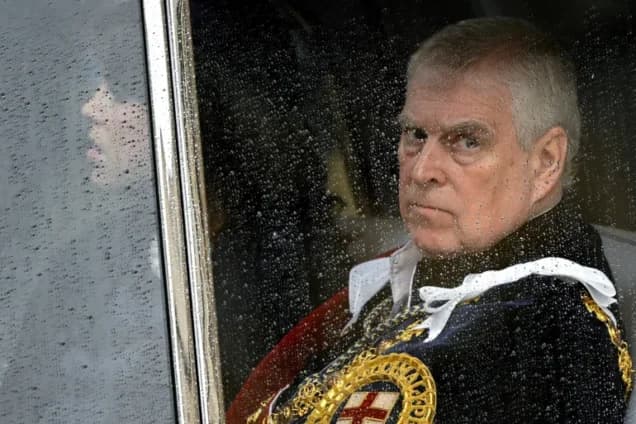
A formal inquiry into Prince Andrew's connections with convicted sex offender Jeffrey Epstein has not been ruled out by law enforcement officials, as police searches continue in relation to the wider Epstein network. The revelation intensifies pressure on the Duke of York, fueling mounting calls for him to be removed from the royal line of succession, severing his official ties to the House of Mountbatten-Windsor.
The ongoing police activity, confirmed to be part of a broader, multi-jurisdictional investigation into Epstein's vast network of associates and alleged co-conspirators, signals that no individual connected to the disgraced financier is beyond potential scrutiny. While specific details of the searches remain confidential, their continuation underscores the gravity and expansive nature of the inquiry into child sex trafficking and exploitation.
A spokesperson for a relevant law enforcement agency, speaking on background, stated,
"In a complex, international investigation of this magnitude, all avenues remain open. The term 'not ruled out' signifies that while no specific inquiry into Prince Andrew has been confirmed or initiated at this precise moment, the possibility remains contingent on new evidence or information emerging as the broader investigation progresses."This careful phrasing highlights the dynamic nature of such probes, where the scope can expand or contract based on developing intelligence.
Mounting Pressure on Royal Succession
The persistent shadow of the Epstein scandal has reignited public debate regarding Prince Andrew's position within the British monarchy. Calls for his removal from the line of succession have amplified across media platforms and public discourse. Critics argue that his continued presence, even in a non-working capacity, tarnishes the reputation of the Royal Family and undermines public trust.
These demands stem from Prince Andrew's acknowledged friendship with Epstein, his controversial 2019 BBC "Newsnight" interview attempting to explain his actions, and the subsequent civil sexual assault lawsuit brought against him by Virginia Giuffre, which he settled out of court without admitting liability. Despite stepping back from public duties and being stripped of his military titles and royal patronages by Queen Elizabeth II in 2022, he remains ninth in line to the throne.
Dr. Eleanor Vance, a constitutional historian and expert on the British monarchy, commented on the unprecedented nature of the situation.
"While there is no clear constitutional mechanism for forcibly removing an individual from the line of succession, short of an Act of Parliament, the public pressure on the institution is undeniable. The monarchy relies heavily on public perception and trust, and the optics of Prince Andrew's continued position are increasingly problematic for many."She added, "The calls for him to be formally dropped are more symbolic than practical in terms of immediate power, but they reflect a deep unease about accountability at the highest levels."
Background of Allegations and Denials
Prince Andrew has consistently and vehemently denied any wrongdoing or knowledge of Epstein's crimes. His infamous interview sought to distance himself from Epstein, asserting he had never witnessed any illicit activity during his visits to Epstein's residences. He maintained that his friendship with Epstein was a misjudgment and expressed regret for the "poor judgment" of remaining friends with the financier.
However, the release of court documents and the ongoing legal proceedings against Epstein's associates, most notably Ghislaine Maxwell, have kept the focus on anyone connected to the late financier. The continuing police searches are believed to be aimed at uncovering further evidence, identifying more victims, and holding additional individuals accountable who may have facilitated or participated in Epstein's criminal enterprise.
Mark Jenkins, a former senior investigator with extensive experience in international crime, explained the meticulous nature of such probes.
"Investigations of this scale do not simply close because one major figure is deceased or another has been convicted. They cast a wide net, systematically examining every lead, every financial transaction, and every known associate. The 'not ruled out' stance on any individual indicates that investigators are leaving no stone unturned in their pursuit of justice for victims."
Implications for the Monarchy
The sustained scrutiny of Prince Andrew poses a significant challenge for the monarchy as it navigates a period of transition under King Charles III. The institution has sought to project an image of modernization and ethical conduct, and the unresolved questions surrounding Prince Andrew continue to be a potential reputational liability.
Calls for his removal from the line of succession are not merely about his personal conduct but about the integrity of the Crown itself. Advocacy groups for victims of sexual abuse have been particularly vocal, emphasizing the need for robust accountability regardless of social standing.
Sarah Davison, spokesperson for the "Voices for Justice" advocacy group, stated,
"No one, regardless of their title or background, should be exempt from scrutiny when serious allegations are made. The ongoing police actions and the public's demand for Prince Andrew to be removed from the succession highlight a fundamental desire for justice and transparency that must be addressed."
As police investigations into the Epstein network continue to unfold, the pressure on Prince Andrew and the wider Royal Family is expected to persist. The potential for a formal inquiry into his links remains a live possibility, ensuring that the Duke of York's past associations will continue to cast a long shadow over both his personal standing and the future perception of the British monarchy.