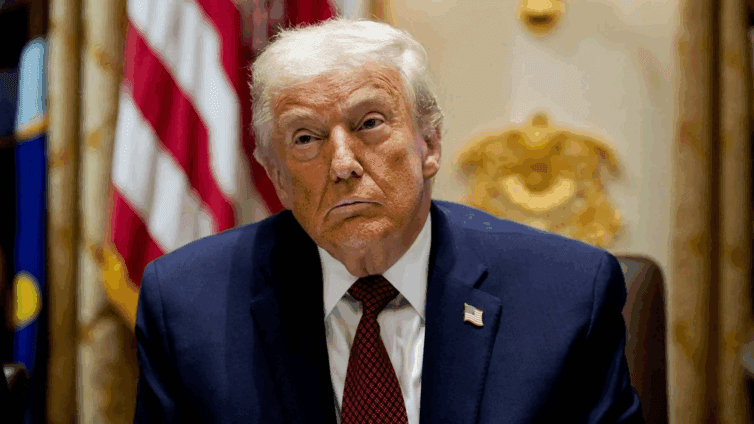
Donald Trump has vowed to impose a new 10% global tariff after the Supreme Court of the United States struck down most of his previous global duties in a 6–3 ruling. The court held that he overstepped his authority by using the 1977 International Emergency Economic Powers Act (IEEPA) to impose sweeping tariffs.
Court ruling
Chief Justice John Roberts wrote that when Congress delegates tariff powers, it does so explicitly and with strict limits. The majority included two justices nominated by Trump, Amy Coney Barrett and Neil Gorsuch.
Dissenting were Clarence Thomas, Brett Kavanaugh and Samuel Alito.
Trump’s response
Speaking at the White House, Trump called the ruling “terrible” and criticised the justices who opposed his policy. He announced he would invoke Section 122 of US trade law to impose a 10% tariff for up to 150 days, pending congressional action. He also signalled possible use of other provisions such as Sections 232 and 301, which allow tariffs on national security or unfair trade grounds.
A White House official said countries that had negotiated trade deals including the UK, India and the EU would now face the 10% global rate under the new authority.
Economic impact
The ruling potentially opens the door to billions of dollars in refunds for businesses. US authorities have already collected at least $130 billion under the IEEPA-based tariffs.
Markets reacted positively, with the S&P 500 rising about 0.7%. However, analysts warn that refunds may require prolonged legal battles, and smaller firms could struggle with the cost of litigation.
The decision injects fresh uncertainty into global trade, as businesses and governments await clarity on how the new tariff framework will be implemented.