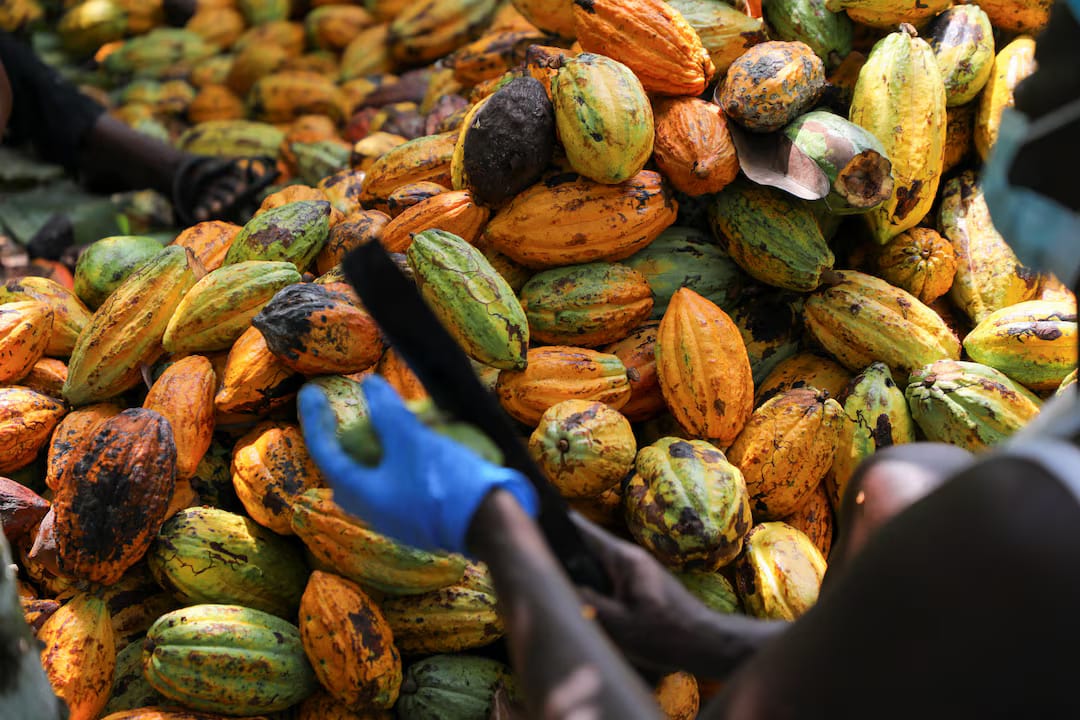
Ghana, the world's second-largest cocoa producer, is pushing to increase its local cocoa processing capacity to 50 percent of its total production, a move that will require substantial investments in the industry. The Managing Director of the Cocoa Marketing Company, Wisdom Dogbe, emphasized the need for Ghana to maximize the value of its cocoa crop by increasing domestic processing, rather than relying heavily on exports of raw cocoa beans.
According to Dogbe, the Cocoa Processing Company, which is the country's sole cocoa processing facility, has an installed processing capacity of approximately 64,000 metric tonnes. However, the company is currently utilizing only a fraction of this capacity, highlighting the need for significant investments to boost production. Increasing local processing to 50 percent of Ghana's cocoa production will not only generate more revenue for the country but also create jobs and stimulate economic growth. Dogbe noted that "the government's vision to increase local cocoa processing is laudable, but it will require a concerted effort from all stakeholders, including the government, private sector investors, and cocoa farmers."
Challenges Facing the Cocoa Industry
The cocoa industry in Ghana faces several challenges, including aging cocoa trees, pests, and diseases, which affect the quality and quantity of cocoa produced. Additionally, the industry is heavily reliant on imports of cocoa processing equipment and spare parts, which can be costly and time-consuming to acquire.
"We need to invest in modernizing our cocoa processing facilities and acquiring new technologies to improve efficiency and productivity,"said Dr. Francis Oppong, a cocoa expert at the University of Ghana. Oppong emphasized that investing in research and development is crucial to improving cocoa yields and quality, as well as developing new cocoa products that can compete in the global market.
The government of Ghana has set an ambitious target to increase cocoa production to 1.5 million metric tonnes by 2025, up from the current production level of around 800,000 metric tonnes. To achieve this target, the government will need to invest in irrigation systems, fertilizers, and other inputs to support cocoa farmers. Private sector investment will also be critical in supporting the development of the cocoa industry, particularly in the areas of processing and marketing. According to Dogbe, "we are open to partnering with private sector investors to develop the cocoa industry and increase local processing capacity."
Benefits of Increased Local Processing
Increasing local cocoa processing to 50 percent of Ghana's production will have numerous benefits for the country. It will generate more revenue for cocoa farmers, create jobs in the processing and manufacturing sectors, and stimulate economic growth. Additionally, it will reduce Ghana's reliance on exports of raw cocoa beans and enable the country to capture more of the value added in the cocoa supply chain.
"We want to move away from being just a producer of raw cocoa beans to a manufacturer of finished cocoa products,"said Dogbe. This will require significant investments in processing facilities, equipment, and training for workers in the industry.
Other experts in the industry agree that increasing local cocoa processing is a step in the right direction. It will enable Ghana to develop a more diversified economy and reduce its vulnerability to fluctuations in global cocoa prices. According to Dr. Oppong, "we need to think beyond just producing cocoa beans and focus on developing a cocoa industry that can create jobs, stimulate economic growth, and improve the livelihoods of cocoa farmers and their communities."
In conclusion, Ghana's push to increase local cocoa processing to 50 percent of its production is an ambitious but achievable target. It will require significant investments in the industry, as well as a concerted effort from all stakeholders. However, the benefits will be well worth the effort, as it will generate more revenue for cocoa farmers, create jobs, and stimulate economic growth. As Dogbe noted,
"we are committed to working with all stakeholders to develop the cocoa industry and increase local processing capacity, and we are confident that with the right investments, we can achieve our target and create a brighter future for Ghana's cocoa industry."With the right investments and support, Ghana can unlock the full potential of its cocoa industry and become a major player in the global cocoa market.