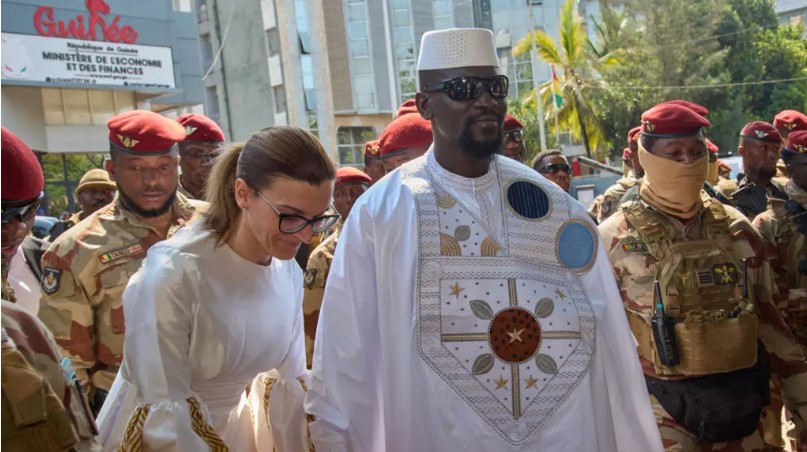
In a surprise move, the government of Guinea has ordered the dissolution of 40 political parties, including the country's three main opposition groups, in a decree issued late at night. This development comes fewer than two months after former junta leader Mamady Doumbouya was sworn in as president, sparking concerns about the state of democracy in the West African nation. The decree, which was made public in the early hours of the morning, has been met with widespread criticism from opposition leaders, human rights groups, and international observers.
According to official sources, the dissolution of the 40 political parties was carried out due to their failure to meet the required criteria set out in the country's electoral laws. The government claims that these parties had not fulfilled their obligations, including the submission of mandatory documents and the payment of required fees. However, opposition leaders have dismissed this explanation, arguing that the real reason behind the dissolution is to suppress dissenting voices and consolidate power in the hands of the ruling party.
Reaction from Opposition Leaders
The leader of one of the dissolved opposition parties, Abdourahmane Sanoh, described the move as a "coup against democracy" and a "clear attempt to undermine the opposition's ability to participate in the political process." In a statement, Sanoh said:
"This decision is a blatant attack on the fundamental rights of Guineans to participate in the democratic process. We will not accept this attempt to silence us and will continue to fight for the rights of our citizens."Another opposition leader, Fodé Oussou, echoed Sanoh's sentiments, stating that the dissolution of the parties is a "dark day for Guinean democracy" and vowed to challenge the decision in court.
International Community Reacts
The international community has also reacted with concern to the development. Amanda Smith, a spokesperson for the United Nations, said:
"We are closely monitoring the situation in Guinea and are concerned about the implications of this decision on the country's democratic process. We urge the government to respect the rights of all citizens to participate in the political process and to ensure that the dissolution of these parties is not used to suppress dissenting voices."The European Union has also issued a statement, calling on the Guinean government to "respect the principles of democracy and the rule of law" and to "ensure that the rights of all citizens are protected."
The dissolution of the 40 political parties has also sparked concerns about the potential for social unrest in the country. Guinea has a history of political instability, and the move is likely to exacerbate tensions between the government and opposition groups. Dr. Alpha Condé, a political analyst at the University of Guinea, said:
"This decision has the potential to unleash a wave of protests and demonstrations across the country. The government needs to be careful and ensure that the rights of all citizens are respected, otherwise, we risk plunging the country into chaos."
Implications for Guinea's Democracy
The dissolution of the 40 political parties has significant implications for Guinea's democracy. The move is likely to weaken the opposition and give the ruling party a disproportionate advantage in future elections. It also raises concerns about the independence of the electoral commission and the ability of the government to manipulate the electoral process. Professor Ibrahima Diallo, a political science expert, said:
"This decision is a major setback for Guinean democracy. It undermines the principles of pluralism and competition, which are essential for a healthy democratic system. The government needs to reconsider this decision and ensure that the electoral process is free and fair."
In conclusion, the dissolution of the 40 political parties in Guinea has sparked widespread concern and criticism from opposition leaders, human rights groups, and the international community. The move has significant implications for the country's democracy and raises concerns about the potential for social unrest. As the situation continues to unfold, it remains to be seen how the government will respond to the criticism and whether it will reconsider its decision. One thing is certain, however: the future of Guinean democracy hangs in the balance, and the international community will be watching closely to ensure that the rights of all citizens are respected and protected.