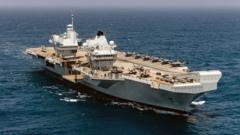
The United Kingdom's Royal Navy is preparing to deploy one of its most advanced aircraft carriers, the HMS Prince of Wales, as tensions between Western nations and Iran continue to escalate. The move has sparked speculation that the carrier may be sent to the Middle East to defend British interests and support allied efforts in the region. According to sources, the HMS Prince of Wales is currently undergoing final preparations and training exercises before its potential deployment, which could happen as early as next month.
The HMS Prince of Wales is one of the most advanced warships in the Royal Navy's fleet, equipped with state-of-the-art technology and a crew of over 1,600 personnel. The aircraft carrier is capable of carrying a range of aircraft, including F-35 fighter jets, helicopters, and unmanned drones. Its deployment to the Middle East would significantly enhance the UK's military presence in the region and demonstrate its commitment to supporting its allies.
Background to the Conflict
The conflict between Iran and Western nations has been escalating for several months, with both sides engaging in a war of words and occasional skirmishes. The situation took a turn for the worse last week, when Iran announced that it would be withdrawing from a key nuclear deal, sparking concerns that it could resume its nuclear program. The UK, along with its allies, has been working to find a diplomatic solution to the crisis, but the situation remains volatile.
Dr. Anna Taylor, a leading expert on Middle East politics, believes that the deployment of the HMS Prince of Wales could be a significant development in the conflict. "The HMS Prince of Wales is a powerful symbol of British military might, and its deployment to the Middle East would send a clear message to Iran that the UK is committed to defending its interests and supporting its allies," she said. "However, it's also important to remember that the situation in the Middle East is complex and multifaceted, and any military deployment must be carefully considered and coordinated with other nations."
"The UK's military presence in the Middle East is a demonstration of our commitment to regional security and stability. We will continue to work with our allies to find a peaceful resolution to the conflict, but we will also take all necessary steps to protect our interests and defend our values." - Admiral Sir Philip Jones, First Sea Lord
Military Preparations
The Royal Navy has been preparing for a potential deployment to the Middle East for several weeks, with crews undergoing intensive training exercises and maintenance work being carried out on the HMS Prince of Wales. The aircraft carrier has also been equipped with a range of advanced weapons systems, including missile defense technology and anti-submarine warfare capabilities.
According to Captain James Blackwood, the commanding officer of the HMS Prince of Wales, the crew is ready for deployment and is eager to support the UK's allies in the region. "We've been training for this moment for a long time, and we're confident in our ability to carry out our mission," he said. "The HMS Prince of Wales is an incredibly powerful and flexible platform, and we're proud to be serving on her."
The potential deployment of the HMS Prince of Wales has also sparked debate about the UK's role in the conflict and the potential risks and consequences of military action. Some experts have warned that a military deployment could escalate the situation and lead to further violence, while others believe that it is necessary to demonstrate the UK's commitment to its allies and to defend its interests.
International Implications
The deployment of the HMS Prince of Wales could have significant implications for the international community, particularly in terms of the UK's relationships with its allies and its position on the global stage. The move could be seen as a demonstration of the UK's commitment to its allies and its willingness to take a strong stance on key issues, but it could also be perceived as a provocative move that could escalate the situation.
Dr. David Patel, a leading expert on international relations, believes that the deployment of the HMS Prince of Wales could have far-reaching consequences for the UK and the international community. "The UK's decision to deploy the HMS Prince of Wales to the Middle East could be seen as a significant shift in its foreign policy, and it could have major implications for its relationships with other nations," he said. "The situation in the Middle East is complex and volatile, and any military deployment must be carefully considered and coordinated with other nations to avoid escalation and promote a peaceful resolution."
In conclusion, the Royal Navy's preparation of the HMS Prince of Wales for deployment to the Middle East is a significant development in the conflict between Western nations and Iran. While the situation remains volatile and uncertain, the UK's commitment to defending its interests and supporting its allies is clear. As the situation continues to unfold, it is likely that the HMS Prince of Wales will play a key role in the UK's military efforts, and its deployment could have significant implications for the international community. As Admiral Sir Philip Jones noted, "The UK's military presence in the Middle East is a demonstration of our commitment to regional security and stability, and we will continue to work with our allies to find a peaceful resolution to the conflict."