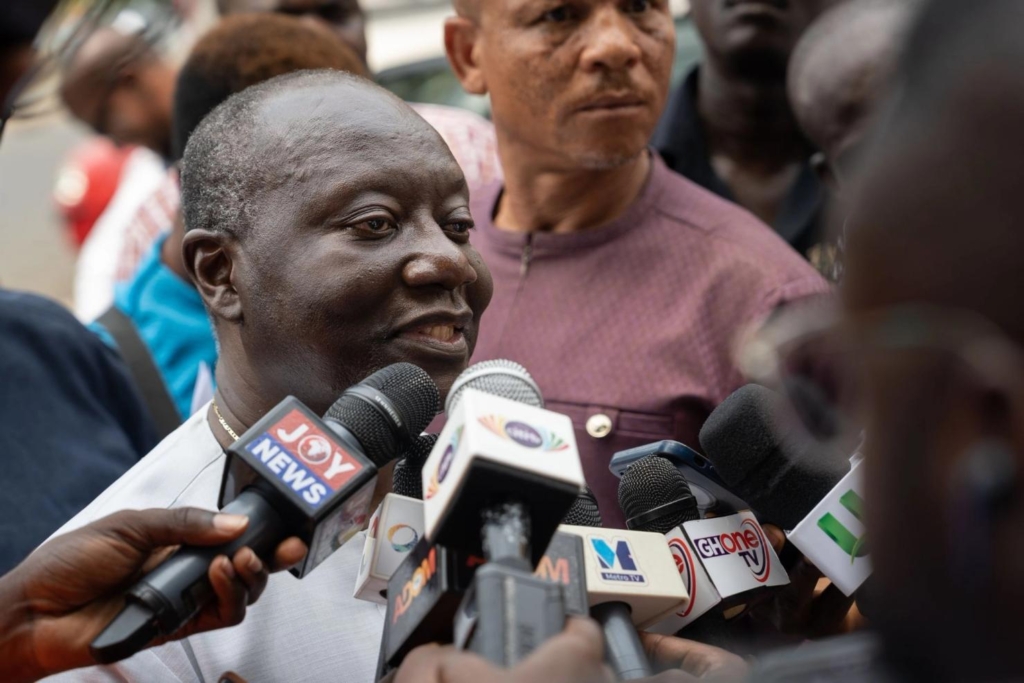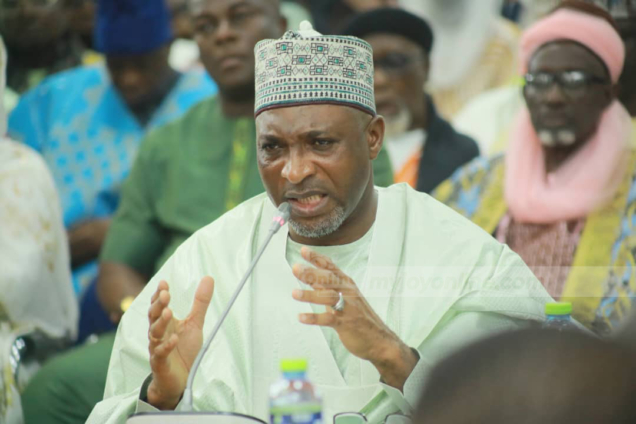
The Minister of the Interior, Muntaka Mohammed Mubarak, has moved to dispel claims that the aptitude tests used for recruiting personnel into Ghana's security services are managed by artificial intelligence (AI). This clarification comes amidst growing concerns over the potential use of AI in the recruitment process, with some arguing that it could lead to biased outcomes. According to Minister Muntaka, the tests are designed and administered by a team of experts, with the primary goal of assessing the skills and abilities of potential recruits.
The Minister's statement seeks to reassure the public that the recruitment process is transparent, fair, and free from any potential biases that could arise from the use of AI. Transparency and accountability are essential in the recruitment process, especially when it comes to the security services, where the integrity of the process can have a direct impact on national security. Minister Muntaka emphasized that the use of AI in the recruitment process is not a consideration at this time, and that the focus remains on ensuring that the best candidates are selected for the available positions.
Background and Context
The use of aptitude tests in the recruitment process for Ghana's security services is a standard practice, designed to evaluate the cognitive abilities, skills, and knowledge of potential recruits. The tests are typically administered in a controlled environment, with candidates given a set amount of time to complete a series of questions and tasks. The results are then used to determine which candidates are best suited for the available positions. While AI has been increasingly used in various aspects of human resources management, including recruitment, its use in the recruitment process for security services is a sensitive topic, with many arguing that it could compromise the integrity of the process.
According to
Dr. Ama Pokuaa Fenny, a lecturer at the University of Ghana's Department of Psychology, "the use of AI in the recruitment process can be beneficial in certain contexts, but it is not without its risks. AI algorithms can perpetuate existing biases if they are not designed and trained with care, which can lead to unfair outcomes." Dr. Fenny emphasized that the use of AI in recruitment requires careful consideration and planning, to ensure that the process is fair, transparent, and unbiased.
Expert Opinions
Security expert, Colonel (rtd) Kwesi Amoa-Awuah, welcomed Minister Muntaka's clarification, stating that "the recruitment process for security services must be transparent and free from any potential biases. The use of AI in the recruitment process could compromise the integrity of the process, and potentially lead to the selection of candidates who are not best suited for the available positions." Colonel Amoa-Awuah emphasized that the security services must prioritize the use of proven methods, that have been shown to be effective in selecting the best candidates for the available positions.
Meanwhile,
Mr. Francis Dzifa Attorse, a recruitment expert, noted that "while AI can be a useful tool in the recruitment process, it is not a substitute for human judgment and expertise. The recruitment process for security services requires a nuanced approach, that takes into account a range of factors, including the candidate's skills, experience, and character." Mr. Attorse emphasized that the use of AI in recruitment must be carefully planned and executed, to ensure that the process is fair, transparent, and effective.
Conclusion and Next Steps
In conclusion, the Minister of the Interior's clarification that aptitude tests for Ghana's security services are not managed by AI is a welcome development, that should help to reassure the public that the recruitment process is transparent and fair. As the security services continue to evolve and adapt to new challenges, it is essential that the recruitment process is designed to select the best candidates for the available positions. While AI may have a role to play in the recruitment process in the future, it is clear that human expertise and judgment will remain essential in ensuring that the process is fair, transparent, and effective. As Dr. Fenny noted, "the key to a successful recruitment process is to strike a balance between the use of technology and human expertise, to ensure that the best candidates are selected for the available positions."
Going forward, it will be important to monitor the recruitment process for Ghana's security services, to ensure that it remains transparent, fair, and free from any potential biases. The Minister of the Interior's clarification is a positive step in this direction, and it is essential that the security services continue to prioritize the use of proven methods, that have been shown to be effective in selecting the best candidates for the available positions. With the security services playing a critical role in maintaining national security, it is essential that the recruitment process is designed to select the best candidates for the available positions, and that the process is transparent, fair, and free from any potential biases.