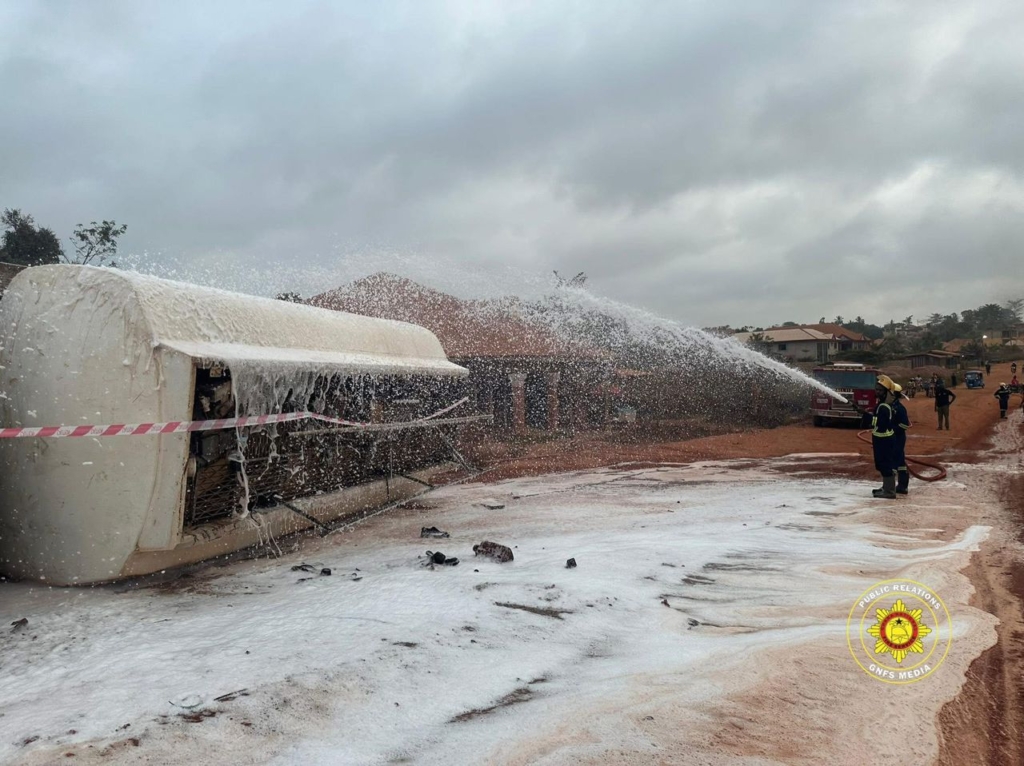
A potentially catastrophic fuel tanker explosion was narrowly averted on Saturday, March 13, at Wassa Kwabeng, thanks to the swift and decisive action of the Ghana National Fire Service (GNFS). The incident occurred when a fuel tanker was involved in a road accident, putting the lives of everyone in the surrounding area at risk. Fortunately, the GNFS personnel responded promptly and professionally, preventing a disaster that could have had far-reaching consequences.
According to eyewitnesses, the fuel tanker was traveling on the main road when it was involved in an accident, causing significant damage to the vehicle. The tanker was carrying a large quantity of fuel, which began to leak onto the road, creating a highly volatile situation. The GNFS was quickly alerted, and a team of firefighters was dispatched to the scene to contain the situation. Their swift response and expertise in handling such situations were instrumental in preventing a major explosion, which could have resulted in loss of life and widespread destruction.
Response and Rescue Efforts
The GNFS team, led by Divisional Officer Grade I, Mrs. Ama Frimpong, quickly assessed the situation and sprang into action. They used specialized equipment to prevent the fuel from igniting, while also evacuating people from the surrounding area.
"Our personnel demonstrated exceptional bravery and professionalism in responding to the emergency. They worked tirelessly to prevent the fuel from igniting, and their efforts paid off,"said Mrs. Frimpong, in an interview. The rescue efforts were coordinated with other emergency services, including the police and ambulance services, to ensure a comprehensive response to the incident.
The GNFS also worked closely with the Ghana Police Service to cordon off the area and prevent people from getting too close to the scene. This helped to prevent any potential injuries or fatalities, and also allowed the firefighters to work safely and effectively. The police also assisted in directing traffic and ensuring that the road was clear for emergency vehicles to access the scene.
Investigation and Aftermath
An investigation into the cause of the accident is currently underway, with the Ghana National Fire Service and the Ghana Police Service working together to determine the circumstances surrounding the incident. The GNFS has also launched an internal review of its response to the emergency, to identify areas for improvement and to commend the personnel involved for their bravery and professionalism.
"We are grateful that no one was injured, and we are proud of the role our personnel played in preventing a major disaster. We will continue to work to improve our response to emergencies and to keep our communities safe,"said Chief Fire Officer, Edwin Ekow Blankson.
The incident has also highlighted the importance of emergency preparedness and response in Ghana. The GNFS has been working to improve its capabilities and to enhance its response to emergencies, and this incident demonstrates the effectiveness of these efforts. The service has also been working to raise awareness about fire safety and prevention, and to educate the public about what to do in case of an emergency.
Conclusion and Future Directions
In conclusion, the GNFS has once again demonstrated its commitment to protecting the people of Ghana from fires and other emergencies. The service's prompt and professional response to the fuel tanker accident at Wassa Kwabeng has prevented a potentially catastrophic disaster, and has saved countless lives. As the GNFS continues to work to improve its capabilities and to enhance its response to emergencies, it is clear that the service will remain a vital part of Ghana's emergency response infrastructure. The incident also serves as a reminder of the importance of emergency preparedness and response, and the need for continued investment in these areas. As the country continues to develop and grow, it is essential that emergency services like the GNFS are equipped to respond to the changing needs of the community, and to keep the public safe from harm.
Looking to the future, the GNFS will continue to work to improve its response to emergencies, and to enhance its capabilities. The service will also continue to work with other emergency services, including the police and ambulance services, to ensure a comprehensive response to emergencies. By working together, these services can help to keep the public safe, and to prevent disasters like the one that was narrowly averted at Wassa Kwabeng. With the GNFS leading the way, Ghana can look forward to a safer and more secure future, where emergencies are responded to quickly and effectively, and where the public can feel confident in the ability of emergency services to protect them.