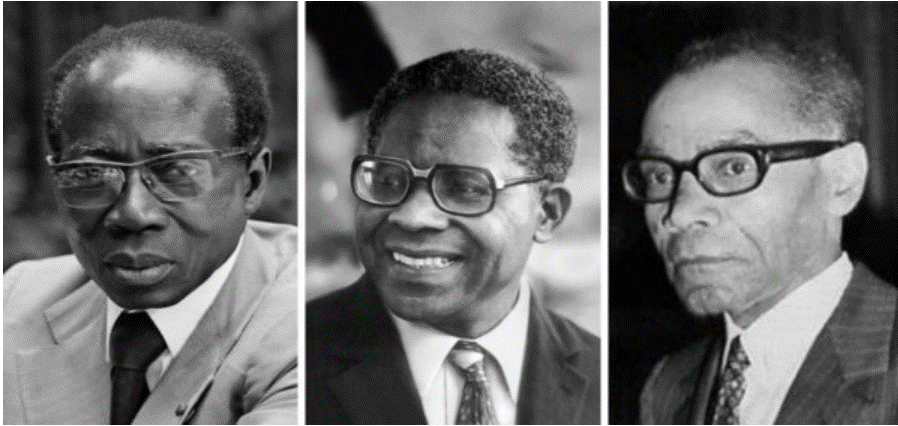
The city of Paris, in particular, served as a hub for Francophone Pan-Africanism, attracting intellectuals and activists from across the French-speaking world. The city's vibrant cultural scene and relatively liberal atmosphere made it an ideal location for the exchange of ideas and the organization of political movements. As Professor Kofi Agorsah, a Ghanaian scholar based in Paris, explains, "Paris was a magnet for African intellectuals who were seeking to challenge colonialism and promote African unity. The city's cafes, journals, and literary salons provided a platform for the discussion of Pan-Africanist ideas and the formation of alliances between activists from different countries." One notable example of this is the Negritude movement, a literary and philosophical movement that emerged in the 1930s and emphasized the value of black culture and identity. The movement's founders, including Léopold Sédar Senghor and Aimé Césaire, were instrumental in shaping the intellectual underpinnings of Francophone Pan-Africanism.
The Caribbean Connection
Martinique, a French overseas department in the Caribbean, also played a significant role in the development of Francophone Pan-Africanism. The island's unique cultural heritage, which reflects its history of slavery, colonization, and creolization, influenced the evolution of Pan-Africanist thought in the region. According to Dr. Édouard Glissant, a Martinican scholar, "Martinique's experience as a colonized territory and its cultural exchange with other Caribbean islands and Africa helped to shape a distinct brand of Pan-Africanism that emphasized the importance of creolization and hybridity." This perspective is reflected in the work of notable Martinican writers and intellectuals, such as Aimé Césaire and Frantz Fanon, who sought to challenge dominant narratives of colonialism and promote a more nuanced understanding of African diasporic identity.
Senegal and the Politics of Independence
Senegal, a West African country that was a French colony until 1960, was another key location for the development of Francophone Pan-Africanism. The country's struggle for independence, led by figures such as Léopold Sédar Senghor, was closely tied to the Pan-African movement. As Senghor himself noted, "The fight for Senegalese independence was not just a national struggle, but also a Pan-African one, as it sought to challenge the legacy of colonialism and promote African unity." The Senegalese experience, with its unique blend of French and African cultural influences, helped to shape a distinct brand of Pan-Africanism that emphasized the importance of cultural exchange and cooperation between African countries. According to
Dr. Babacar Fall, a Senegalese historian, "Senegal's history of colonialism and independence has given the country a unique perspective on Pan-Africanism, one that emphasizes the need for African countries to work together to promote economic development, cultural exchange, and political solidarity."
Today, the legacy of Francophone Pan-Africanism continues to shape the movement's evolution, with many African countries seeking to promote greater cooperation and unity across linguistic and cultural divides. As Dr. N'Dri Assié-Lumumba, a Ivorian scholar, notes, "The Francophone perspective on Pan-Africanism is not a relic of the past, but rather a living, breathing tradition that continues to inspire new generations of African intellectuals and activists." The recognition of this legacy, and the contributions of Paris, Martinique, and Senegal to the Pan-African movement, serves as a powerful reminder of the diversity and complexity of African diasporic experiences, and the need for a more nuanced understanding of the movement's history and evolution.
A New Era of Cooperation
In recent years, there has been a growing recognition of the importance of Francophone Pan-Africanism, with many African countries seeking to promote greater cooperation and exchange between Francophone and Anglophone nations. This trend is reflected in the growth of regional organizations, such as the Economic Community of West African States (ECOWAS) and the African Union, which seek to promote economic development, cultural exchange, and political solidarity across the continent. According to
Dr. Aminata Traoré, "The future of Pan-Africanism lies in its ability to transcend linguistic and cultural divides, and to promote a more nuanced understanding of African diasporic experiences." As the movement continues to evolve, it is likely that the contributions of Francophone countries, and the unique perspectives they bring, will play an increasingly important role in shaping its future.
In conclusion, the story of Francophone Pan-Africanism is a complex and multifaceted one, reflecting the diverse experiences and perspectives of African diasporic communities across the French-speaking world. By recognizing the contributions of Paris, Martinique, and Senegal to the movement, we can gain a deeper understanding of the history and evolution of Pan-Africanism, and the ways in which it continues to shape the lives of African people around the world. As we look to the future, it is clear that the legacy of Francophone Pan-Africanism will remain a powerful force, inspiring new generations of African intellectuals and activists to promote greater cooperation, unity, and solidarity across the continent.