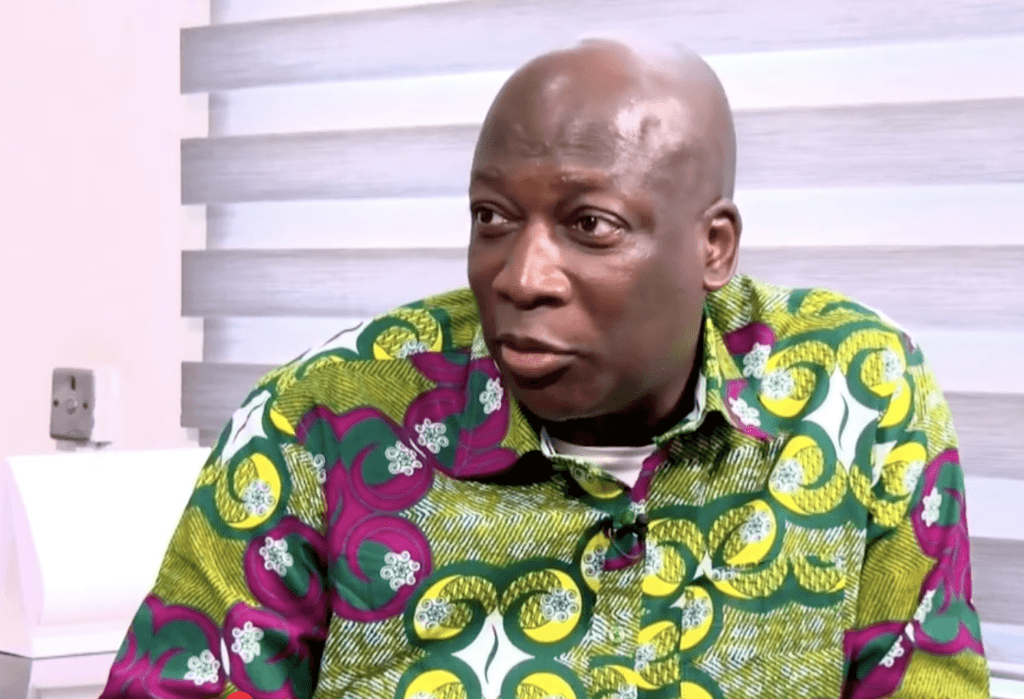
Accra, Ghana – Prominent business executive and former Unilever Executive Vice President, Yaw Nsarkoh, has unequivocally challenged the widespread belief that a 'third force' political movement is the panacea for Ghana's persistent governance and development challenges. Nsarkoh, known for his incisive socio-economic commentary, stated that the fundamental issues plaguing the nation run deeper than the absence of an alternative to the dominant New Patriotic Party (NPP) and National Democratic Congress (NDC). His remarks have ignited a fresh debate on the efficacy of structural political changes versus a focus on systemic reforms.
Nsarkoh's position casts significant doubt on the growing chorus of voices advocating for a new political entity to break the duopoly that has characterized Ghanaian politics since the Fourth Republic. He argues that merely introducing another player into the existing political arena does not automatically translate to improved governance, accountability, or socio-economic progress. Instead, he suggests that the problems lie within the very fabric of the political culture, the quality of leadership, and the engagement of the citizenry.
"The idea that a 'third force' is the definitive solution often oversimplifies the complex matrix of challenges we face," Nsarkoh reportedly observed during a recent public engagement. "Are we saying that the problems are solely about the number of parties, or about the character, competence, and commitment of those who lead them, irrespective of their party affiliation? We must critically examine the institutional weaknesses, the pervasive lack of accountability, and the transactional nature of our politics that often transcends party lines."
The Lure of the 'Third Force'
Calls for a third political force have gained traction in recent years, fueled by a palpable sense of disillusionment among a segment of the Ghanaian populace. Many citizens express frustration with the perceived similarities in policy approaches, the cyclical allegations of corruption, and the perceived failure of both the NPP and NDC to fundamentally transform the lives of ordinary Ghanaians. Advocates for a new party envision an alternative that offers fresh ideas, prioritizes national development over partisan interests, and fosters genuine inclusive growth.
However, Nsarkoh's intervention serves as a significant counterpoint to this popular sentiment. He cautions against what he perceives as a superficial fix, stressing that a new political entity could easily fall prey to the same pitfalls if the underlying systemic issues are not addressed.
Expert Perspectives on Nsarkoh's Stance
Political analysts and civil society leaders have weighed in on Nsarkoh's thought-provoking statements, offering varied perspectives on the intricate dynamics of Ghana's political landscape.
Dr. Akosua Mensah, a Political Science lecturer at the University of Ghana, echoed some of Nsarkoh's concerns, emphasizing the need for deeper introspection. "Mr. Nsarkoh's perspective is a crucial intervention in our national discourse," she stated in an interview. "Many assume a new party automatically translates to better governance, but without fundamental changes in our political discourse, electoral system, and active citizen engagement, we might just be adding another cog to the same problematic machine. The focus should perhaps shift from just changing players to changing the rules of the game and ensuring enforcement."
"The idea that a 'third force' is the definitive solution often oversimplifies the complex matrix of challenges we face. We must critically examine the institutional weaknesses, the pervasive lack of accountability, and the transactional nature of our politics that often transcends party lines." — Yaw Nsarkoh
Conversely, some still see potential value in the emergence of a new political force, even while acknowledging the systemic challenges. Mr. Kofi Boateng, Executive Director of the Centre for Democratic Governance, offered a nuanced view. "While Mr. Nsarkoh raises valid points about systemic issues like corruption and weak institutions, the desire for a third force also stems from a genuine hunger for choice and accountability that the established parties often fail to provide," Boateng explained. "It's a symptom, perhaps, but also a potential avenue for change if channeled correctly and if its proponents are truly committed to a different brand of politics, not just a different label."
Beyond the 'Third Force': Nsarkoh's Implied Solutions
While Nsarkoh did not explicitly outline a prescriptive alternative, his critique implicitly points towards solutions that transcend party politics. These include strengthening democratic institutions, fostering a culture of accountability, promoting citizen vigilance and engagement beyond election cycles, and demanding policy-driven debates over personality clashes. His arguments suggest that the focus should be on *how* politics is conducted and *what* outcomes it delivers, rather than simply *who* is conducting it.
Nsarkoh's remarks force a critical re-evaluation of the current political narrative in Ghana. They challenge citizens and political actors alike to look beyond superficial solutions and delve into the more profound structural and cultural impediments to national progress. His intervention underscores the complexity of Ghana's political fix, suggesting that sustainable change will require more than just a new party; it will demand a fundamental shift in mindset and approach from all stakeholders. The debate sparked by his comments is likely to continue shaping discussions around Ghana's political future, pushing for deeper introspection into the nation's democratic journey.