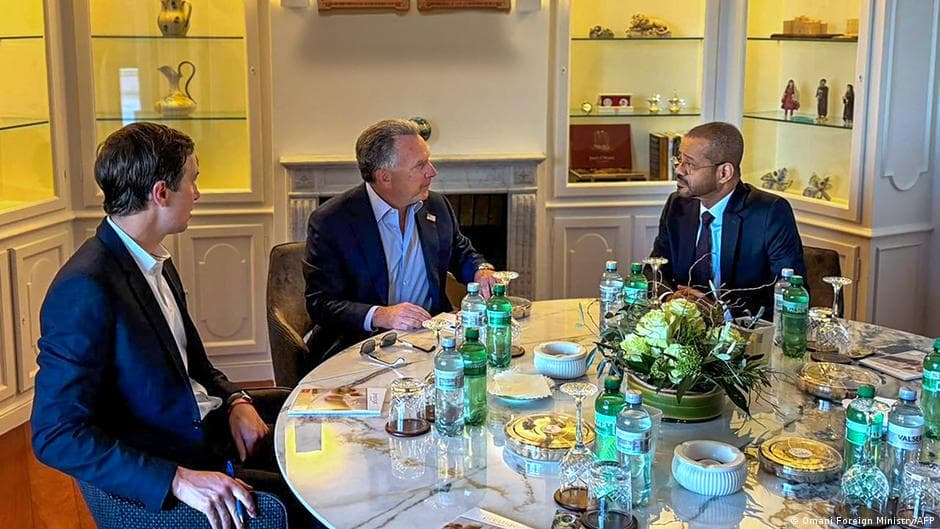
The Geneva talks are being closely watched by the international community, as a successful outcome could have far-reaching implications for regional and global security. The negotiations are taking place against a backdrop of heightened military tensions in the region, with both the US and Iran engaging in a war of words and a show of military strength. Despite these tensions, experts believe that the current talks offer a glimmer of hope for a peaceful resolution to the dispute. "The fact that both sides are willing to consider new ideas and approaches is a positive development," said Dr. Sanam Vakil, a Middle East expert at Chatham House. "It suggests that they are looking for a way out of the current impasse and are willing to think outside the box to achieve a breakthrough."
Mediation Efforts
Oman's role as mediator in the talks is seen as crucial, given its good relations with both the US and Iran. The Gulf state has a long history of facilitating dialogue between the two nations, and its Foreign Minister, Badr Al-Busaidi, has been instrumental in bringing the parties to the negotiating table. "We are committed to helping the US and Iran find a peaceful solution to their differences,"
Al-Busaidi said in a statement. "We believe that dialogue and diplomacy are the best way to resolve conflicts, and we are willing to do everything in our power to support this process."
Experts say that Oman's mediation efforts have been facilitated by its unique position in the region. As a Gulf state with close ties to both the US and Iran, Oman is well-placed to understand the concerns and interests of both parties. "Oman has a long history of playing a mediating role in regional conflicts," said Dr. Kristian Coates Ulrichsen, a Gulf expert at Rice University. "Its good relations with both the US and Iran make it an ideal partner to facilitate dialogue between the two nations."
Negotiating Positions
The US and Iran have been at odds over the latter's nuclear program for many years, with the US accusing Iran of seeking to develop nuclear weapons and Iran maintaining that its program is for peaceful purposes only. The current talks are focused on finding a way to address these concerns and to reach a mutually acceptable agreement. The US is seeking assurances that Iran's nuclear program will be subject to rigorous inspections and monitoring, while Iran is looking for relief from economic sanctions that have crippled its economy. "The US is looking for a verifiable and sustainable agreement that will prevent Iran from developing nuclear weapons," said Dr. Robert Einhorn, a former US State Department official. "Iran, on the other hand, is seeking to lift the economic sanctions that have had a devastating impact on its economy."
Despite these differing positions, experts believe that the current talks offer a real opportunity for progress. The fact that both sides are willing to consider new ideas and approaches suggests that they are looking for a way out of the current impasse. "The key to success will be finding a way to address the concerns of both parties," said Dr. Vakil. "If the US and Iran can find a way to reconcile their differences, it could have a major impact on regional and global security."
Regional Implications
A successful outcome to the talks could have far-reaching implications for the region. A resolution to the nuclear dispute could help to reduce tensions between the US and Iran, and could also have a positive impact on the broader region. "A deal between the US and Iran could help to create a more stable and secure environment in the Middle East," said Dr. Ulrichsen. "It could also help to promote economic cooperation and development in the region, which would have a positive impact on the lives of millions of people."
However, the talks are not without their challenges. The current tensions between the US and Iran are just one aspect of a broader set of conflicts and rivalries in the region. The Middle East is a complex and volatile region, with many different players and interests at work. "The US and Iran are not the only players in the region," said Dr. Einhorn. "There are many other countries and non-state actors that have a stake in the outcome of these talks, and that will be watching the negotiations closely."
In conclusion, the current talks between the US and Iran offer a real opportunity for progress and a peaceful resolution to the longstanding dispute over Iran's nuclear program. While the negotiations are complex and challenging, the fact that both sides are willing to consider new ideas and approaches suggests that they are looking for a way out of the current impasse. As the talks continue, the international community will be watching closely to see if the US and Iran can find a way to reconcile their differences and reach a mutually acceptable agreement. The outcome of these talks will have far-reaching implications for regional and global security, and could help to create a more stable and secure environment in the Middle East.