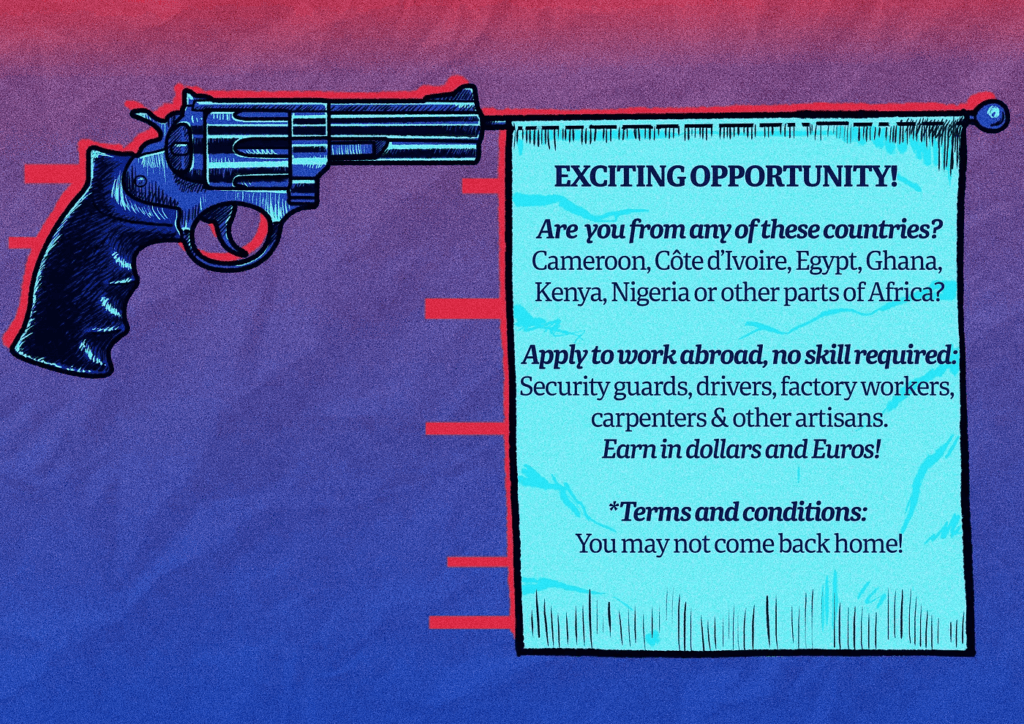
The recruitment process often begins with social media ads and online campaigns targeting young Africans, promising them lucrative jobs, scholarships, or other opportunities in Russia or Ukraine. However, upon arrival, many of these individuals are forced to join the military or engage in other forms of labor. "We've seen cases where Africans are promised a chance to study in Russia, only to find themselves on the front lines in Ukraine," said Dr. Fatima Mohammed, a researcher at the African Studies Center. "It's a blatant exploitation of their desperation and lack of opportunities at home."
Deception and Exploitation
Experts say that Russia's recruitment efforts are often facilitated by local intermediaries, who may be motivated by financial gain or other forms of compensation. These intermediaries may use their connections and influence to convince African nationals to travel to Russia or Ukraine, where they are then handed over to military or paramilitary groups. Once in the hands of these groups, the Africans are often subjected to coercion, intimidation, and other forms of exploitation. "We've received reports of Africans being forced to fight on the front lines, with little training or equipment," said Ambassador John Smith, a senior diplomat at the African Union. "It's a tragic situation, and one that we're working to address through diplomatic channels."
"The use of African nationals in the Russian-Ukrainian war is a clear violation of international law and human rights," said Dr. Mohammed. "It's essential that we raise awareness about these practices and work to prevent further exploitation."
Despite the risks and challenges involved, many African nationals continue to be drawn to the promise of employment or education in Russia or Ukraine. According to some estimates, thousands of Africans have already been recruited into the conflict, with many more at risk of being exploited. To address this issue, experts say that it's essential to provide alternative opportunities and support to African nationals, while also working to disrupt the recruitment networks and hold those responsible accountable.
International Response
The international community has begun to take notice of the issue, with several countries and organizations speaking out against the recruitment and exploitation of African nationals. "We're deeply concerned about the situation and are working to provide support to those affected," said a spokesperson for the United Nations. "We urge all parties involved to respect the rights and dignity of African nationals and to cease their recruitment and exploitation." Meanwhile, the African Union has launched an initiative to raise awareness about the risks of recruitment and to provide alternative opportunities for young Africans.
As the conflict in Ukraine continues to escalate, the recruitment and exploitation of African nationals is likely to remain a major concern. Efforts to address this issue will require a coordinated and sustained response from governments, international organizations, and civil society. According to Dr. Mohammed, "it's essential that we take a comprehensive approach to addressing this issue, one that includes providing alternative opportunities, supporting those affected, and holding those responsible accountable." By working together, it may be possible to prevent further exploitation and to promote a more stable and secure future for African nationals.
In conclusion, the recruitment and exploitation of African nationals in the Russian-Ukrainian war is a complex and pressing issue that requires immediate attention and action. As the international community continues to grapple with the challenges of this conflict, it's essential that we prioritize the protection and well-being of African nationals and work to prevent further exploitation. By doing so, we can help to promote a more stable and secure future for all parties involved and ensure that the rights and dignity of African nationals are respected and protected. The future of regional stability and security depends on our ability to address this issue and prevent further manipulation and exploitation of vulnerable individuals.