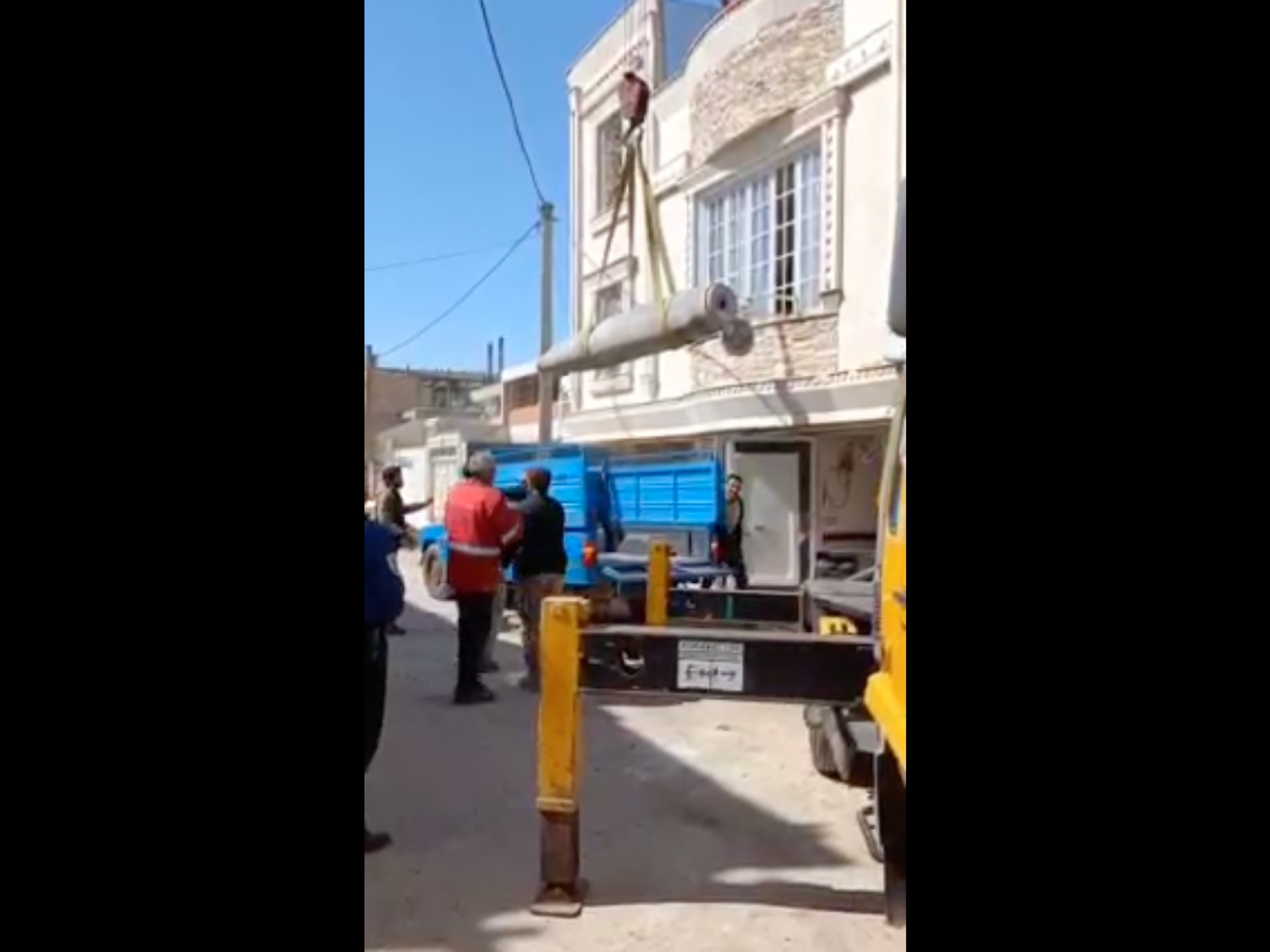
In a delicate and high-stakes operation, rescue workers in Kuhdasht City, western Iran, have successfully extracted an unexploded missile from a residential house, following a series of airstrikes conducted by the US and Israel. The extraction, which was carried out with utmost care and precision, has brought a sense of relief to the local community, which had been living under the shadow of the potentially catastrophic device.
The airstrikes, which were reportedly aimed at targeting military installations and infrastructure in the region, had left the unexploded missile lodged in the house, posing a significant threat to the lives of the occupants and neighboring residents. According to local officials, the missile was discovered on the morning after the airstrikes, and a team of expert rescue workers was immediately dispatched to the scene to assess the situation and devise a plan for its safe removal. The operation, which took several hours to complete, was carried out under the watchful eyes of local authorities and military personnel, who had cordoned off the area to prevent any potential accidents or security breaches.
Delicate Operation
The extraction process was described as a delicate and complex operation, requiring the expertise of specialized personnel and equipment. Colonel Ali Mohammad, a local military official, praised the rescue team for their professionalism and bravery, saying: "The team of rescue workers who carried out this operation are true heroes. They worked tirelessly and with great precision to ensure that the missile was removed safely, without causing any harm to the surrounding area or the people nearby." The colonel added that the operation was a testament to the preparedness and capabilities of Iran's emergency response services, which had been put to the test in recent years due to various conflicts and security challenges in the region.
"The extraction of the unexploded missile is a significant achievement, and we are grateful that it was carried out without any incidents or accidents. However, this incident highlights the need for continued vigilance and preparedness in the face of potential security threats,"said Dr. Hossein, a local expert on conflict and security issues. The expert emphasized that the presence of unexploded ordnance in residential areas posed a significant risk to civilians, and that it was essential for authorities to take proactive measures to prevent such incidents in the future.
Regional Tensions
The airstrikes that led to the discovery of the unexploded missile have heightened tensions in the region, with both the US and Israel maintaining that the strikes were necessary to counter perceived security threats. Iranian officials, on the other hand, have condemned the airstrikes as a reckless and provocative act, which has put the lives of innocent civilians at risk. The incident has sparked a war of words between the two sides, with each accusing the other of aggression and disregard for international law.
As the situation continues to unfold, local residents are breathing a sigh of relief that the unexploded missile has been removed, and that the immediate danger has passed. However, the incident has also raised concerns about the longer-term consequences of the conflict, and the potential for further escalation in the region. According to Amnesty International, the presence of unexploded ordnance in civilian areas is a serious humanitarian concern, which requires urgent attention and action from all parties involved. The organization has called on all sides to respect international humanitarian law and to take steps to prevent the use of explosive weapons in populated areas.
Future Implications
The successful extraction of the unexploded missile from the house in Kuhdasht City is a significant development, but it also highlights the need for sustained efforts to address the root causes of the conflict and to prevent similar incidents in the future. As noted by Dr. Mohammad, a local expert on international relations, "The incident is a reminder that the conflict in the region is far from over, and that all parties must work together to find a lasting solution that prioritizes the safety and security of civilians." The expert emphasized that this would require a commitment to diplomacy and dialogue, as well as a willingness to address the underlying issues that have contributed to the conflict.
In conclusion, the extraction of the unexploded missile from the house in western Iran is a welcome development, but it also serves as a reminder of the ongoing challenges and risks associated with the conflict in the region. As the situation continues to evolve, it is essential that all parties prioritize the safety and security of civilians, and work towards a lasting resolution that addresses the root causes of the conflict. The international community will be watching the situation closely, and will be looking for signs of progress and cooperation from all sides involved. Only through sustained efforts and a commitment to peace and diplomacy can the region hope to achieve a lasting and stable peace.