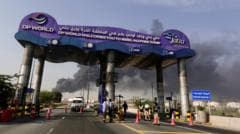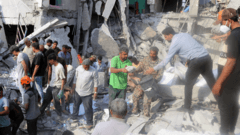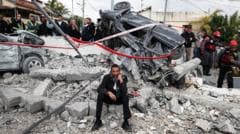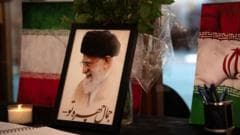

The situation in the Middle East has been precarious for some time, with Iran's aggressive military posturing and rhetoric raising concerns among international leaders. The recent strikes, which have targeted various locations in the region, have brought the conflict closer to home for UK personnel and civilians. Healey's warning serves as a stark reminder of the dangers faced by those serving in the region, and the need for increased vigilance and cooperation among allies to mitigate these risks.
Assessing the Threat
Experts believe that the Iranian strikes are a deliberate attempt to destabilize the region and exert pressure on Western nations to reconsider their involvement in the Middle East. Dr. Maria Rodriguez, a leading expert on Middle Eastern affairs, notes that "Iran's actions are a clear indication of their desire to challenge the status quo and assert their dominance in the region." She adds,
"The fact that UK personnel were so close to a strike is a worrying sign that Iran is willing to push the boundaries and test the resolve of Western nations."This assessment is shared by other experts, who warn that the situation could escalate further if not managed carefully.
The British military base in Bahrain, which hosts a significant number of UK personnel, is a key location for regional operations. The base serves as a hub for maritime security, counter-terrorism, and training exercises, and its proximity to Iranian territory makes it a potential target. Healey's statement highlights the gravity of the situation, and the need for the UK government to take concrete steps to protect its personnel and interests in the region. As former Defence Secretary, Michael Fallon, remarks,
"The safety of our troops is paramount, and we must do everything in our power to ensure their security and well-being in the face of these growing threats."
International Cooperation and Response
In response to the Iranian strikes, the UK government has been working closely with its international partners to coordinate a unified response. This includes diplomatic efforts to de-escalate tensions, as well as military measures to enhance the security of personnel and assets in the region. Healey has been in close contact with his counterparts in the US, France, and other nations to discuss the situation and potential courses of action. According to a spokesperson for the Ministry of Defence,
"We are working tirelessly with our allies to address the threats posed by Iran and to ensure the safety of our personnel and civilians in the region."This cooperation is seen as essential in mitigating the risks and preventing further escalation.
As the situation in the Middle East continues to unfold, the UK government is faced with the challenging task of balancing its commitment to regional security with the need to protect its personnel and interests. Healey's warning serves as a reminder of the complexities and dangers involved, and the need for a thoughtful and measured approach. The international community will be watching closely as events develop, and the UK's response will be shaped by its commitment to protecting its people and upholding regional stability.
Conclusion and Future Outlook
In conclusion, the recent Iranian strikes have highlighted the risks faced by UK troops and civilians in the Middle East, and the need for increased vigilance and cooperation among allies. As the situation continues to evolve, the UK government will be working closely with its international partners to address the threats posed by Iran and to ensure the safety of its personnel and interests in the region. The coming weeks and months will be crucial in determining the trajectory of the conflict, and the international community will be watching with bated breath as events unfold. As Healey notes,
"We will continue to work tirelessly to protect our people and our interests, and to promote stability and security in the region."The future of the Middle East hangs in the balance, and the UK's response will be a critical factor in shaping the outcome.