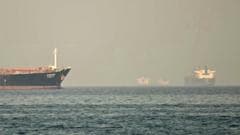
Two commercial vessels collided in the vital shipping lanes near the Strait of Hormuz in the early hours of Thursday, causing an immediate halt to international maritime traffic at the strait's entrance and triggering a sharp rise in global oil prices. The incident has intensified long-standing concerns over the stability of energy supply routes and the vulnerability of global trade to disruptions in this strategically critical region.
The collision, involving an oil tanker and a bulk carrier, occurred approximately 10 nautical miles off the coast, according to preliminary reports from maritime authorities. While immediate details regarding the extent of damage and potential casualties remain scarce, the sheer importance of the Strait of Hormuz to global energy flows has sent ripples through financial markets and international shipping communities. Shipping operations have reportedly ground to a halt as authorities assess the situation, initiate investigations, and work to clear any potential hazards to navigation.
Immediate Market Reaction and Oil Price Surge
The most immediate and pronounced impact of the incident has been on the global oil market. Crude oil futures saw a significant jump shortly after news of the collision broke, with Brent crude rising by over 3% to near $88 a barrel and West Texas Intermediate (WTI) following suit. Analysts attribute this surge to the Strait of Hormuz's unparalleled role as the world's most important oil transit choke point, through which roughly one-fifth of global oil consumption and a substantial portion of liquefied natural gas (LNG) passes daily.
"This incident, regardless of its scale, immediately injects a risk premium into oil prices," stated Dr. Lena Khan, a senior energy market analyst at Global Insights Group. "The Strait of Hormuz is non-negotiable for global energy security. Any perceived threat to its navigability, even temporary, triggers an instinctive flight to safety in the markets. We are seeing speculative buying on fears of prolonged disruption and potential supply bottlenecks."
The halt in shipping traffic is particularly concerning for oil majors and commodity traders, who rely on the strait for the timely delivery of crude and refined products from Middle Eastern producers to markets in Asia, Europe, and the Americas. Delays can lead to costly rerouting, increased insurance premiums, and ultimately, higher costs for consumers.
Details of the Collision and Response Efforts
While details are still emerging, initial reports suggest the collision involved the Liberian-flagged crude oil tanker, the 'Sea Serpent,' and the Marshall Islands-flagged bulk carrier, the 'Ocean Pioneer.' Both vessels are understood to have sustained damage, though the extent is currently being assessed. Maritime rescue coordination centres in the region have reportedly deployed assets to the scene to provide assistance and evaluate potential environmental hazards, particularly from the oil tanker.
A spokesperson for the regional maritime authority, who requested anonymity pending a full investigation, confirmed that "all incoming and outgoing commercial vessel traffic through the immediate vicinity of the strait's entrance has been advised to hold position or divert to designated waiting areas until the channel is deemed safe." The spokesperson added that "investigators are on site to determine the cause of the collision, which could range from human error to mechanical failure or adverse weather conditions."
Supply Chain Vulnerability and Broader Economic Impact
Beyond oil, the Strait of Hormuz is also a crucial conduit for a vast array of goods, connecting major manufacturing hubs with global consumer markets. A prolonged standstill could have far-reaching implications for international supply chains, already strained by recent global events.
"The ripple effect of a shutdown in the Strait of Hormuz extends far beyond just oil," explained Marcus Thorne, CEO of Maritime Logistics Solutions. "Container ships carrying everything from electronics to apparel, and bulk carriers with agricultural products, traverse this route daily. Even a few days of delay can create significant backlogs at destination ports, leading to increased freight costs and potential shortages on store shelves. Businesses are already grappling with inflation, and this incident adds another layer of complexity."
Governments worldwide are closely monitoring the situation. A statement from the International Maritime Organization (IMO) urged all parties to prioritize safety and environmental protection, offering support to regional authorities in managing the incident and restoring safe navigation.
Geopolitical Significance and Ongoing Concerns
The Strait of Hormuz, a narrow waterway connecting the Persian Gulf with the Arabian Sea, has long been a focal point of geopolitical tension. Its strategic importance has led to numerous security concerns and incidents over the decades, making any disruption particularly sensitive.
Analysts suggest that while the current incident appears to be an accident, its location in such a sensitive area underscores the inherent risks of maritime operations in crowded and politically charged waters. The potential for miscalculation or escalation, even from an accidental event, remains a constant concern for international diplomacy.
As salvage operations get underway and investigations proceed, the world watches anxiously. The immediate priority is to ensure the safety of crews, prevent environmental catastrophe, and restore the free flow of commerce through one of the world's most economically vital waterways. However, the incident serves as a stark reminder of the fragile balance underpinning global energy markets and supply chains, with the repercussions likely to be felt in consumer prices and economic forecasts for weeks to come.