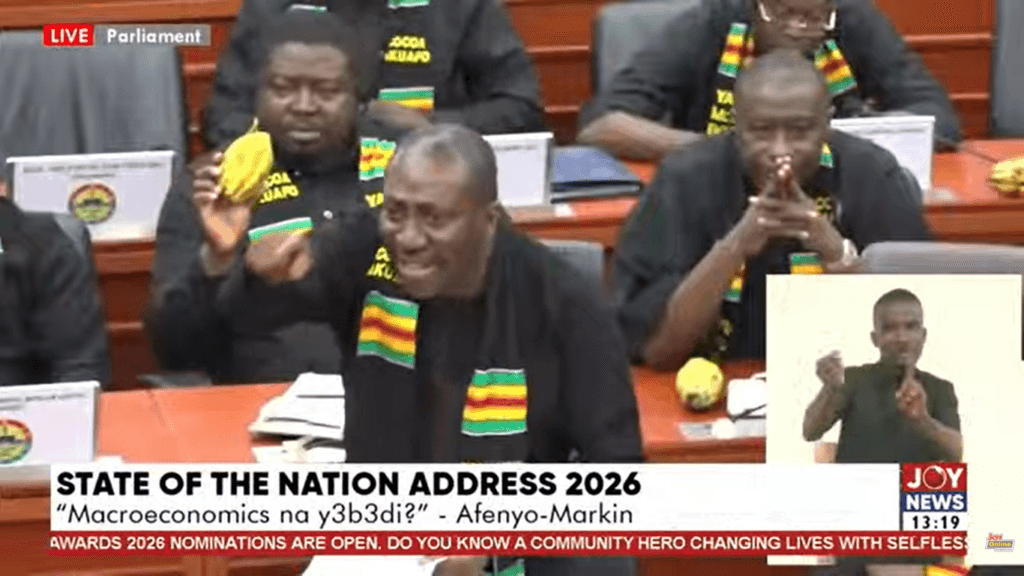
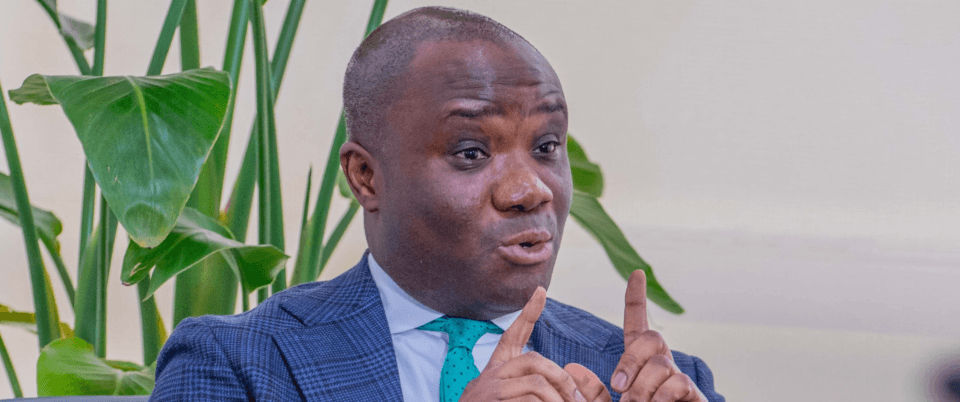
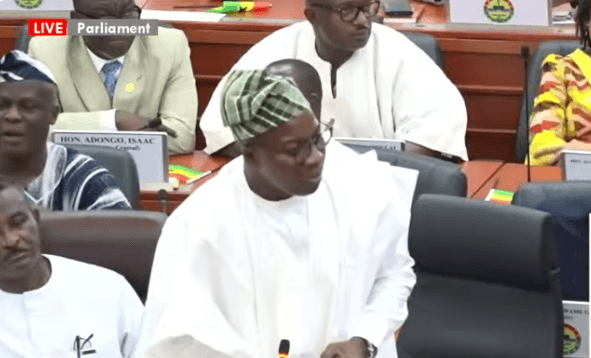
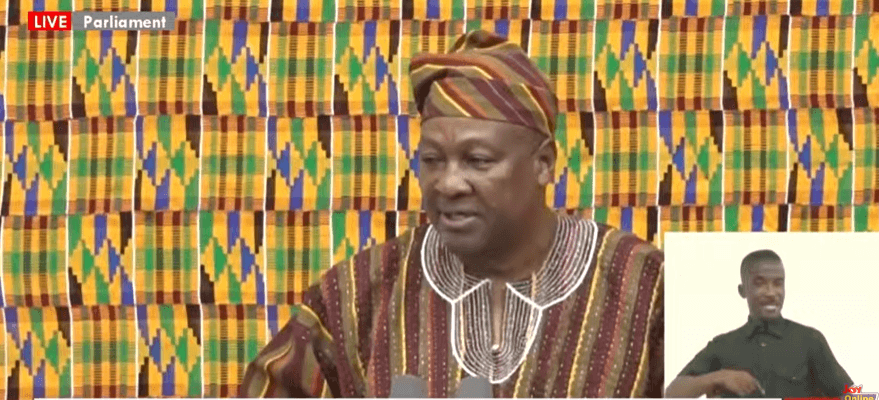
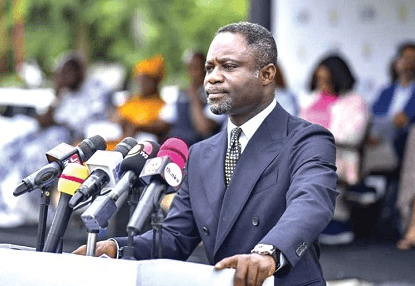
Minority Leader Alexander Afenyo-Markin launched a scathing critique of the government’s performance immediately following President John Dramani Mahama’s 2026 State of the Nation Address (SONA), lambasting the administration over its handling of persistent challenges in electricity supply, the struggling cocoa sector, and the unrelenting menace of illegal mining, commonly known as galamsey. Speaking to journalists outside the parliamentary chamber, Afenyo-Markin asserted that the President's address failed to accurately reflect the dire realities faced by many Ghanaians, painting an overly optimistic picture that starkly contrasted with the widespread disillusionment.
Electricity Crisis: A Return to 'Dumsor'
Afenyo-Markin began his critique by challenging the government's narrative on energy security, arguing that the nation was once again grappling with unreliable power supply, reminiscent of past periods of intense load shedding. He highlighted the debilitating impact of frequent power outages on businesses, industries, and ordinary households, stating that the situation had severely hampered economic productivity and eroded investor confidence.
"The President spoke of stability and expansion in the energy sector, but what Ghanaians are experiencing daily is a return to darkness,"
Afenyo-Markin declared, his voice firm. "Small and medium-sized enterprises are collapsing, hospitals are struggling to operate efficiently, and the cost of doing business has skyrocketed due to reliance on generators. This is not the progress the people were promised."
The Minority Leader further accused the government of mismanaging critical energy infrastructure and failing to implement sustainable long-term solutions, despite significant investments and assurances. "Where are the solutions that were promised years ago? We are seeing a cyclical problem, indicating a fundamental failure in planning and execution," he added.
Dr. Kwame Nkrumah Jr., Head of Energy Policy at the Institute for Economic Affairs (IEA), echoed some of these concerns, stating,
"The inconsistency in power supply has become a significant deterrent to investment and a daily frustration for citizens. While the President’s address painted a hopeful picture, the reality on the ground for many businesses and households tells a different story. The economic costs of 'dumsor' are immense and cannot be overlooked."
Cocoa Sector in Decline
Turning his attention to the cocoa industry, a backbone of Ghana’s economy, Afenyo-Markin painted a grim picture of declining yields, farmer hardship, and a sector in crisis. He contended that the government’s policies had failed to adequately support cocoa farmers, leaving them vulnerable to market fluctuations, pests, and diseases like the swollen shoot virus.
"Our gallant cocoa farmers, who feed this nation and contribute immensely to our foreign exchange, are being neglected,"
Afenyo-Markin stated emphatically. "Production figures are dwindling, farmers are abandoning their farms due to poor prices and lack of support, and the future of Ghana's cocoa sector looks bleak under this administration. The SONA barely touched on the true extent of this crisis." He demanded immediate and comprehensive interventions, including better input subsidies, disease control measures, and fairer pricing mechanisms.
Madam Ama Serwaa, a veteran cocoa farmer from the Western Region, expressed her frustrations with the current state of affairs.
"We hear big speeches, but our farms are still battling swollen shoot disease, and the prices we get barely cover our costs. The promises of better support feel distant when our yields are falling. We need action on the ground, not just words."
Galamsey Menace Continues Unabated
Perhaps the most passionate part of Afenyo-Markin's critique focused on the government's perceived failure to combat illegal mining, or galamsey. He argued that despite repeated pledges and various initiatives, the menace continued to pollute water bodies, degrade vast tracts of land, and destroy forests, with devastating consequences for the environment and public health.
"The President spoke of efforts to fight galamsey, but the evidence on the ground tells a different story,"
the Minority Leader asserted. "Our rivers remain murky, our farmlands are being destroyed, and the health of our communities is at risk. It appears the political will to decisively tackle this destructive activity is simply not there, or perhaps, it has been compromised." He called for a more robust and transparent approach, demanding accountability from those responsible for allowing the illicit activities to persist.
Mr. Kojo Boateng, Director of the Environmental Protection Advocacy Group (EPAG), highlighted the community impact.
"The rhetoric against illegal mining is strong, but the actual enforcement remains weak. Our rivers are still polluted, and the land ravaged. The SONA needed to offer concrete, measurable steps, not just a reiteration of existing challenges. Communities are losing faith in the government's ability to protect their natural resources."
Responding to the Minority Leader’s claims, Hon. Adwoa Mensah, Deputy Minister for Information, briefly defended the government's stance, emphasizing the comprehensive nature of the President's address.
"The President's address was a comprehensive and honest assessment of the nation's progress and the challenges we are actively confronting. The Minority's critique, while expected, conveniently overlooks the significant strides made in various sectors, including ongoing investments in energy infrastructure and sustainable mining initiatives. We remain committed to addressing these issues systematically."
The sharp exchange immediately following the State of the Nation Address underscores the deepening political divide as the nation approaches future elections. Dr. Emelia Ofori, a Political Science Lecturer at the University of Ghana, noted,
"Afenyo-Markin’s immediate counter-narrative sets the stage for a very contentious parliamentary debate. This isn't just about policy; it's about shaping public perception ahead of what will undoubtedly be a crucial election cycle. The opposition is signaling that they intend to hold the government accountable on the very issues that resonate most with the populace."
The Minority Leader's pointed criticisms have set the tone for what promises to be a robust parliamentary debate on the State of the Nation Address, with the opposition clearly intent on challenging the government's narrative on key performance indicators that directly affect the lives of ordinary Ghanaians. The coming weeks will reveal how the government responds to these accusations and whether their stated commitments can assuage growing public concerns.