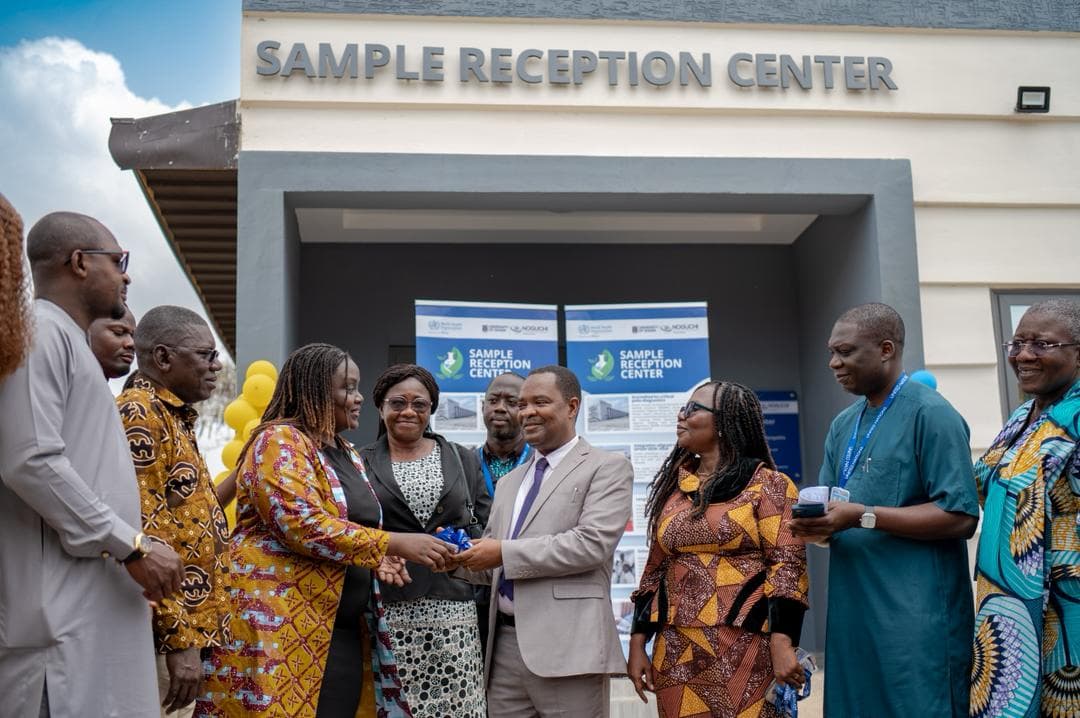
The Sample Reception Centre is a major boost to Ghana's laboratory infrastructure, which has been a critical gap in the country's healthcare system. According to Dr. Francis Nkrumah, Director of the Noguchi Memorial Institute for Medical Research, "the new facility will significantly improve our capacity to receive, process, and analyze laboratory samples, enabling us to respond more effectively to disease outbreaks and other public health emergencies." The centre is equipped with cutting-edge technology, including advanced biosafety cabinets, refrigeration systems, and sample management software, to ensure the safe and efficient handling of samples.
Enhancing Disease Surveillance Capacity
The Sample Reception Centre is expected to play a critical role in enhancing Ghana's disease surveillance capacity, which is essential for detecting and responding to public health threats.
"The centre will enable us to strengthen our surveillance systems, allowing us to detect disease outbreaks earlier and respond more quickly to prevent their spread,"said Dr. Charity Sarpong, a senior epidemiologist at the Ghana Health Service. The centre will also facilitate the sharing of data and samples with international partners, enabling Ghana to contribute to global efforts to combat infectious diseases.
The WHO has been a key partner in the establishment of the Sample Reception Centre, providing technical assistance and expertise to ensure that the facility meets international standards. Dr. Owen Kaluwa, WHO Country Representative in Ghana, noted that "the centre is a significant step forward in strengthening Ghana's laboratory systems and disease surveillance capacity, and we are proud to have supported its establishment." The Gates Foundation has also provided critical funding for the project, highlighting the importance of private sector support for public health initiatives.
Addressing the Challenge of Sample Management
The Sample Reception Centre addresses a critical challenge in Ghana's laboratory systems, namely the safe and efficient management of laboratory samples. In the past, samples were often stored and transported in inadequate conditions, posing a risk to laboratory workers and compromising the integrity of the samples. The new centre provides a secure and climate-controlled environment for sample storage and processing, reducing the risk of sample contamination and loss. Dr. Emmanuel Akoto, a laboratory scientist at the Noguchi Memorial Institute, noted that "the centre has already improved our sample management processes, enabling us to focus on analyzing samples and providing critical data to inform public health decisions."
The inauguration of the Sample Reception Centre is a significant achievement for Ghana's healthcare sector, and it is expected to have a positive impact on the country's ability to respond to public health threats. As Dr. Nkrumah noted, "the centre is a testament to the power of partnership and collaboration in strengthening our healthcare systems, and we look forward to working with our partners to build on this success." The centre will also serve as a model for other countries in the region, demonstrating the importance of investing in laboratory infrastructure and disease surveillance capacity.
Looking to the Future
As Ghana continues to strengthen its healthcare systems, the Sample Reception Centre is poised to play a critical role in supporting these efforts. The centre will enable the country to respond more effectively to public health emergencies, and it will also facilitate the sharing of data and samples with international partners. According to Dr. Sarpong, "the centre is a significant step forward in our efforts to build a robust and resilient healthcare system, and we are excited to see the impact it will have on our ability to protect the health and wellbeing of the Ghanaian people." As the country looks to the future, it is clear that the Sample Reception Centre will be a critical component of its healthcare infrastructure, supporting efforts to prevent, detect, and respond to public health threats.
In conclusion, the inauguration of the Sample Reception Centre at the Noguchi Memorial Institute for Medical Research marks a significant milestone in Ghana's efforts to strengthen its laboratory systems and disease surveillance capacity. With its state-of-the-art facilities and cutting-edge technology, the centre is poised to play a critical role in supporting the country's healthcare sector, and it is expected to have a positive impact on the nation's ability to respond to public health threats. As Ghana continues to build on this success, it is clear that the Sample Reception Centre will be a key component of its healthcare infrastructure, supporting efforts to protect the health and wellbeing of the Ghanaian people.