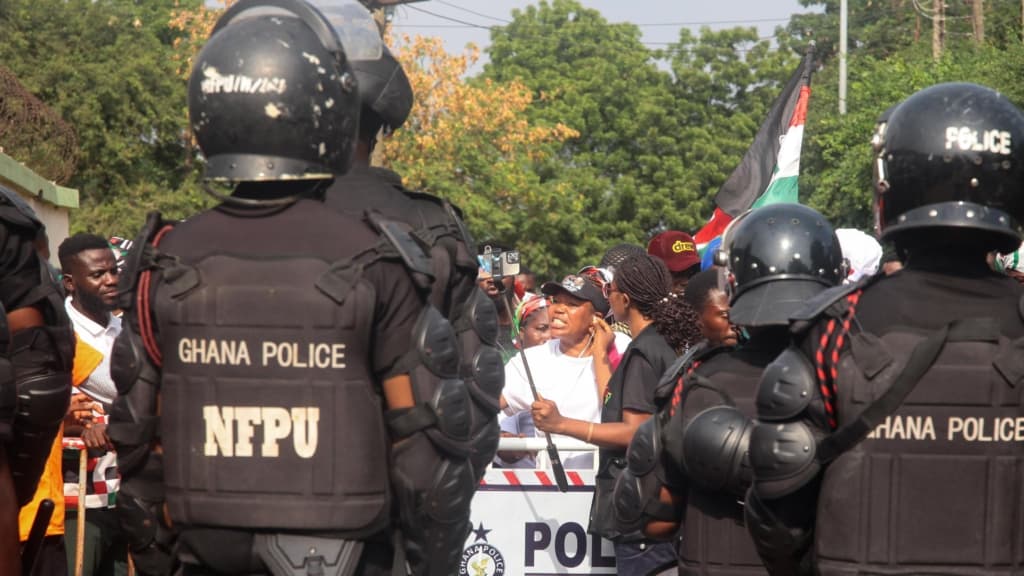
The Ayawaso East by-election, which was held to fill a vacant seat in parliament, was marked by a significant police presence, with officers deployed to polling stations across the constituency. While the police have stated that their presence was necessary to prevent any potential disturbances or violence, others have argued that it was excessive and intimidating. Dr. Kwame Addo, a political analyst at the University of Ghana, noted that "the presence of such a large number of police officers at polling stations can be seen as a form of voter suppression, and can undermine the integrity of the electoral process." He added that "in a democratic society, voters should be able to cast their ballots without fear of intimidation or harassment."
Concerns about Voter Intimidation
One of the primary concerns surrounding the police presence at polling stations is the potential for voter intimidation. With officers stationed at polling stations, some voters may feel uneasy or even threatened, which could discourage them from casting their ballots.
"The presence of police officers at polling stations can be intimidating, especially for first-time voters or those who are not familiar with the electoral process,"said Ms. Ama Kudom, a voter who cast her ballot in the Ayawaso East by-election. She added that "while I understand the need for security, I believe that the police presence could have been more discreet and less intimidating." Experts have also pointed out that the police presence can be particularly problematic in areas with a history of political violence or tension, where the presence of officers can exacerbate existing tensions.
Implications for Ghana's Democracy
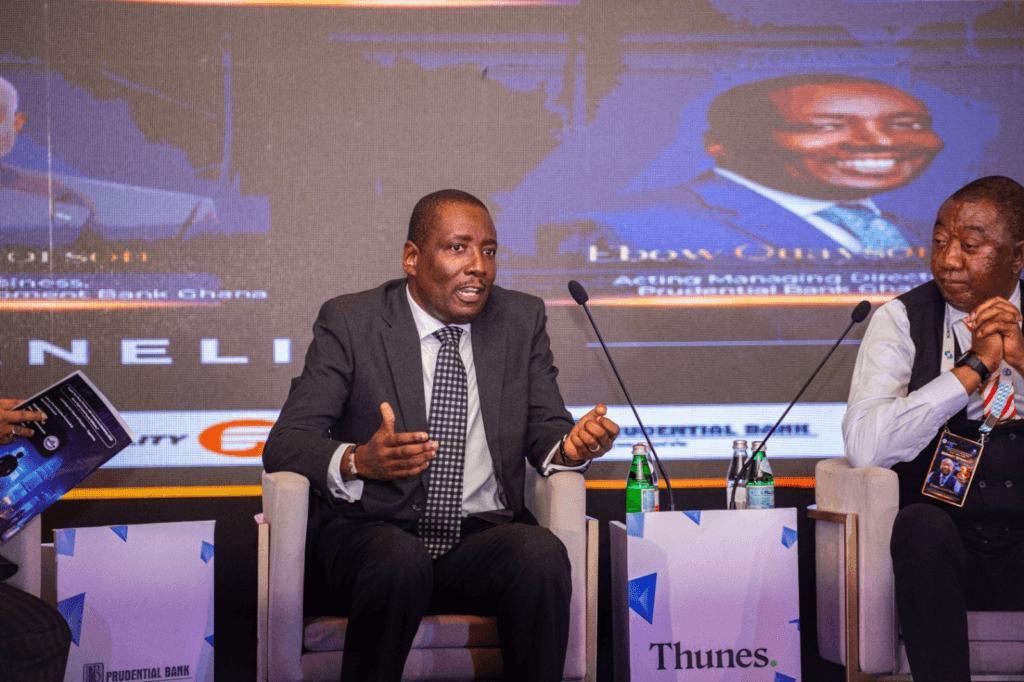
The need for a significant police presence at polling stations has significant implications for Ghana's democracy. According to Agyarko, it exposes a worrying weakness in the country's democratic evolution, and suggests that the country still has a long way to go in terms of ensuring free and fair elections. Dr. Eric Bossman, a political scientist at the Ghana Institute of Management and Public Administration, noted that "the fact that we need such a large number of police officers to maintain order at polling stations suggests that our democratic institutions are still fragile, and that we need to do more to build trust and confidence in the electoral process." He added that "this is a wake-up call for us to re-examine our democratic systems and processes, and to identify areas where we can improve."
Experts have also pointed out that the police presence at polling stations can undermine the integrity of the electoral process, and can create an uneven playing field for candidates. Mr. Kofi Adams, a former National Organiser of the National Democratic Congress (NDC), noted that "the presence of police officers at polling stations can be used to intimidate voters, or to influence the outcome of the election." He added that "this is a serious concern, and one that we need to address if we are to ensure that our elections are free and fair." To address these concerns, experts have recommended that the police presence at polling stations be reduced, and that alternative measures be put in place to ensure the security and integrity of the electoral process.
Way Forward
To address the concerns surrounding the police presence at polling stations, experts have recommended a number of measures. These include reducing the number of police officers deployed to polling stations, and increasing the use of civilian polling station workers to manage the electoral process. Dr. Addo noted that "we need to find a balance between ensuring the security and integrity of the electoral process, and respecting the rights of voters to cast their ballots without fear of intimidation or harassment." He added that "this will require a concerted effort from all stakeholders, including the police, the electoral commission, and political parties." By working together, Ghana can ensure that its democratic institutions are strengthened, and that the country can hold free and fair elections that reflect the will of the people.
In conclusion, the presence of a heavy police force at polling stations during the Ayawaso East by-election has sparked concerns about the state of democracy in Ghana. While the police presence may be necessary to maintain order, it also exposes a worrying weakness in the country's democratic evolution. To address these concerns, Ghana must find a balance between ensuring the security and integrity of the electoral process, and respecting the rights of voters to cast their ballots without fear of intimidation or harassment. By working together, the country can ensure that its democratic institutions are strengthened, and that the electoral process is free and fair. As Agyarko noted,
"the future of our democracy depends on our ability to hold free and fair elections, and to ensure that the rights of all citizens are respected."It is imperative that Ghana takes the necessary steps to address the concerns surrounding the police presence at polling stations, and to ensure that the country's democratic institutions continue to evolve and strengthen.