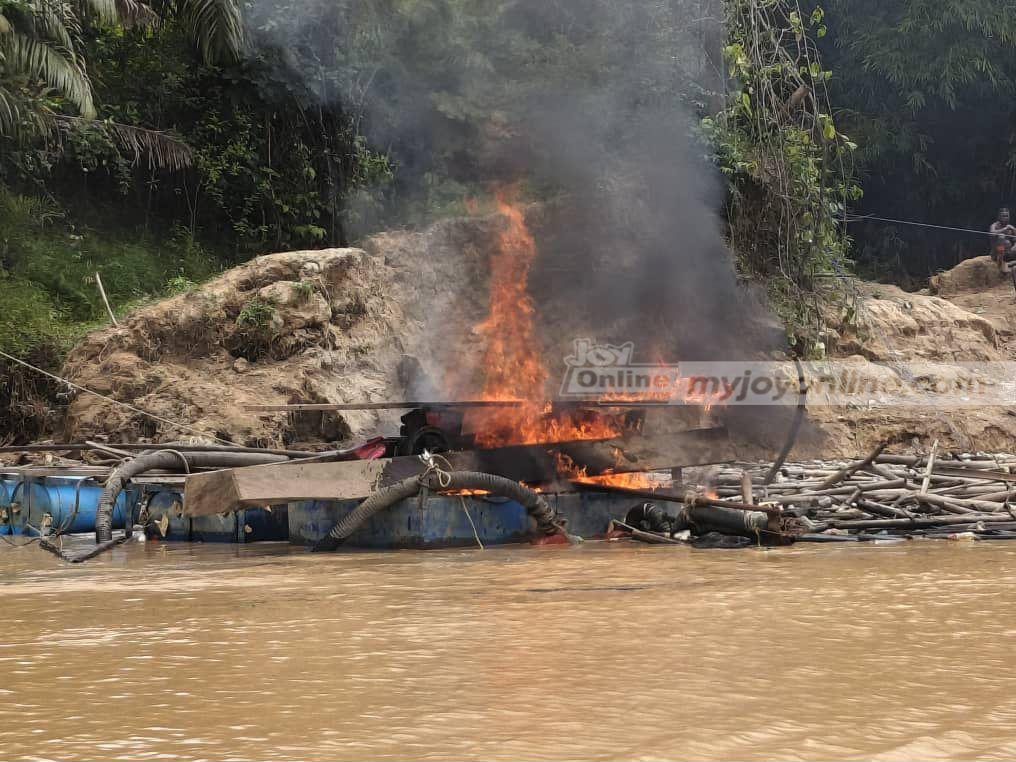
In a significant move to curb the menace of illegal mining in Ghana, the National Anti-Illegal Mining Operations Secretariat (NAIMOS) has successfully disrupted illicit mining activities at Gwira Banso and Gwira Eshiem in the Nzema East District of the Western Region. The operation, which was carried out in collaboration with the Blue Water Guards, is part of a broader effort by the government to protect the country's natural resources and prevent environmental degradation.
According to official sources, the joint operation involved a team of security personnel and experts from NAIMOS and the Blue Water Guards, who combed the areas to identify and dismantle illegal mining equipment and infrastructure. The operation is reported to have been carried out without any major incidents, and several suspects are currently being interrogated by the authorities. NAIMOS officials have confirmed that the operation is an ongoing effort to rid the country of illegal mining activities, which have been blamed for causing widespread environmental damage and social unrest.
Background to the Operation
The Western Region, where the operation took place, has been a hotspot for illegal mining activities in recent years. The region's rich gold deposits and proximity to major water bodies have made it an attractive destination for artisanal miners, many of whom operate without the required permits and licenses. The activities of these miners have been linked to deforestation, water pollution, and soil degradation, prompting concerns from environmentalists and local communities.
"The situation in the Western Region is quite dire, and it requires a sustained effort from all stakeholders to address the issue of illegal mining," said Dr. Francis Boateng, a lecturer at the University of Mines and Technology. "The operation by NAIMOS and the Blue Water Guards is a step in the right direction, but it must be followed up with more concrete actions to prevent the resurgence of illegal mining in the area."
Impact of the Operation
The disruption of illegal mining activities at Gwira Banso and Gwira Eshiem is expected to have a significant impact on the environment and local communities. The operation is likely to reduce the levels of water pollution and deforestation in the area, and also help to prevent the loss of livelihoods associated with illegal mining. Local residents have welcomed the operation, saying it will help to restore the natural beauty of the area and promote sustainable development.
"We are happy that the authorities have taken action to stop the illegal mining activities in our area," said Madam Akua Mensah, a resident of Gwira Banso. "The miners were causing a lot of damage to our environment and disrupting our way of life. We hope that the government will continue to take steps to prevent the resurgence of illegal mining in our community."
Way Forward
The operation by NAIMOS and the Blue Water Guards is part of a broader effort by the government to tackle the issue of illegal mining in Ghana. The government has introduced several measures, including the establishment of a task force to monitor and enforce mining regulations, and the provision of support to artisanal miners to help them operate within the law. Experts say that the key to success lies in sustained enforcement and community engagement.
"The fight against illegal mining requires a multifaceted approach that involves not just enforcement, but also education and community engagement," said Professor Kwabena Frimpong, a mining expert. "The government must work closely with local communities and other stakeholders to promote sustainable mining practices and prevent the resurgence of illegal mining."
In conclusion, the disruption of illegal mining activities at Gwira Banso and Gwira Eshiem is a significant achievement for NAIMOS and the Blue Water Guards. The operation highlights the government's commitment to protecting the country's natural resources and promoting sustainable development. As the authorities continue to enforce mining regulations and engage with local communities, it is likely that the incidence of illegal mining will reduce, and the environment will begin to heal. The future of Ghana's mining industry looks promising, and it is imperative that all stakeholders work together to ensure that the country's natural resources are exploited in a responsible and sustainable manner.