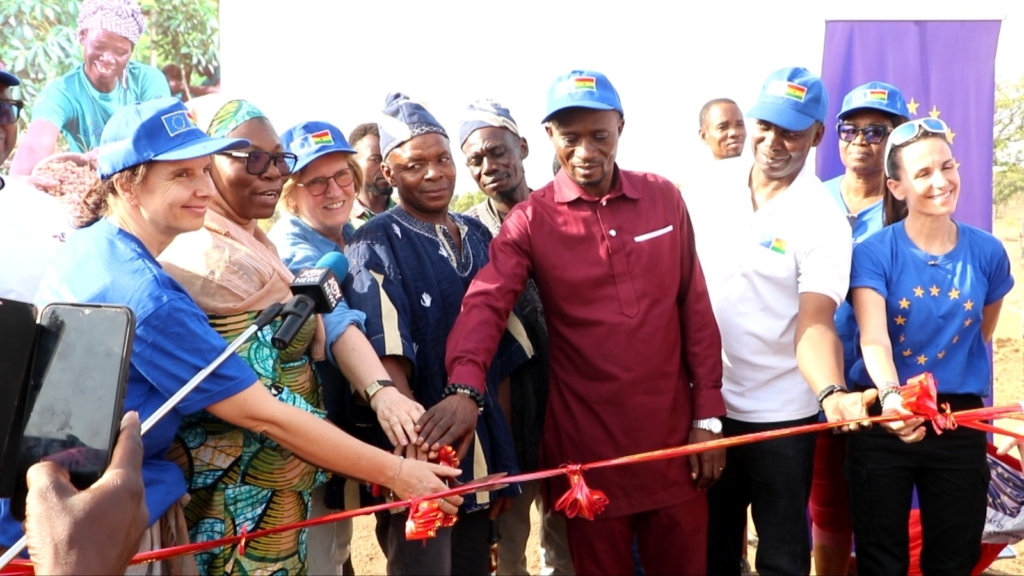
The Buka community in the Wa West District has taken a significant leap towards ensuring food security and curbing rural-urban migration with the inauguration of an 85,000-cubic-metre capacity dam and irrigation facility. This multi-purpose infrastructure, which covers 30 acres of irrigable land, was officially handed over to the community on Monday, March 9, 2026, as part of the Strengthening Community Resilience through Community Action Plans (CAPS) project. The project, implemented by ActionAid Ghana, is co-funded by the European Union (EU) and the German Federal Ministry for Economic Cooperation and Development through the REACH project, which is implemented by GIZ.
The new dam is expected to be a game-changer for the community, which has long relied on rain-fed agriculture. With the capacity to store 85,000 cubic metres of water, the dam will enable year-round farming, reducing the community's dependence on the single rainy season. This, in turn, is expected to create new economic opportunities, reduce poverty, and minimize the annual migration of youth to urban areas in search of employment. According to Paulina Rozycka, Programme Manager for Agriculture at the EU Delegation to Ghana, "the facility will completely change the equation for a community largely dependent on rain-fed agriculture. With a capacity of 85,000 cubic metres and 30 acres of irrigable land, this dam opens the dry season as a productive time of year."
Community Resilience and Partnership
The handing over of the dam is a testament to the power of partnership and community resilience.
"Building community resilience relies heavily on teamwork, partnerships, and collaborations,"said John Nkaw, Country Director of ActionAid Ghana. He expressed his gratitude to the funders, contractors, and other stakeholders who contributed to the successful completion of the project. The project's success is also attributed to the active involvement of the community, who identified the need for the dam and irrigation facility as a priority. Beate Weiskopf, Project Leader for GIZ, noted that "the infrastructure was rooted in the community's own identified priorities, making it a visible example of practical resilience-building in action."
The dam is also expected to complement the government's flagship "FEED GHANA PROGRAME" (FGP). Faustine Amegah, Coordinator of the EUGAP-Programme Coordination Unit, emphasized the importance of protecting and properly managing the facility. He encouraged the formation of a Water Users Association to partner with traditional authorities to ensure the dam's sustainability.
"The investment complements the government's flagship programme, and it is essential that the community takes ownership of the facility to ensure its longevity,"he said.
Impact on the Community
The new dam is expected to have a significant impact on the community, particularly the youth. Paul Nwinlanaa, speaking on behalf of the community youth, described the intervention as a "life-changer." He noted that about 90% of the village relies on farming, which had previously been entirely dependent on the single rainy season.
"The community has lost many of its workforce to the south due to inadequate job opportunities. We believe it is now time to call our men home because ActionAid has brought the south to our community where we can now farm all year round,"he said, pledging that the community would maintain the facility for generations to come.
The Upper West Regional Minister, represented by Pognaa Fati Issakah Koray, Chief Director for the Regional Coordinating Council, emphasized the significance of the project in the region.
"In a region where agriculture is not merely an occupation but the backbone of survival, water is life. Water is income. And water is dignity,"she said, urging the community to guard the facility as their own future. The minister noted that the project is not merely an infrastructure achievement but an "economic intervention," a "social protection mechanism," and a "poverty reduction strategy."
A New Dawn for Food Security and Climate Adaptation
The handing over of the dam in Buka community marks a new dawn for food security and climate adaptation in Northern Ghana. Under the sustainable water management component of the broader CAPS project, a total of five dams, five irrigation facilities, and 60 boreholes have been successfully completed across the participating districts. This infrastructure will enable communities to adapt to the challenges of climate change, reduce poverty, and improve their overall well-being. As Celina Prud’homme Madsen, representing the EU Delegation to Ghana, noted,
"the facility will completely change the equation for a community largely dependent on rain-fed agriculture."
In conclusion, the inauguration of the dam in Buka community is a significant milestone in the quest for food security and climate adaptation in Northern Ghana. The project demonstrates the power of partnership, community resilience, and practical resilience-building in action. As the community begins to utilize the new dam, it is expected that the benefits will be felt across the region, contributing to a more sustainable and food-secure future for generations to come. With the dam in place, the Buka community is poised to become a model for community-led development, showcasing the potential for rural communities to drive their own growth and prosperity.