
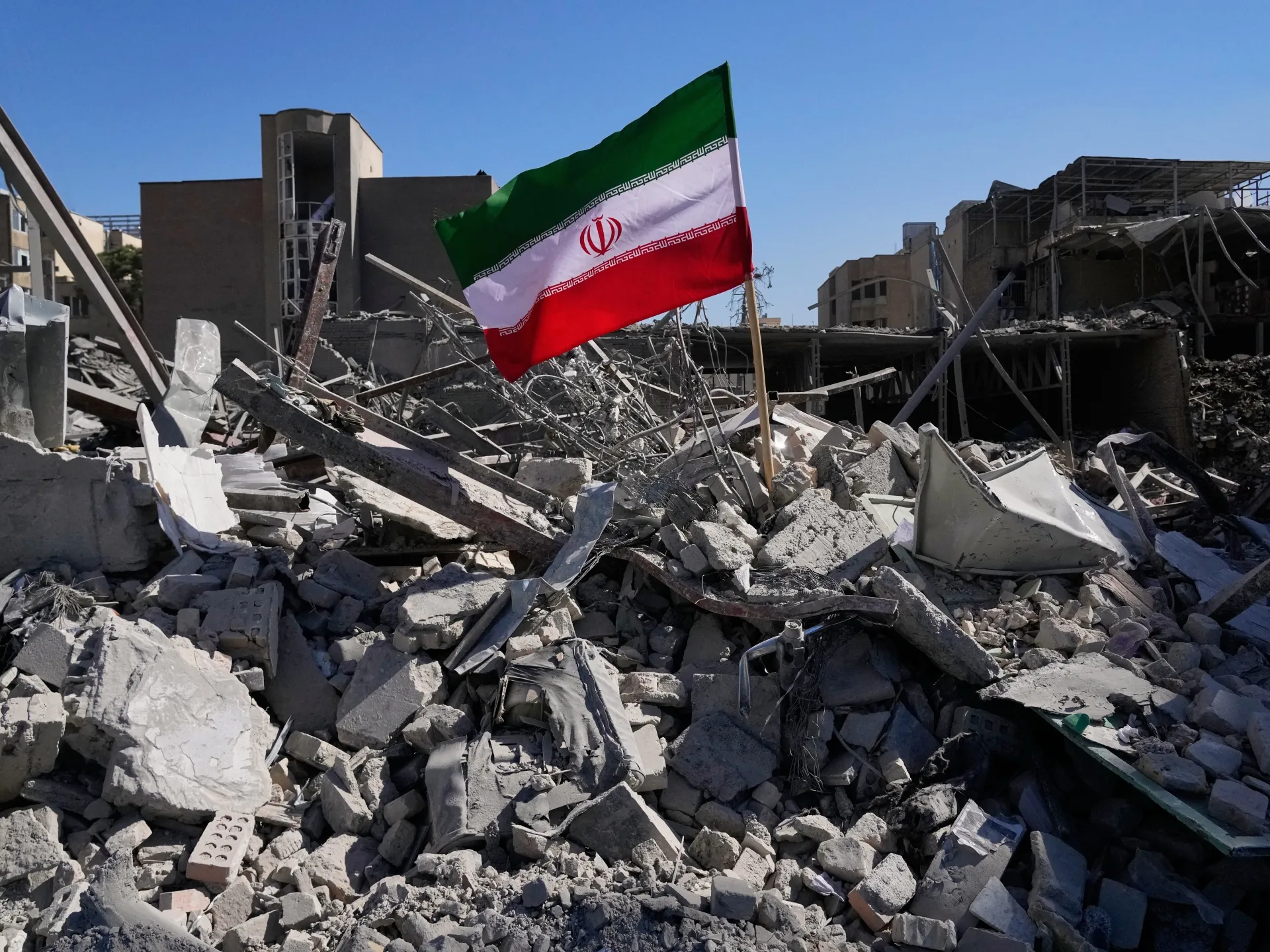
The Iranian government's strategy of strategic patience, which aimed to avoid provoking the international community while gradually building up its military capabilities, has ultimately failed to prevent conflict. Despite Tehran's efforts to exercise restraint, the country has found itself at the center of escalating tensions in the Middle East. According to experts, the failure of this approach may now lead to a more dangerous and aggressive stance from the new Iranian leadership, potentially destabilizing the entire region.
The concept of strategic patience was first introduced by Iranian leaders as a way to navigate the complex geopolitical landscape of the Middle East. By avoiding direct confrontation with rival nations and instead focusing on quietly building up its military and economic capabilities, Iran hoped to create a deterrent that would prevent attacks from other countries. However, this approach has been put to the test in recent months, and the results have been disastrous. Despite Iran's restraint, the country has still been the target of numerous attacks and provocations, including the targeting of its oil tankers and the downing of one of its drones.
Assessing the Failure of Strategic Patience
Experts point to the failure of Iran's strategic patience tactic as a clear indication that the country's leadership must now reassess its approach to national security.
"The Iranian government's strategy of strategic patience was always a gamble, and it's clear that it has not paid off,"said Dr. Sanam Vakil, a leading expert on Iranian politics at the Royal Institute of International Affairs.
"The fact that Iran has still been the target of attacks and provocations, despite its efforts to exercise restraint, suggests that the country's leadership must now consider a more robust approach to defending its interests."According to Dr. Vakil, this could involve a significant increase in military spending, as well as a more aggressive posture towards rival nations.
The potential consequences of Iran's shift away from strategic patience are far-reaching and alarming. A more aggressive approach from Tehran could lead to a significant escalation of tensions in the Middle East, potentially drawing in other countries and leading to a wider conflict. The international community is already on high alert, with many nations calling for calm and restraint in the face of rising tensions. However, with Iran's new leadership seemingly committed to a more assertive approach, the prospects for a peaceful resolution to the crisis appear increasingly remote.
Implications for Regional Stability
The failure of Iran's strategic patience tactic has significant implications for regional stability, and the potential consequences of the country's shift towards a more aggressive approach are being closely watched by experts and officials around the world.
"The Middle East is already a highly volatile region, and the last thing we need is for Iran to start adopting a more aggressive posture,"said General Joseph Dunford, the former Chairman of the Joint Chiefs of Staff.
"We urge all parties to exercise restraint and to work towards a peaceful resolution to the crisis, but it's clear that the situation is becoming increasingly dire."According to General Dunford, the international community must now come together to address the crisis and prevent a wider conflict from breaking out.
As tensions continue to escalate, the international community is bracing itself for the possibility of a major conflict in the Middle East. With Iran's new leadership seemingly committed to a more aggressive approach, the prospects for a peaceful resolution to the crisis appear increasingly remote. The coming weeks and months will be critical in determining the course of events, and experts warn that the situation could deteriorate rapidly if a peaceful solution is not found. As the world watches with bated breath, one thing is clear: the failure of Iran's strategic patience tactic has set the stage for a potentially catastrophic confrontation in the Middle East.
In conclusion, the failure of Iran's strategic patience tactic has significant implications for the Middle East and the wider world. As the country's new leadership considers a more aggressive approach, the international community must come together to prevent a wider conflict from breaking out. The prospects for a peaceful resolution to the crisis are uncertain, but one thing is clear: the coming weeks and months will be critical in determining the course of events. The world must now wait with bated breath to see what comes next, and hope that a peaceful solution can still be found to the crisis unfolding in the Middle East.