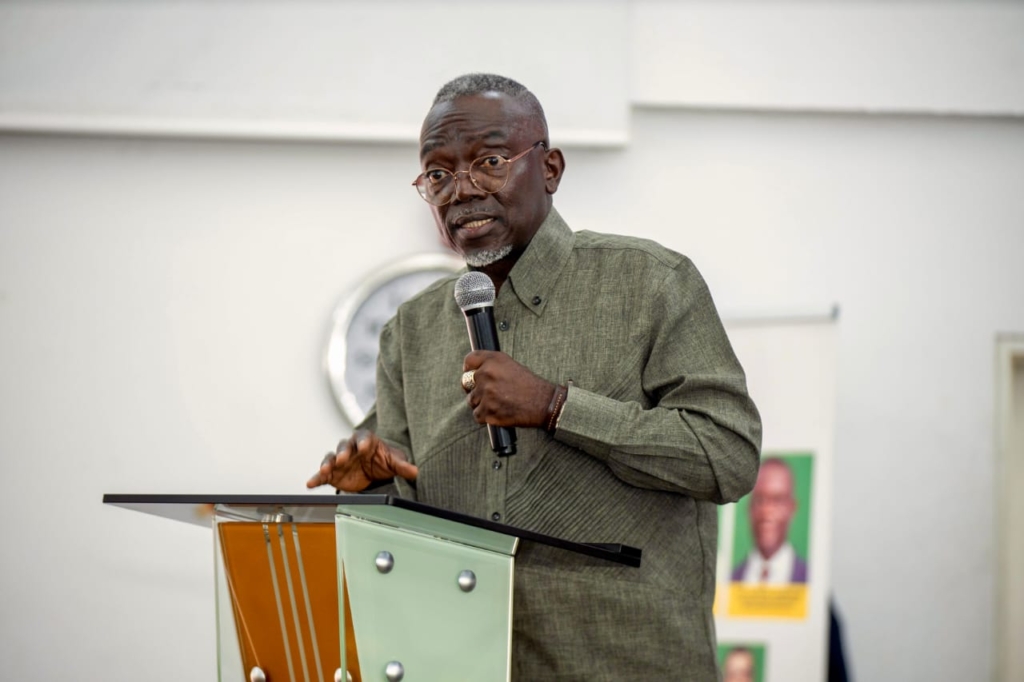
The Ghanaian government's efforts to prioritize value for money in public expenditure and infrastructure development have received a significant boost, with renowned procurement expert Prof. Douglas Boateng commending the administration's intensified commitment to this cause. Speaking on the sidelines of the recent induction ceremony of the Ghana Institute of Procurement and Supply (GIPS), Prof. Boateng, a fellow of the Ghana Institution of Engineering, emphasized the importance of entrenching value for money principles in the country's procurement processes.
According to Prof. Boateng, the government's value for money agenda is a step in the right direction, as it seeks to ensure that public funds are utilized efficiently and effectively. He noted that this approach is critical in promoting transparency, accountability, and competitiveness in the procurement process, ultimately leading to better outcomes for the country.
"The government's commitment to value for money is a welcome development, as it has the potential to transform the way we approach public procurement in Ghana,"Prof. Boateng said.
"By prioritizing value for money, we can ensure that our limited resources are used to achieve the best possible results, and that our infrastructure development projects are completed on time, within budget, and to the required standards."
The Procurement Bill: A Key Enabler of Value for Money
Prof. Boateng also used the opportunity to urge the government to expedite the passage of the Procurement Bill, which is currently before parliament. The bill, when passed, is expected to provide a robust framework for public procurement in Ghana, promoting transparency, accountability, and fairness in the process. The bill's passage is seen as critical in supporting the government's value for money agenda, as it will help to prevent wastage, corruption, and other forms of inefficiency in public procurement.
"The Procurement Bill is a critical piece of legislation that will help to entrench value for money principles in our public procurement processes,"Prof. Boateng explained.
"I urge the government to work closely with stakeholders, including the private sector and civil society, to ensure that the bill is passed into law as soon as possible, and that its provisions are effectively implemented to achieve the desired outcomes."
Other experts have also weighed in on the importance of the Procurement Bill, noting that its passage will help to promote good governance and accountability in public procurement.
"The Procurement Bill is a key enabler of good governance and accountability in public procurement,"said Dr. Kwame Owusu-Frimpong, a procurement expert and lecturer at the University of Ghana.
"When passed, the bill will help to prevent corruption, promote transparency, and ensure that public funds are used for the benefit of all Ghanaians, rather than just a few individuals."
Implementing Value for Money: Challenges and Opportunities
While the government's value for money agenda has been widely commended, there are concerns about the challenges that may arise during its implementation. Some experts have noted that the lack of capacity and expertise in some public institutions may hinder the effective implementation of value for money principles.
"One of the key challenges we face is the lack of capacity and expertise in some of our public institutions,"said Mrs. Ama Pomaa-Bruce, a deputy minister of procurement.
"We need to invest in building the capacity of our procurement professionals, and providing them with the necessary tools and resources to effectively implement value for money principles in their work."
Despite these challenges, there are opportunities for innovation and growth in the procurement sector, particularly in the area of digitalization and technology. The use of digital platforms and tools can help to promote transparency, efficiency, and accountability in public procurement, and can also help to reduce costs and improve outcomes.
"Digitalization and technology have the potential to transform the procurement sector, and help us to achieve our value for money objectives,"said Prof. Boateng.
"We need to explore innovative solutions and partnerships that can help us to leverage technology and achieve better outcomes in our procurement processes."
In conclusion, the government's value for money agenda has gained significant momentum, with Prof. Douglas Boateng and other experts commending the administration's commitment to this cause. The passage of the Procurement Bill is a critical step in entrenching value for money principles in public procurement, and will help to promote transparency, accountability, and good governance in the sector. As Ghana continues to navigate the complexities of public procurement, it is clear that the future of value for money will depend on the ability of stakeholders to work together, innovate, and leverage technology to achieve better outcomes for all Ghanaians.