The global economy is expected to experience steady growth in the coming year, provided that the current oil price shock does not persist for an extended period, according to a recent forecast by Fitch, a leading credit rating agency. This assessment is based on the agency's revised forecast for the United States' economic growth, which has been adjusted upwards to 2.2% for 2026, from the initial 2% predicted in January. This growth rate is consistent with the previous year's performance, suggesting a degree of stability in the face of potential economic headwinds.
One of the key factors influencing Fitch's forecast is the anticipated slowdown in US consumption, driven by labor market weakness and its impact on household income. However, the widening US fiscal deficit is also a significant consideration, as it could have both positive and negative effects on the economy. Dr. Maria Rodriguez, a leading economist at a prominent think tank, noted, "The widening fiscal deficit can be a double-edged sword. On one hand, it can provide a necessary stimulus to the economy by increasing government spending. On the other hand, it can lead to higher interest rates and increased inflation, which could undermine economic growth if not managed properly."
Economic Growth Projections
Fitch's projection of 2.2% GDP growth for the US in 2026 indicates a cautious optimism about the economy's ability to withstand current challenges. This growth rate, while not spectacular, suggests that the US economy is resilient and can maintain a steady pace of expansion despite potential obstacles.
"We are cautiously optimistic about the US economy's prospects for 2026. While there are risks, particularly from the oil price shock and labor market weakness, we believe that the economy has the underlying strength to navigate these challenges,"said John Lee, a senior economist at Fitch. The agency's forecast also takes into account the global context, including the impact of oil price fluctuations on economic activity.
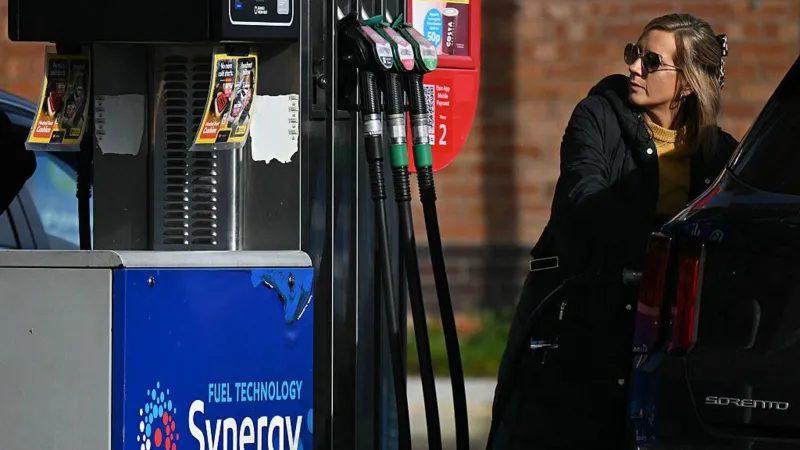
The oil price shock, while a significant concern, is not expected to have a prolonged impact on the global economy, according to Fitch. The agency's forecast assumes that oil prices will stabilize and not continue to rise sharply, which would mitigate the negative effects on economic growth. Dr. David Kim, an energy economist, commented, "The key to minimizing the impact of the oil price shock is to ensure that it does not persist for too long. If oil prices can stabilize relatively quickly, the economy should be able to absorb the shock without significant long-term damage."
Implications for Global Economic Stability
The implications of Fitch's forecast are significant for global economic stability. A steady growth rate in the US, combined with the assumption that the oil price shock will not be prolonged, suggests that the global economy can maintain its current trajectory. This, in turn, would support economic activity in other regions, particularly in countries that are closely tied to the US economy. Mark Davis, a financial analyst, observed, "A stable US economy is crucial for global economic stability. If the US can maintain its growth rate, it will have a positive impact on trade and investment flows, which will benefit other economies around the world."
However, there are also risks associated with Fitch's forecast. If the oil price shock persists or if labor market weakness in the US deepens, it could lead to a slowdown in economic growth, both in the US and globally. Therefore, it is essential to monitor these factors closely and be prepared to respond to any changes in the economic landscape.
"The current economic environment is characterized by a high degree of uncertainty. It is crucial for policymakers and businesses to be vigilant and prepared to adapt to changing circumstances,"warned Dr. Sophia Patel, a macroeconomic expert.
In conclusion, Fitch's forecast suggests that the global economy can maintain a steady growth rate in 2026, provided that the oil price shock is not prolonged. The US economy, in particular, is expected to experience a slowdown in consumption due to labor market weakness, but the widening fiscal deficit could provide a necessary stimulus. As the economy navigates these challenges, it is essential to monitor key indicators closely and be prepared to respond to any changes in the economic landscape. With cautious optimism and careful management, the global economy can continue to grow and prosper in the face of uncertainty.