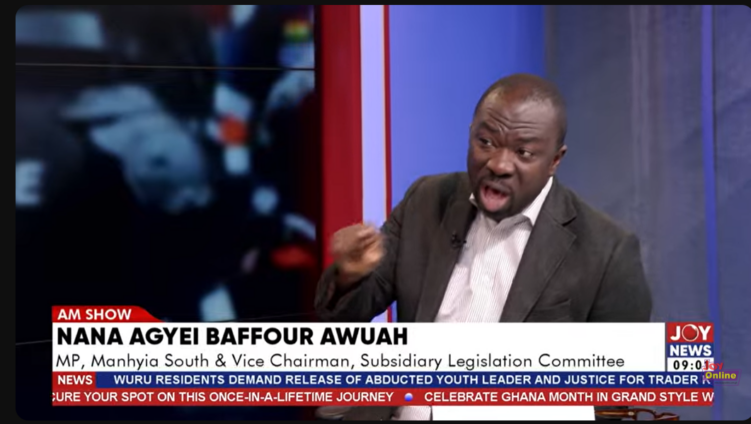
A high-ranking Ghanaian lawmaker has expressed strong reservations about the government's 24-hour economy policy, warning that it fails to address the country's underlying employment issues. Nana Agyei Baffour Awuah, MP for Manhyia South and Vice Chairman of the Subsidiary Legislative Committee of Parliament, believes that the policy misdiagnoses the nation's economic challenges, and as such, will not yield the desired results.
According to Baffour Awuah, the government's approach to promoting a 24-hour economy is overly focused on extending working hours and encouraging businesses to operate around the clock. However, he argues that this strategy does not tackle the root causes of unemployment and underemployment in Ghana. The lawmaker's concerns are echoed by many experts who believe that the policy overlooks critical factors such as job creation, skills training, and investment in key sectors. "The 24-hour economy policy is a classic case of treating the symptoms rather than the disease," Baffour Awuah said in an interview. "We need to focus on creating decent jobs, improving working conditions, and providing our citizens with the skills they need to compete in the global economy."
The Misdiagnosis of Ghana's Economic Challenges
Baffour Awuah's criticisms of the 24-hour economy policy are not isolated. Many economists and business leaders in Ghana share his concerns, arguing that the policy is based on a flawed understanding of the country's economic challenges.
"The government's assumption that a 24-hour economy will automatically lead to more jobs and economic growth is simplistic and misguided," said Dr. Eric Osei-Assibey, a senior economist at the University of Ghana. "We need to take a more nuanced approach that addresses the structural issues in our economy, such as the lack of diversity, the dominance of the informal sector, and the limited access to credit for small and medium-sized enterprises."Experts like Dr. Osei-Assibey believe that the government should prioritize policies that promote investment in key sectors, such as manufacturing, agriculture, and tourism, which have the potential to create large numbers of decent jobs.
Moreover, the 24-hour economy policy has been criticized for its potential impact on the welfare of workers. Many employees may be forced to work longer hours without adequate compensation or benefits, leading to burnout and decreased productivity. "The policy may lead to a situation where workers are exploited, and their rights are violated," said Baffour Awuah. "We need to ensure that any policy aimed at promoting economic growth also protects the interests of workers and promotes social justice." The government has yet to respond to these concerns, but it is clear that the 24-hour economy policy will face intense scrutiny in the coming months.
Alternative Solutions to Ghana's Economic Challenges
So, what are the alternative solutions to Ghana's economic challenges? According to Baffour Awuah and other experts, the government should focus on creating an enabling environment for businesses to thrive. This includes investing in infrastructure, such as roads, ports, and telecommunications, as well as streamlining regulatory processes and reducing bureaucratic hurdles. The government should also prioritize skills training and education, to equip citizens with the skills they need to compete in the global economy. "We need to invest in our people, and provide them with the skills and knowledge they need to succeed," said Baffour Awuah. "This includes vocational training, apprenticeships, and education in critical areas such as science, technology, engineering, and mathematics (STEM)."
In addition, the government should promote investment in key sectors, such as manufacturing, agriculture, and tourism, which have the potential to create large numbers of decent jobs. This includes providing incentives for businesses to invest in these sectors, such as tax breaks, subsidies, and access to credit.
"We need to create an ecosystem that supports entrepreneurship and innovation," said Dr. Osei-Assibey. "This includes providing access to finance, markets, and technology, as well as promoting a culture of entrepreneurship and risk-taking."By promoting investment in key sectors and creating an enabling environment for businesses to thrive, the government can create decent jobs, stimulate economic growth, and reduce poverty and inequality.
In conclusion, the 24-hour economy policy has been criticized for misdiagnosing Ghana's economic challenges. While the policy aims to promote economic growth by extending working hours and encouraging businesses to operate around the clock, it overlooks critical factors such as job creation, skills training, and investment in key sectors. As the government moves forward with its economic development agenda, it is essential that it listens to the concerns of lawmakers, experts, and citizens, and prioritizes policies that promote decent jobs, social justice, and sustainable economic growth. By doing so, Ghana can create a brighter future for its citizens, and become a beacon of hope and prosperity in West Africa.