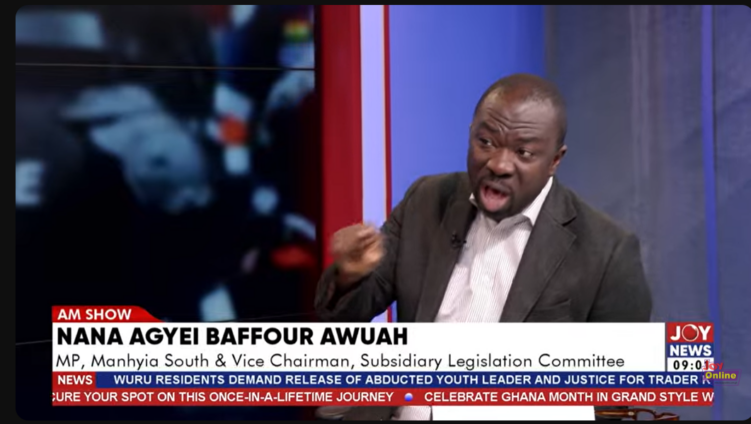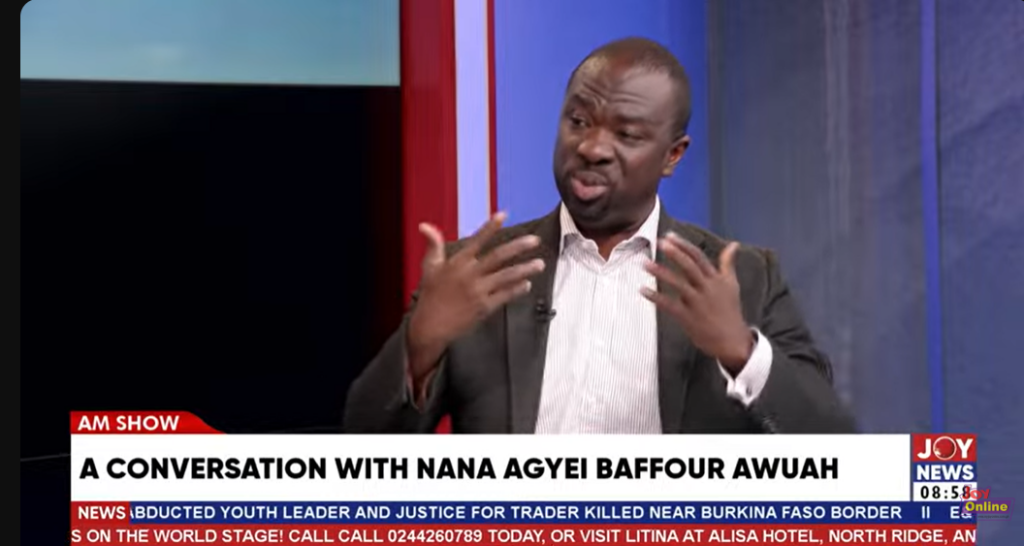
The government of Ghana's ambitious infrastructure development program, known as the "Big Push" initiative, has been touted as a panacea for the country's economic woes, but according to Nana Agyei Baffour Awuah, Member of Parliament for Manhyia South, it may not be enough to stem the tide of unemployment, particularly among university graduates. In a recent address, Awuah cautioned that while the "Big Push" is a step in the right direction, it is insufficient to guarantee jobs for the thousands of young Ghanaians entering the job market every year.
The "Big Push" initiative, a flagship program of the current administration, aims to accelerate Ghana's economic development through the construction of critical infrastructure such as roads, bridges, and public buildings. Proponents of the program argue that it will not only improve the country's infrastructure but also create jobs and stimulate economic growth. However, Awuah's comments suggest that the program's impact on employment may be overstated.
"We need to be realistic about the potential of the 'Big Push' to create jobs,"Awuah said.
"While it is a laudable initiative, it is not a silver bullet for our unemployment problem. We need to think more critically about how to address the issue of job creation, particularly for our young people."
The Unemployment Conundrum
Ghana's unemployment problem is a long-standing one, with official statistics indicating that the country's unemployment rate stands at around 4.2%. However, this figure masks a more nuanced reality, with youth unemployment estimated to be significantly higher, at around 12%. The situation is particularly dire for university graduates, many of whom struggle to find employment in their chosen fields. According to experts, the problem is not just one of a lack of jobs, but also of a mismatch between the skills of graduates and the needs of the labor market.
Dr. Baah Boateng, a labor market analyst at the University of Ghana, notes that the country's education system is not adequately preparing students for the demands of the modern workforce.
"Our education system is still focused on producing graduates with theoretical knowledge, rather than practical skills,"Dr. Boateng said.
"This means that many graduates are not equipped with the skills that employers are looking for, making it difficult for them to find employment."Dr. Boateng argues that the government needs to work with education institutions and industry stakeholders to develop a more vocational training approach, one that emphasizes the development of practical skills and competencies.
An Alternative Approach
So, what can be done to address Ghana's unemployment problem? Awuah and other experts argue that a more comprehensive approach is needed, one that involves not just the government, but also the private sector, education institutions, and civil society. This could involve initiatives such as apprenticeships, internships, and entrepreneurship training, all designed to equip young people with the skills and knowledge they need to succeed in the workforce.
Mr. Kwame Gyasi, CEO of the Ghana Chamber of Commerce, notes that the private sector has a critical role to play in addressing the unemployment problem.
"We need to work with government and education institutions to identify the skills gaps in the labor market and develop training programs that address those gaps,"Mr. Gyasi said.
"We also need to provide opportunities for young people to gain work experience and build their professional networks."Mr. Gyasi argues that this will require a collaborative approach, one that brings together all stakeholders to develop innovative solutions to the unemployment problem.
In conclusion, while the "Big Push" initiative is a positive development, it is clear that it will not be enough to guarantee jobs for Ghana's unemployed youth. A more comprehensive approach is needed, one that involves all stakeholders and addresses the root causes of unemployment. As Awuah notes,
"We need to think outside the box and come up with innovative solutions to this problem. The future of our young people depends on it."As Ghana continues to grapple with the challenges of unemployment, it is clear that a new approach is needed, one that prioritizes the needs of young people and provides them with the skills and opportunities they need to succeed.