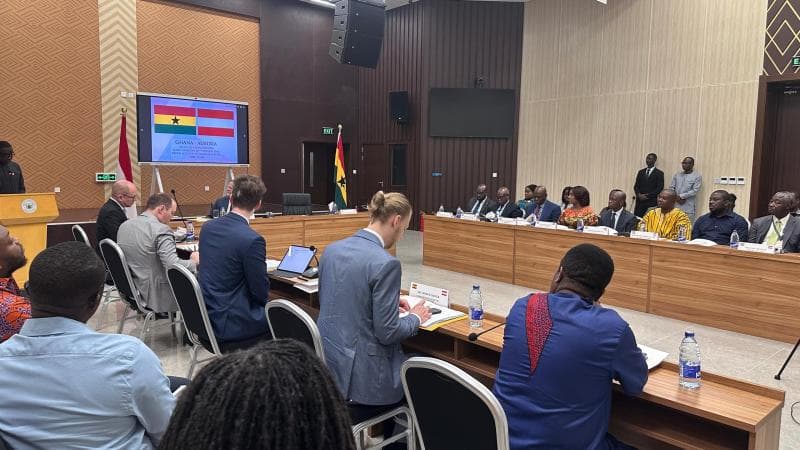
The Second Session of the Ghana–Austria Political Consultations, held at the Ministry of Foreign Affairs in Ghana, provided a platform for both countries to discuss and explore ways to enhance their partnership. According to Dr. Helena Kuagbedzi, Director of European Affairs at the Ghanaian Ministry of Foreign Affairs, "the consultations offered an opportunity for Ghana and Austria to reaffirm their commitment to strengthening their bilateral relations and addressing common challenges." Dr. Kuagbedzi noted that "the consultations were fruitful, and we are excited about the prospects of deepening our cooperation in areas such as peacekeeping, military training, and sustainable development."
Security Cooperation
The security situation in West Africa has become increasingly complex, with terrorist groups such as Al-Qaeda and the Islamic State expanding their operations in the region. In response, Ghana and Austria have agreed to enhance their security cooperation, including the provision of military training and capacity-building programs. General Michael Owusu, Chief of Defense Staff of the Ghana Armed Forces, emphasized the importance of international cooperation in addressing regional security challenges. "We recognize that the security threats facing our region are transnational in nature, and therefore, require a collective response," General Owusu said. "Our partnership with Austria will enable us to tap into their expertise and experience in peacekeeping and military training, which will be beneficial in enhancing our capacity to respond to emerging security challenges."
Economic Cooperation
In addition to security cooperation, Ghana and Austria are also seeking to expand their economic ties. Austria has expressed interest in investing in Ghana's energy, agriculture, and infrastructure sectors, which are critical to the country's economic growth and development.
"We see Ghana as a strategic partner in West Africa, and we are committed to supporting their economic development efforts," said Ambassador Thomas Schlesinger, Austrian Ambassador to Ghana. "We believe that our investments in Ghana will not only promote economic growth but also create jobs and improve living standards for the Ghanaian people."Ghana, on the other hand, is seeking to leverage Austria's expertise in technology and innovation to drive its own economic transformation. According to Professor Kwame Baah-Nuakoh, a Ghanaian economist, "Austria's experience in innovation and technology can be a valuable asset for Ghana, as we seek to diversify our economy and promote sustainable development."
The deepening cooperation between Ghana and Austria is also expected to have positive implications for regional stability and economic growth. As Dr. Festus Kofi Aubyn, a regional security expert, noted, "the partnership between Ghana and Austria sends a strong signal to other countries in the region that international cooperation is essential in addressing common security and economic challenges." Dr. Aubyn added that "the cooperation between Ghana and Austria can serve as a model for other countries in the region, as they seek to navigate the complexities of regional security and economic development."
Challenges Ahead
While the cooperation between Ghana and Austria is a positive development, there are challenges that need to be addressed. One of the key challenges is the need to ensure that the benefits of the cooperation are shared equitably between the two countries. Ms. Ama Pomaa-Baiden, a Ghanaian businesswoman, emphasized the importance of ensuring that Ghanaian businesses are able to compete effectively in the Austrian market. "We need to ensure that our businesses are equipped with the necessary skills and resources to tap into the Austrian market," Ms. Pomaa-Baiden said. "This will require efforts to promote trade facilitation, reduce bureaucratic barriers, and enhance the competitiveness of Ghanaian businesses."
In conclusion, the deepening cooperation between Ghana and Austria is a significant development that has the potential to promote regional stability and economic growth. As both countries continue to navigate the complexities of regional security and economic development, their partnership is expected to play a critical role in addressing common challenges and promoting mutual interests. According to Dr. Kuagbedzi, "the future of our cooperation looks bright, and we are committed to working together to achieve our common goals." As Ghana and Austria look to the future, their partnership is likely to serve as a model for other countries in the region, as they seek to promote regional stability, economic growth, and sustainable development.