Paris, France – The French government today summoned U.S. Ambassador Charles Kushner to the Ministry for Europe and Foreign Affairs, expressing strong disapproval over recent U.S. State Department comments that attributed the beating death of French activist Quentin Deranque, 23, to "violent radical leftism." The diplomatic démarche signals a rare public rebuke of a key ally and underscores deepening tensions over external commentary on sensitive internal French affairs.
The summons, confirmed by sources within the Quai d'Orsay, occurred after the U.S. State Department issued a statement citing "violent radical leftism" in connection with Deranque's death. This characterization of the incident by a foreign government has been viewed by French officials as an unwarranted intrusion into an ongoing judicial investigation and a potentially inflammatory politicization of a tragic event.
Diplomatic Repercussions
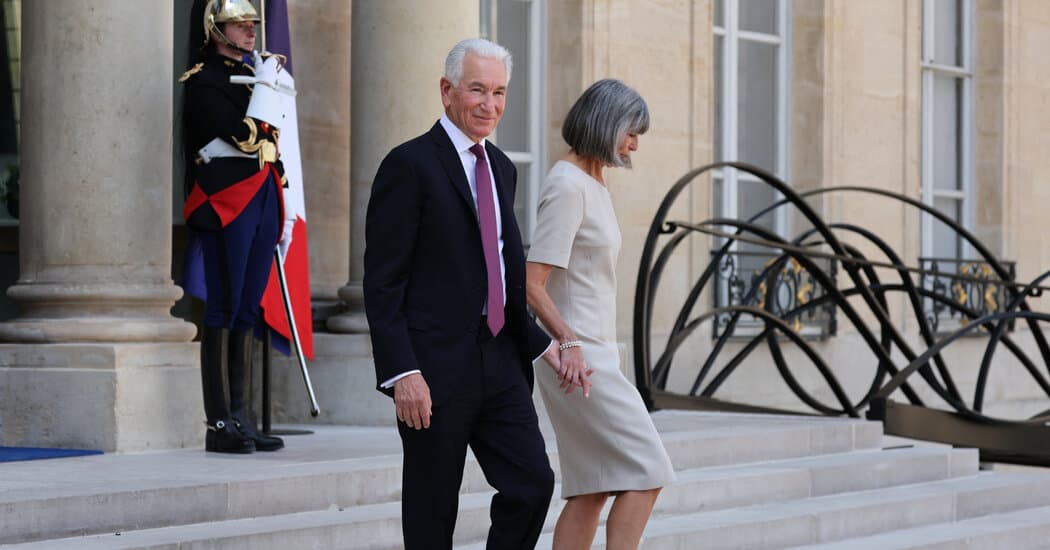
Ambassador Kushner, President Trump's envoy to Paris, was called in to meet with senior French diplomatic officials who conveyed France's "profound displeasure" with the U.S. remarks. While details of the private meeting were not immediately released, it is understood that French officials emphasized the principle of national sovereignty and the imperative for non-interference in the country’s internal legal processes.
A high-ranking official at the Ministry for Europe and Foreign Affairs, speaking on background, articulated the French position.
"France is a sovereign nation, and we strongly reject any foreign interference in our internal affairs, particularly regarding ongoing investigations into tragic deaths. Such pronouncements are unhelpful, prejudge a judicial process, and undermine the spirit of our alliance built on mutual respect and understanding."
The official added that France expects its allies to allow its independent judiciary to conduct investigations without external commentary that could be perceived as biased or politically motivated.
The State Department's Statement
The U.S. State Department's statement, issued earlier this week, highlighted concerns about political violence. While not directly naming individuals, its specific reference to "violent radical leftism" in the context of Quentin Deranque's death drew immediate attention in Paris. The statement appeared to align with a broader U.S. administration narrative on political extremism, but its application to a specific, unfolding French case caused significant friction.
A spokesperson for the U.S. Embassy in Paris, contacted for comment, acknowledged the meeting at the Quai d'Orsay but declined to elaborate on the specifics of the discussion. The spokesperson reiterated the U.S. government's general stance on political violence.
"The United States mourns the loss of any young life to political violence. Our concern is for human rights and the safety of individuals, regardless of their political affiliation. We believe it is important to call out and condemn all forms of political extremism that lead to violence, and we stand by our assessment of the broader threats posed by radical ideologies."
This response suggests the U.S. is unlikely to retract its characterization, further complicating the diplomatic landscape.
The Death of Quentin Deranque
Quentin Deranque, 23, died last month after being brutally beaten in what French authorities are investigating as a case of aggravated assault. Deranque was known locally as an activist involved in various social and environmental causes. The circumstances surrounding his death remain under active investigation by French police and judicial authorities, who have not yet publicly concluded on the specific motivations or affiliations of the perpetrators. Initial reports indicated Deranque was attacked following a demonstration, but the precise sequence of events and the identities of those responsible are still being determined.
The French government has consistently urged patience and respect for the judicial process, emphasizing that conclusions should only be drawn once investigations are complete and facts are firmly established. The U.S. State Department's pre-emptive attribution of Deranque's death to "violent radical leftism" is seen in Paris as not only premature but also as an attempt to frame the narrative politically before the full facts are known.
Broader Implications for Franco-U.S. Relations
The summoning of an ambassador is a significant diplomatic action, typically reserved for moments of serious disagreement or protest. While France and the United States share deep historical ties and cooperate extensively on issues ranging from security to trade, instances like this highlight underlying sensitivities and potential strains. The Trump administration's "America First" foreign policy has sometimes led to friction with traditional European allies, and this latest incident adds to a list of diplomatic challenges between Washington and Paris.
Analysts suggest that while this episode is unlikely to derail the fundamental alliance, it could contribute to an atmosphere of distrust and complicate future bilateral engagements. The French government's firm stance underscores its commitment to protecting its sovereignty and judicial independence from external influence, even from its closest partners.
As investigations into Quentin Deranque's death continue, the diplomatic fallout from the U.S. State Department's comments will likely remain a point of contention. Both nations now face the delicate task of managing the immediate diplomatic challenge while navigating their broader strategic partnership.