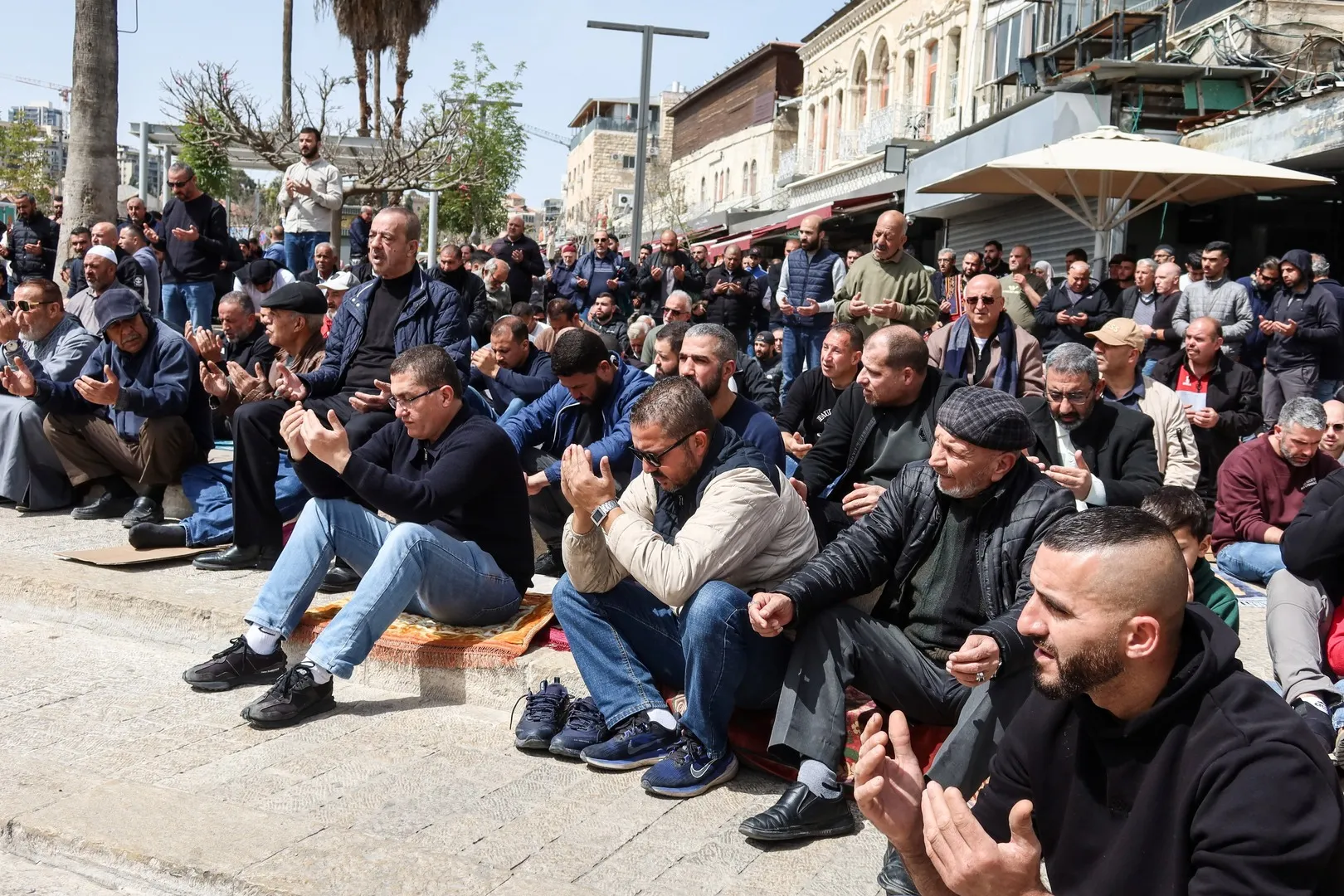
Muslim worshippers gathered outside the Al-Aqsa compound in Jerusalem to pray, as Israeli authorities maintained the closure of the holy site on al-Quds Day. The closure, which was imposed due to security concerns, prevented thousands of worshippers from accessing the compound, prompting them to hold prayers outside the premises. The move has been met with criticism from Palestinian leaders, who view the closure as an attempt to restrict Muslim access to the site.
Al-Quds Day, which is observed on the last Friday of the Islamic holy month of Ramadan, is a day of solidarity with the Palestinian people and a call for the liberation of Jerusalem. The day has been marked by protests and demonstrations in various parts of the world, with many calling for an end to the Israeli occupation of Palestinian territories. In Jerusalem, the closure of the Al-Aqsa compound has added to the tensions, with many worshippers expressing frustration and disappointment at being unable to access the site.
Security Concerns Cited as Reason for Closure
According to Israeli authorities, the closure of the Al-Aqsa compound was necessary due to security concerns. Israeli police spokesman, Micky Rosenfeld, stated that the closure was imposed to prevent any potential disturbances or clashes between worshippers and security forces. "We have taken the necessary measures to ensure public safety and maintain order in the area," Rosenfeld said. "The closure of the Al-Aqsa compound is a precautionary measure to prevent any potential threats to security." However, Palestinian leaders have disputed this claim, arguing that the closure is an attempt to restrict Muslim access to the site and undermine Palestinian rights.
The closure of the Al-Aqsa compound on al-Quds Day is a clear example of Israel's attempts to erase Palestinian identity and restrict our access to our holy sites - Ahmed Tibi, Palestinian lawmaker. Tibi added that the move is a "clear violation of international law and a blatant disregard for Muslim rights." The Palestinian Authority has also condemned the closure, stating that it is an "attack on the freedom of worship and a provocation to the Muslim world."
Worshippers Defiant in the Face of Closure
Despite the closure of the Al-Aqsa compound, thousands of worshippers gathered outside the premises to hold prayers. The atmosphere was tense, with many worshippers expressing frustration and anger at being unable to access the site. However, the mood was also defiant, with many calling for the liberation of Jerusalem and an end to the Israeli occupation. Sheikh Muhammad Hussein, the Grand Mufti of Jerusalem, led the prayers outside the compound, calling on worshippers to remain steadfast in the face of adversity. "We will not be deterred by the closure of the Al-Aqsa compound," Hussein said. "We will continue to pray and worship, even if it means doing so outside the premises."
The closure of the Al-Aqsa compound has also sparked widespread condemnation from the international community. United Nations Secretary-General, António Guterres, has called on Israel to respect the rights of Muslim worshippers and to avoid any actions that could escalate tensions in the region. The European Union has also expressed concern over the closure, stating that it is "deeply worried about the situation in Jerusalem and the potential consequences for the peace process."
Implications for the Peace Process
The closure of the Al-Aqsa compound on al-Quds Day has significant implications for the peace process between Israel and the Palestinians. The move has been seen as a major setback to efforts to restart negotiations, which have been stalled for several years. Palestinian leaders have warned that the closure could lead to further escalation and violence, while Israeli officials have argued that it is necessary to maintain security and stability in the region. As the situation continues to unfold, it remains to be seen how the closure of the Al-Aqsa compound will impact the prospects for peace in the region.
In conclusion, the closure of the Al-Aqsa compound on al-Quds Day has sparked widespread condemnation and frustration among Muslim worshippers and Palestinian leaders. As the situation continues to unfold, it is clear that the issue of access to holy sites in Jerusalem remains a major point of contention between Israel and the Palestinians. With the peace process already stalled, the closure of the Al-Aqsa compound has added to the tensions, making it even more challenging to find a resolution to the conflict. As Dr. Hanan Ashrawi, a Palestinian lawmaker, noted, "The closure of the Al-Aqsa compound is a symptom of a larger problem - the occupation and the denial of Palestinian rights. Until we address these underlying issues, we will continue to see tensions and violence in the region." Only time will tell how the situation will develop, but one thing is certain - the closure of the Al-Aqsa compound on al-Quds Day has marked a significant escalation in the conflict between Israel and the Palestinians.