The Middle East is bracing for a potential escalation of violence as the conflict between Israel, the United States, and Iran enters its third week. Israeli airstrikes have been pounding the Iranian capital, Tehran, while Gulf states are repelling a massive wave of Iranian drone attacks. The situation has been deteriorating rapidly since the United States and Israel entered into a direct war with Iran two weeks ago. The latest developments have raised concerns about the potential for a wider regional conflict, with many experts warning that the situation is on the brink of spiraling out of control.
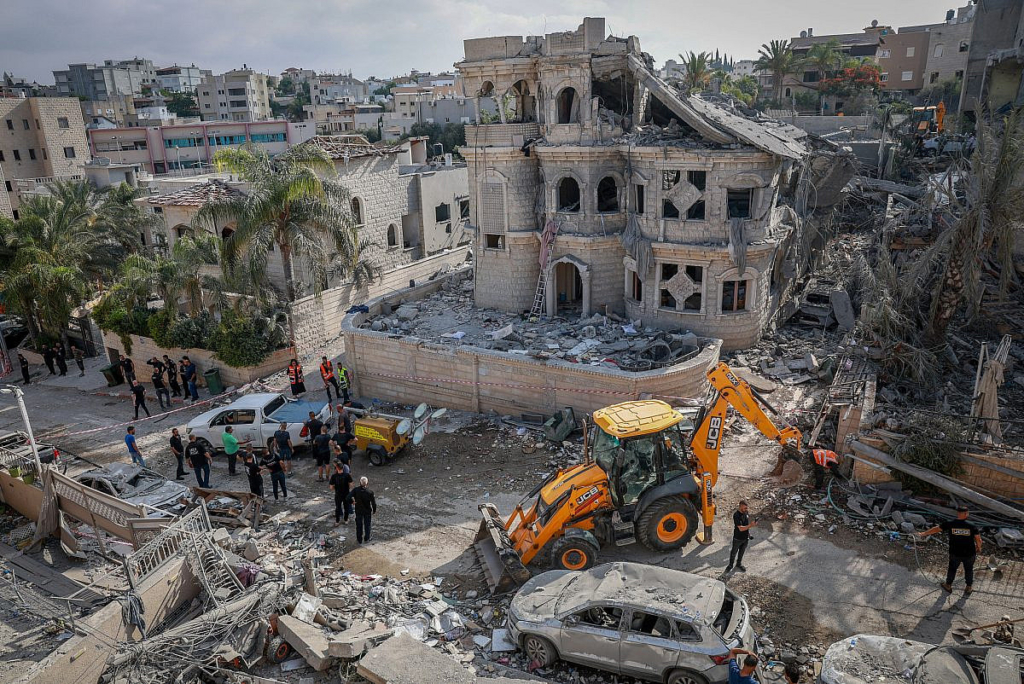
According to reports, the Israeli airstrikes on Tehran have been targeting key military installations and infrastructure, including command centers, missile launch sites, and ammunition depots. The Iranian military has been retaliating with a barrage of missile and drone attacks on Israeli cities, including Tel Aviv and Jerusalem. The Gulf states, including Saudi Arabia and the United Arab Emirates, have also been targeted by Iranian drone attacks, but their air defense systems have been able to repel the majority of the attacks.
Escalation of Violence
The escalation of violence in the region has been rapid and intense, with both sides exchanging blows and accusing each other of aggression. The Iranian government has been warning that it will not hesitate to retaliate against any attacks on its territory, while the Israeli government has been stating that it will do everything in its power to protect its citizens and defend its sovereignty. The United States has been providing military support to Israel, including the deployment of additional troops and equipment to the region.
Dr. Maria Rossi, a Middle East expert at the Brookings Institution, warned that the situation is "extremely volatile" and that the potential for a wider regional conflict is "very high." "The fact that the conflict has been escalating for two weeks without any signs of de-escalation is a major concern," she said. "The region is a powder keg, and it wouldn't take much to spark a wider conflict."
"The situation is very serious, and we are doing everything in our power to protect our citizens and defend our sovereignty. We will not hesitate to take action against any aggression, and we will do everything in our power to prevent the conflict from escalating further." - Israeli Prime Minister, Benjamin Netanyahu
The international community has been calling for calm and restraint, with many world leaders urging both sides to engage in diplomatic efforts to resolve the conflict peacefully. The United Nations Security Council has been meeting in emergency session to discuss the situation, and a number of countries, including the European Union and Russia, have been offering to mediate talks between the parties.
Humanitarian Concerns
The conflict has also raised serious humanitarian concerns, with many civilians caught in the crossfire. The Iranian Red Crescent has been reporting that hundreds of people have been injured or killed in the airstrikes, while the Israeli government has been stating that it is doing everything in its power to minimize civilian casualties. The Gulf states have also been reporting casualties, although the numbers are believed to be relatively low.
Dr. Ahmed Mohammed, a humanitarian expert at the International Rescue Committee, warned that the humanitarian situation is "dire" and that the conflict is having a "devastating impact" on civilians. "The fact that the conflict has been ongoing for two weeks without any signs of de-escalation is a major concern," he said. "We are seeing a significant increase in humanitarian needs, including food, shelter, and medical care, and it is essential that the international community provides support to those affected."
The conflict has also had a significant impact on the regional economy, with many countries experiencing disruptions to trade and commerce. The price of oil has been rising, and many analysts are warning that the conflict could have a significant impact on global energy markets.
International Response
The international community has been responding to the crisis, with many countries offering support to the parties involved. The United States has been providing military support to Israel, while the European Union has been offering to mediate talks between the parties. Russia has also been involved, with the Russian government offering to provide diplomatic support to Iran.
Secretary of State, Antony Blinken, stated that the United States is "deeply concerned" about the situation and is working closely with its allies to resolve the conflict peacefully. "We are doing everything in our power to support our allies and partners in the region, while also working to prevent the conflict from escalating further," he said.
In conclusion, the conflict between Israel, the United States, and Iran is a complex and volatile situation that has the potential to escalate into a wider regional conflict. The international community must work together to provide support to those affected and to encourage diplomatic efforts to resolve the conflict peacefully. As Dr. Rossi warned, "the situation is extremely volatile, and it is essential that the international community takes immediate action to prevent the conflict from spiraling out of control." The coming days and weeks will be critical in determining the outcome of the conflict, and it is essential that all parties involved work towards a peaceful resolution.