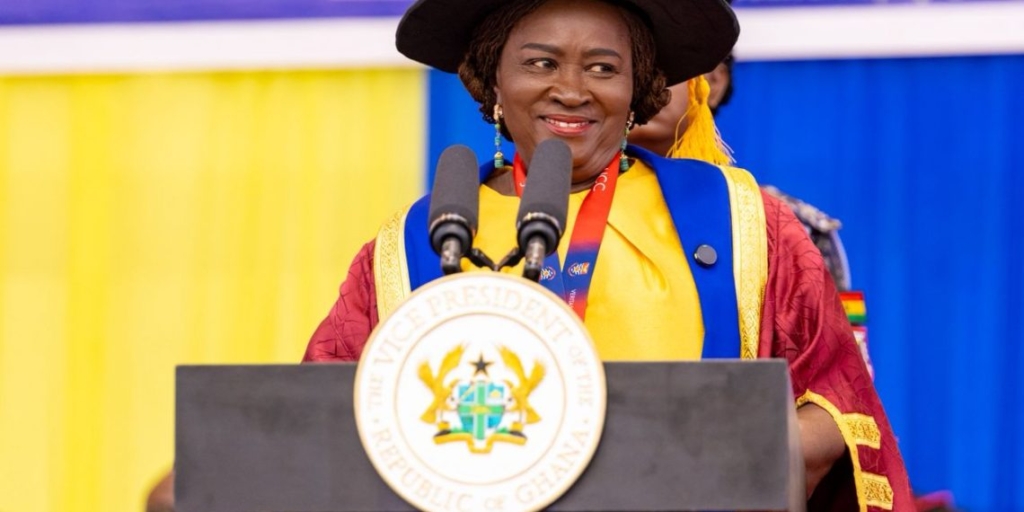
The University of Cape Coast (UCC) has conferred its prestigious Distinguished Fellow Award on Vice President Prof Jane Naana Opoku-Agyemang, in recognition of her outstanding contributions to education and national development. The award ceremony, which took place at the university’s campus, was attended by dignitaries, academics, and students. In her acceptance speech, Vice President Opoku-Agyemang called on Ghanaians to ensure that the country’s significant investment in education yields tangible development outcomes, benefiting the nation as a whole.
According to Vice President Opoku-Agyemang, Ghana has made tremendous progress in expanding access to education, but the focus should now shift to improving the quality of education and its relevance to the country’s development needs.
"We need to move beyond the rhetoric of education being a right, to education being a tool for national development,"she emphasized. The Vice President also stressed the need for education to be aligned with the needs of the economy, so that graduates can acquire the skills and knowledge required to drive innovation and entrepreneurship.
Education and National Development
The relationship between education and national development has been a topic of discussion among scholars, policymakers, and development experts. Dr. Ernesto Rodriguez, a lecturer at UCC’s Faculty of Social Sciences, noted that education is a critical factor in a country’s development trajectory.
"Education has the potential to break the cycle of poverty, promote economic growth, and foster social mobility,"he said. Dr. Rodriguez added that Ghana’s investment in education should be accompanied by a focus on quality, equity, and relevance, to ensure that the country reaps the desired benefits.
Vice President Opoku-Agyemang also highlighted the importance of promoting STEM education (science, technology, engineering, and mathematics) to equip Ghanaian students with the skills required to compete in the global economy. She noted that the country needs to produce more scientists, engineers, and innovators to drive technological advancement and entrepreneurship.
"We need to inspire our young people to pursue careers in STEM fields, and provide them with the necessary support and resources to succeed,"she said.
Challenges and Opportunities
Despite the progress made in expanding access to education, Ghana still faces significant challenges in the sector. Mr. Samuel Owusu-Acheampong, the Executive Director of the Ghana National Education Campaign Coalition, identified inadequate infrastructure, shortage of qualified teachers, and limited resources as some of the key challenges facing the education sector. He called on the government to prioritize investment in education infrastructure, teacher training, and resource allocation to improve the quality of education.
However, there are also opportunities for growth and innovation in the education sector. Prof. Kwame Adom-Frimpong, the Dean of UCC’s Faculty of Education, noted that the use of technology can enhance teaching and learning, and improve access to education for marginalized communities. He emphasized the need for Ghana to leverage technology to promote online learning, virtual classrooms, and digital resources to reach more students and improve learning outcomes.
In conclusion, the conferral of the Distinguished Fellow Award on Vice President Prof Jane Naana Opoku-Agyemang is a recognition of her commitment to education and national development. As Ghana continues to invest in education, it is essential to focus on quality, relevance, and equity to ensure that the country reaps the desired benefits. By promoting STEM education, leveraging technology, and addressing the challenges facing the education sector, Ghana can unlock the full potential of its human capital and drive sustainable development. As Vice President Opoku-Agyemang emphasized, education is key to national development, and it is up to Ghanaians to ensure that the country’s investment in education yields tangible outcomes for the nation.