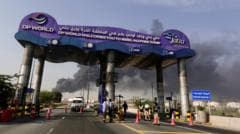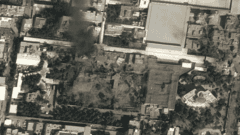
The US-Israeli attacks, which were carried out in coordination with each other, targeted several Iranian military installations and facilities. The attacks were reportedly aimed at disrupting Iran's ability to launch further attacks on US and Israeli interests in the region. According to Dr. Michael Rubin, a senior fellow at the American Enterprise Institute, "The US and Israel have been warning Iran for months about its aggressive behavior, and it seems that Tehran has failed to take these warnings seriously." Rubin added that "the latest attacks are a clear message to Iran that its actions will have consequences, and that the US and Israel will not hesitate to take action to protect their interests."
Iran's Retaliation
Iran's retaliation has been swift and decisive, with the country launching a barrage of missiles and drones towards Israel and four Gulf Arab countries that host US military bases. The attacks, which were carried out by Iran's Islamic Revolutionary Guard Corps (IRGC), have raised concerns about the potential for a wider conflict in the region. General Joseph Votel, a former commander of US Central Command, warned that "Iran's retaliation is a significant escalation of the conflict, and it's clear that Tehran is not afraid to take on the US and Israel." Votel added that "the US and its allies need to be prepared for a long and bloody conflict, and they need to be willing to take the necessary steps to protect their interests."
According to reports, the missiles and drones launched by Iran have targeted several US military bases in the region, including the Al Udeid Air Base in Qatar and the Al Dhafra Air Base in the United Arab Emirates. The attacks have also targeted several Israeli military installations, including the Tel Nof Air Base in central Israel.
"We will not stand idly by while Iran continues to launch attacks on our allies and our interests," said US Secretary of State, Anthony Blinken. "We will continue to work with our partners in the region to deter Iranian aggression and to protect our interests."
Regional Implications
The attacks have significant implications for the region, and have raised concerns about the potential for a wider conflict. The four Gulf Arab countries that host US military bases - Bahrain, Kuwait, Qatar, and the United Arab Emirates - have all condemned Iran's retaliation, and have called for an end to the violence. Dr. Sanam Vakil, a Middle East expert at Chatham House, warned that "the conflict has the potential to draw in other countries in the region, including Saudi Arabia and Turkey." Vakil added that "the international community needs to take a strong stance against Iranian aggression, and needs to work towards a diplomatic solution to the conflict."
The attacks have also raised concerns about the potential for a humanitarian crisis in the region. The conflict has already displaced thousands of people, and has raised concerns about the potential for a wider refugee crisis. United Nations Secretary-General, António Guterres, called for an immediate end to the violence, and warned that "the conflict has the potential to cause significant humanitarian suffering." Guterres added that "the international community needs to come together to support the people of the region, and to work towards a peaceful resolution to the conflict."
International Reaction
The international community has condemned Iran's retaliation, and has called for an end to the violence. The European Union has called for a diplomatic solution to the conflict, and has warned that "the conflict has the potential to destabilize the entire region." Chinese Foreign Ministry spokesperson, Zhao Lijian, warned that "the conflict has the potential to cause significant economic and humanitarian suffering, and needs to be resolved through diplomatic means." Zhao added that "China is willing to work with the international community to support a peaceful resolution to the conflict."
Russia has also condemned Iran's retaliation, and has called for an end to the violence. Russian Foreign Minister, Sergey Lavrov, warned that "the conflict has the potential to escalate into a wider war, and needs to be resolved through diplomatic means." Lavrov added that "Russia is willing to work with the international community to support a peaceful resolution to the conflict, and to prevent further escalation."
In conclusion, the US-Israeli attacks and Iran's retaliation have marked a significant escalation of the conflict in the Middle East. The attacks have raised concerns about the potential for a wider conflict in the region, and have highlighted the need for a diplomatic solution to the crisis. As the situation continues to unfold, it remains to be seen how the conflict will play out, and what the ultimate consequences will be for the region and the world. One thing is certain, however: the international community must come together to support a peaceful resolution to the conflict, and to prevent further escalation. The world is watching with bated breath as the situation continues to unfold, and it remains to be seen what the future holds for the region.