Man Abused for Heathrow Poster Confronts Trolls in Unprecedented Meetings
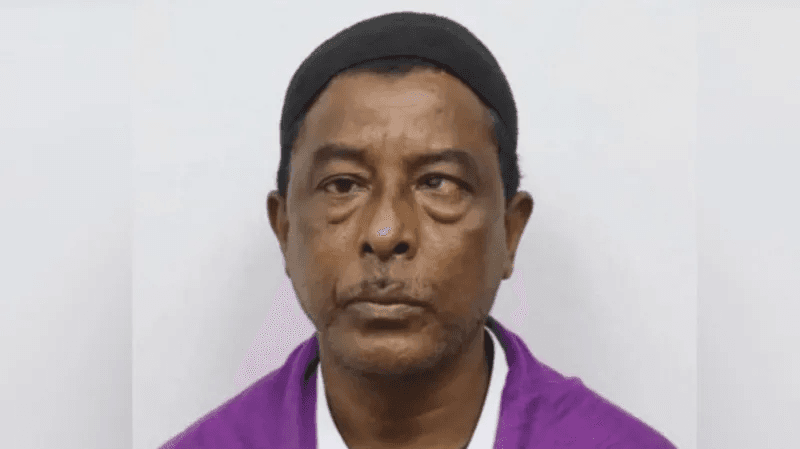
London, UK – Syed Usman Shah, a British citizen whose image graced a prominent "Welcome to Heathrow" campaign, has bravely confronted some of the individuals who subjected him to a barrage of online abuse, following his appearance on the widely displayed poster. Shah, who initially expressed immense pride in representing modern Britain, found himself targeted by racist and xenophobic vitriol, prompting him to take the extraordinary step of meeting his anonymous tormentors face-to-face.
The campaign, launched by Heathrow Airport, aimed to celebrate the diversity of travelers and staff, showcasing a range of faces reflecting the multicultural fabric of the United Kingdom. Shah, a long-term resident of the UK with a career in public service, was one of those selected. "I was incredibly proud to appear in the campaign," Shah recounted in a recent interview, "to be a face that welcomed people to this country, a country I've called home for decades." However, this pride was quickly overshadowed by a torrent of hateful comments across social media platforms and online forums.
The Onslaught of Online Hate
The abuse directed at Shah escalated rapidly after his image became widely visible. Comments ranged from questioning his British identity and demanding he "go back to where he came from," to outright racist and Islamophobic slurs. The sheer volume and intensity of the hate took a significant toll. "What followed was deeply upsetting," Shah explained. "It wasn't just criticism; it was personal, it was hateful, and it made me question if I truly belonged, despite all my contributions to this society."
The experience highlights a growing concern about online hate speech and its impact on individuals thrust into the public eye. Dr. Evelyn Reed, a sociologist specializing in digital communication at the University of London, commented on the phenomenon.
"Online platforms often create a disinhibited environment where individuals feel empowered to express views they might never voice in person," Dr. Reed stated. "Mr. Shah's experience is a stark reminder of the human cost when anonymity fuels prejudice, turning a symbol of welcome into a target of hate."
A Bold Step Towards Confrontation
After grappling with the emotional fallout, Shah made the difficult and unconventional decision to seek out some of his most vocal online abusers. Facilitated by a mediation charity and digital forensics experts, a series of meetings were arranged under controlled conditions. The rationale behind this unprecedented move, Shah explained, was not primarily about seeking apologies, but about fostering understanding and exposing the human reality behind the screens.
"I wanted them to see me, not just an image on a poster or a caricature in their minds," Shah elaborated. "I wanted them to understand the person they were attacking, and perhaps, for me to understand what fuels such intense hatred." The meetings involved individuals who had posted particularly vitriolic comments, some of whom had initially expressed no remorse.
The Meetings: A Glimpse into Human Complexity
The encounters were described as intense and revealing. In one instance, Shah met a man in his early twenties who had repeatedly called him an "outsider." According to observers present, the initial interaction was tense, with the troll maintaining a defensive stance. However, as Shah calmly shared his life story, his journey to the UK, and his contributions, a visible shift occurred. The young man, identified only as "Mark," reportedly became quieter, eventually offering a halting apology.
"I just saw an image, not a person," Mark reportedly told Shah. "I never thought about who you actually were. It was just easy to type things."
Another meeting involved a woman in her late forties who had accused Shah of being part of a "plot to erase British culture." Shah meticulously explained his own cultural heritage and how it coexisted and enriched, rather than diminished, British society. While no immediate apology was offered, the woman reportedly left the meeting deep in thought, acknowledging that she had "only seen one side of the story."
A spokesperson for Heathrow Airport reiterated their unwavering support for Shah and the campaign's original intent.
"Our 'Welcome to Heathrow' campaign celebrates the incredible diversity that defines our airport and our nation," the spokesperson commented. "We are incredibly proud of Syed Usman Shah and deeply condemn the unacceptable abuse he faced. His courage in confronting this hate is truly inspiring, and we hope it sparks broader conversations about empathy and respect online."
Implications for Online Accountability
Shah's proactive approach has garnered attention from anti-hate organizations and human rights advocates. "This is an extraordinary act of bravery and a rare attempt to bridge the chasm created by online anonymity," said Sarah Jenkins, Director of the Anti-Discrimination League.
"While not every victim of online hate will, or should, meet their abusers, Syed's actions highlight the potential for personal interaction to challenge preconceived notions and foster a sense of accountability that is often absent in digital spaces."
The long-term impact on the trolls involved remains to be seen. However, for Shah, the experience, though emotionally taxing, has been empowering. "It didn't erase the hurt, but it gave me a sense of agency," he reflected. "It showed me that behind every hateful comment, there's a person, and sometimes, just sometimes, showing them your humanity can make a difference." Shah hopes his story serves as a catalyst for greater empathy online and encourages platforms and individuals alike to take stronger stands against hate speech.