
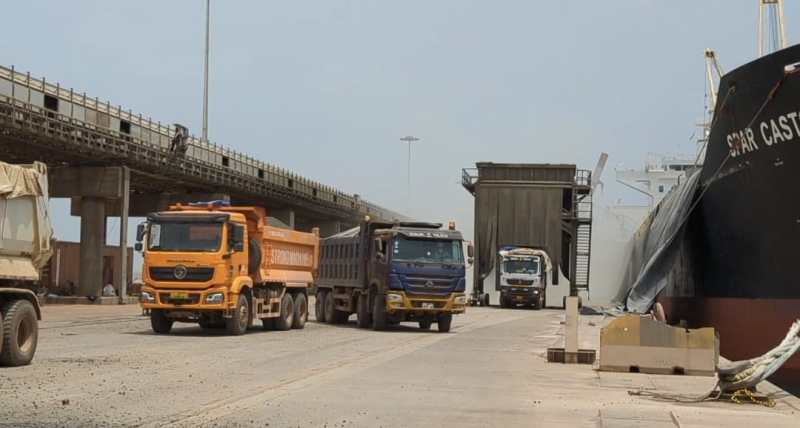
The clarification from the port management is significant, given the critical role that clinker plays in cement production. Cement manufacturers rely heavily on a consistent supply of clinker to maintain their production levels, and any disruption to this supply chain can have far-reaching consequences for the industry as a whole. In light of these concerns, the port authority has moved to reassure stakeholders that its operations are geared towards facilitating the smooth and uninterrupted flow of cargo, including clinker. As noted by Mr. Emmanuel Boachie, Director of Operations at the Takoradi Port, "We are committed to ensuring that our operations are aligned with the needs of our clients, including cement manufacturers. Our records indicate that we have been handling clinker vessels without any delays, and we will continue to work closely with all stakeholders to address any challenges that may arise."
Addressing Industry Concerns
In recent weeks, the cement manufacturing industry had expressed concerns about the alleged congestion at the Takoradi Port, citing potential disruptions to their production schedules. These concerns were largely driven by reports of delays in the handling of clinker vessels, which were said to be causing bottlenecks in the supply chain. However, the port management's rebuttal of these claims has provided a measure of relief to industry players, who had been worried about the potential impact of congestion on their operations. As Ms. Ama Owusu, Executive Secretary of the Ghana Cement Manufacturers Association, observed, "We appreciate the port authority's efforts to clarify the situation and reassure us that clinker vessels are being handled efficiently. This is a positive development, and we look forward to continuing our collaboration with the port management to address any challenges that may arise in the future."
Industry experts have also weighed in on the matter, highlighting the importance of efficient port operations in facilitating the growth of the cement manufacturing sector. According to
"A well-functioning port is essential for the cement industry, as it enables manufacturers to access the raw materials they need to produce high-quality cement. Any disruptions to port operations can have a ripple effect throughout the entire supply chain, leading to delays and increased costs. It is therefore encouraging to see the Takoradi Port management taking proactive steps to address concerns and ensure that its operations remain efficient,"said Dr. Kwame Osei, a logistics and supply chain expert.
Operational Efficiency
The Takoradi Port's emphasis on operational efficiency is a key factor in its ability to handle clinker vessels without delay. The port authority has implemented various measures to streamline its operations, including the introduction of new cargo handling equipment and the optimization of its berth allocation system. These initiatives have enabled the port to increase its throughput capacity, reducing the likelihood of congestion and ensuring that vessels can be handled in a timely and efficient manner. As Mr. Boachie noted, "We have invested heavily in our infrastructure and systems to ensure that we can handle cargo efficiently and effectively. Our goal is to provide a world-class service to our clients, and we are committed to continuously improving our operations to meet their evolving needs."
In addition to its operational efficiency, the Takoradi Port's strategic location also makes it an attractive option for cement manufacturers. The port's proximity to key markets and its accessibility by road and rail make it an ideal hub for the distribution of cement and other construction materials. As the demand for cement continues to grow, driven by infrastructure development projects and other construction activities, the Takoradi Port is well-positioned to play a critical role in supporting the growth of the cement manufacturing industry.
Conclusion and Future Outlook
In conclusion, the Takoradi Port management's rebuttal of claims of congestion at the facility is a positive development for the cement manufacturing industry. The port authority's commitment to operational efficiency and its efforts to address industry concerns are essential in ensuring a steady supply of clinker to cement producers. As the industry continues to evolve, it is likely that the Takoradi Port will remain a vital component of the supply chain, providing a critical link between cement manufacturers and their raw material suppliers. As Ms. Owusu observed, "We are confident that the Takoradi Port will continue to play a key role in supporting the growth of the cement manufacturing industry, and we look forward to working closely with the port management to address any challenges that may arise in the future." With its emphasis on operational efficiency and customer service, the Takoradi Port is well-positioned to meet the evolving needs of the cement industry, driving growth and development in the sector for years to come.