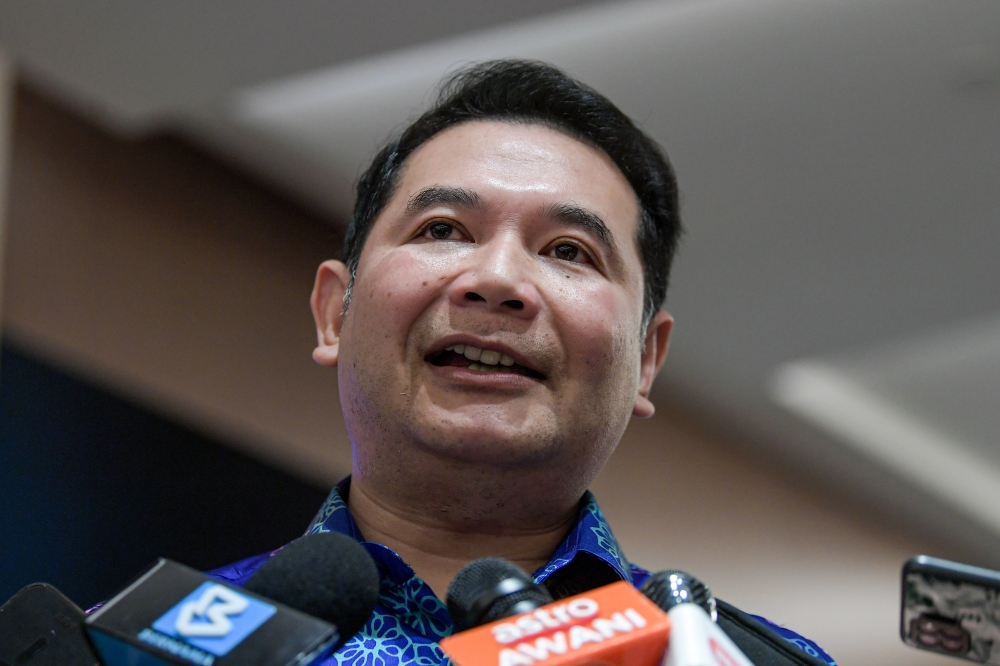
In a shocking turn of events, former Malaysian economy minister Datuk Seri Rafizi Ramli has withdrawn his bid to bankrupt National Feedlot Corporation Sdn Bhd (NFCorp) director, Datuk Seri Mohamad Salleh Ismail, just days before the highly anticipated High Court hearing. The decision to discontinue the bankruptcy proceedings was made after an amicable resolution was reached between the two parties, bringing an end to the long-standing dispute.
According to sources close to the matter, the agreement was reached after a series of intense negotiations between Rafizi's legal team and NFCorp's representatives. While the exact terms of the settlement remain unclear, it is understood that both parties have agreed to put the matter to rest and move forward. This development is seen as a significant departure from the aggressive stance taken by Rafizi in the past, who had been vocal about his intentions to hold NFCorp accountable for its alleged financial mismanagement.
Background of the Dispute
The controversy surrounding NFCorp dates back to 2011, when the company was awarded a contract to develop a national feedlot project aimed at boosting the country's cattle farming industry. However, the project was plagued by allegations of corruption, mismanagement, and cronyism, which led to a public outcry and calls for accountability. Rafizi, who was then a prominent opposition figure, had been at the forefront of the criticism, accusing NFCorp of gross financial mismanagement and abuse of public funds.
As part of his efforts to hold NFCorp accountable, Rafizi had initiated bankruptcy proceedings against Mohamad Salleh, citing the company's alleged failure to repay debts totaling millions of ringgit. The move was seen as a strategic attempt to expose the company's financial dealings and force it to come clean about its business practices. However, with the withdrawal of the bankruptcy case, it appears that Rafizi has chosen to adopt a more conciliatory approach, opting for an out-of-court settlement instead.
Expert Analysis
Commenting on the development, constitutional law expert, Professor Dr. Abdul Aziz Bari, noted that the decision to withdraw the bankruptcy case may have significant implications for the broader context of corporate governance in Malaysia. "This case highlights the need for greater transparency and accountability in the way companies are run and managed," he said. "While the settlement may have brought an end to this particular dispute, it is essential that we do not lose sight of the bigger picture and the need for reforms to prevent such abuses of power in the future."
"The fact that Rafizi has chosen to withdraw the case suggests that there may be more to the story than meets the eye. It is possible that the parties involved have reached a mutually beneficial agreement, but it is also important to consider the potential consequences of this decision for the wider community," said Dr. Aziz.
Meanwhile, corporate lawyer, Datuk Seri Jahaberdeen Mohamed Yunoos, welcomed the decision, saying that it was a positive step towards resolving the dispute amicably. "In many cases, litigation can be a long and costly process, and it is often in the best interests of all parties involved to explore alternative dispute resolution mechanisms. This settlement is a testament to the fact that, with good faith and a willingness to negotiate, even the most complex disputes can be resolved through dialogue and compromise," he added.
Conclusion
In conclusion, the decision by Rafizi Ramli to withdraw his bankruptcy case against NFCorp director Mohamad Salleh Ismail has brought an end to a long-standing dispute that had sparked intense public interest and debate. While the terms of the settlement remain unclear, it is evident that both parties have chosen to put the matter to rest and move forward. As Malaysia continues to grapple with issues of corporate governance and accountability, this case serves as a reminder of the importance of transparency, accountability, and the rule of law in ensuring that companies are run in a responsible and ethical manner. As the country looks to the future, it is essential that we learn from the lessons of the past and work towards creating a more just and equitable society for all.