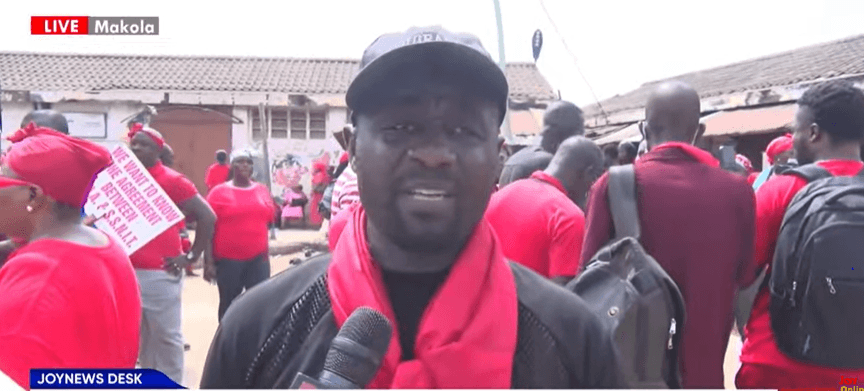
The traders are upset about the recent rent increments, which they claim have increased by as much as 50 percent in some cases. They say that the high rents, coupled with the new 20 percent VAT, are making it difficult for them to break even, let alone make a profit. "We are not against paying taxes, but the new VAT rate is too high and is affecting our business negatively," said Ama Owusu, a trader at the market. "We are already struggling to pay our rents, and the additional tax burden is becoming too much to bear." The traders are calling on the government to review the tax policy and reduce the VAT rate to a more manageable level.
Background to the Crisis
The Makola No. 2 Market is one of the busiest markets in Accra, with thousands of traders operating in the area. The market has been in existence for decades and has been a major hub for trade and commerce in the city. However, in recent years, the market has been facing several challenges, including high rents, poor sanitation, and inadequate infrastructure. The traders have been complaining about the high rents for some time now, but the situation has been exacerbated by the new VAT rate, which was introduced last month. "The high rents and taxes are killing our business," said Kofi Boakye, a trader at the market. "We are not making enough money to pay our rents, let alone the taxes. If the government does not intervene, we will be forced to close our shops and go out of business."
According to Dr. George Owusu, an economist at the University of Ghana, the high VAT rate is likely to have a negative impact on the economy, particularly on small businesses. "The VAT rate is too high and is likely to lead to a reduction in consumer spending," he said. "This will have a negative impact on businesses, particularly small ones, which are already struggling to survive." Dr. Owusu called on the government to review the tax policy and consider reducing the VAT rate to a more manageable level. "The government needs to find a balance between raising revenue and supporting businesses," he said. "A high VAT rate may raise revenue in the short term, but it will have long-term negative consequences for the economy."
Government Response
The government has responded to the protest by promising to engage with the traders and find a solution to their problems. Ms. Mavis Hawa Koomson, the Minister of Trade and Industry, said that the government is committed to supporting small businesses and will do everything possible to address the concerns of the traders. "We understand the challenges faced by the traders, and we are committed to finding a solution," she said. "We will engage with the traders and other stakeholders to find a way forward." Ms. Koomson called on the traders to remain calm and to continue to engage with the government to find a solution to their problems.
"We are committed to supporting small businesses and will do everything possible to address the concerns of the traders. We will engage with the traders and other stakeholders to find a way forward." - Ms. Mavis Hawa Koomson, Minister of Trade and Industry
The traders have welcomed the government's response and have called on the government to take immediate action to address their concerns. They say that they are willing to engage with the government to find a solution, but they need to see concrete actions, not just promises. "We are tired of promises," said Ama Owusu. "We need to see concrete actions from the government to address our concerns. We are willing to engage with the government, but we need to see results." The traders have threatened to continue their protest if their concerns are not addressed, which could have a negative impact on the economy.
Conclusion
The protest by the traders at Makola No. 2 Market is a wake-up call for the government to take immediate action to address the concerns of small businesses. The high rents and taxes are a major challenge for traders, and if not addressed, could lead to a decline in business activity and a negative impact on the economy. The government needs to find a balance between raising revenue and supporting businesses, particularly small ones. As the situation continues to unfold, it remains to be seen whether the government will take the necessary steps to address the concerns of the traders and support the growth of small businesses. One thing is certain, however: the traders will not give up their fight for a fair and sustainable business environment, and the government will have to take their concerns seriously if it wants to avoid further unrest. With the economy already facing several challenges, the government cannot afford to ignore the concerns of the traders and must take immediate action to address their concerns.