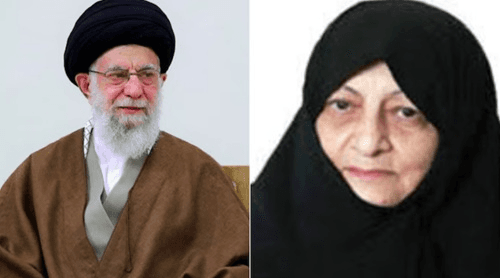
The air strike, which was widely condemned by Iranian officials, targeted several key locations in Tehran, including the residence of Ayatollah Khamenei. The attack has sparked widespread outrage and calls for retaliation from Iranian leaders. Dr. Sanam Vakil, a Middle East expert at Chatham House, noted that "the death of Ayatollah Khamenei's wife is a significant blow to the Iranian regime, and is likely to further escalate tensions in the region." Vakil added that "the Iranian government will likely use this incident to rally support and unify the population against the perceived enemy, which in this case is the US and Israel."
Background to the Crisis
The crisis in Iran began several weeks ago, when tensions between the US, Israel, and Iran started to escalate. The situation deteriorated rapidly, with both sides engaging in a war of words and exchanging threats. The air strike on Tehran was seen as a major escalation of the conflict, and has sparked fears of a wider war in the region. Iranian Foreign Minister, Hossein Amirabdollahian, condemned the attack, stating that "the US and Israel will pay a heavy price for their actions. We will not stand idly by while our leaders are targeted and killed." Amirabdollahian added that "we will take all necessary measures to protect our country and our people, and we will not be intimidated by threats from our enemies."
Experts believe that the death of Ayatollah Khamenei's wife will only add to the tensions in the region. Dr. Afshon Ostovar, a professor of national security affairs at the Naval Postgraduate School, noted that "the Iranian regime is likely to become even more belligerent and aggressive in the wake of this incident. They will see this as a personal attack, and will want to respond in kind." Ostovar added that "the US and Israel need to be careful, as they have now crossed a major red line. The Iranians will not forget this incident, and will seek to exact revenge at the earliest opportunity."
International Reaction
The international community has been quick to condemn the air strike on Tehran, with many countries calling for restraint and calm. United Nations Secretary-General, António Guterres, issued a statement expressing his deep concern over the situation, and calling on all parties to "exercise maximum restraint and avoid any further escalation." Guterres added that "the situation in the region is extremely volatile, and any further violence could have catastrophic consequences." The European Union has also issued a statement, condemning the attack and calling for a peaceful resolution to the crisis.
Despite the international outcry, the US and Israel have defended their actions, stating that the air strike was necessary to protect their national security interests. US Secretary of State, Antony Blinken, stated that "we will not apologize for taking action to protect our citizens and our allies. We will continue to take all necessary measures to ensure our security, and we will not be deterred by threats from Iran or any other country." Blinken added that "we are committed to finding a peaceful resolution to the crisis, but we will not compromise on our core principles and values."
"The situation in the region is extremely complex, and there are no easy solutions. However, we must continue to work towards a peaceful resolution, and avoid any further escalation. The consequences of failure would be catastrophic, and would have far-reaching implications for the entire region." - Dr. Elizabeth Stephens, a Middle East expert at the Brookings Institution
What's Next?
As the situation in Iran continues to deteriorate, experts believe that the country is on the brink of a major crisis. The death of Ayatollah Khamenei's wife has added fuel to the fire, and has sparked widespread outrage and calls for retaliation. The international community is watching with bated breath, as the US, Israel, and Iran engage in a high-stakes game of cat and mouse. The consequences of failure would be catastrophic, and would have far-reaching implications for the entire region. As Dr. Stephens noted, "the situation is extremely complex, and there are no easy solutions. However, we must continue to work towards a peaceful resolution, and avoid any further escalation."
In conclusion, the death of Ayatollah Khamenei's wife marks a significant development in the ongoing crisis in Iran. The situation is extremely volatile, and the international community is holding its breath as the US, Israel, and Iran engage in a high-stakes game of cat and mouse. The consequences of failure would be catastrophic, and would have far-reaching implications for the entire region. As the situation continues to unfold, one thing is certain - the world is watching, and the stakes are higher than ever before. The question on everyone's mind is - what's next? Only time will tell, but one thing is certain - the situation in Iran will continue to be a major focal point for the international community in the days and weeks to come.