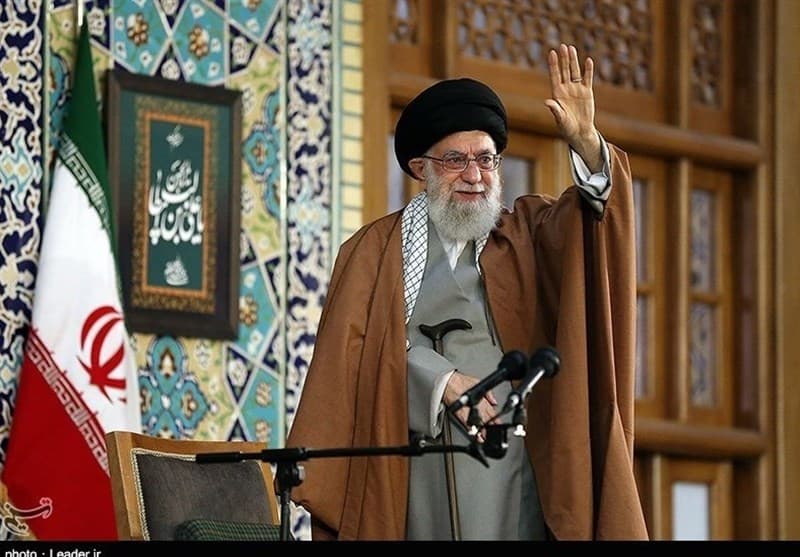
The Iranian government has announced that Khamenei's funeral will be held in the coming days, with top officials and foreign dignitaries expected to attend. The country's state media has also announced a series of mourning ceremonies and events to be held across the country, including in the capital city of Tehran. Iran's President, Ebrahim Raisi, has urged citizens to remain calm and united in the face of this national tragedy, while also warning against any attempts to destabilize the country. "We will not let the enemies of Iran take advantage of this situation," Raisi said in a statement. "We will continue to move forward, stronger and more united than ever."
International Reaction
The international community has been quick to respond to Khamenei's death, with many world leaders offering condolences to the Iranian people.
"We are deeply saddened by the loss of Ayatollah Khamenei, and we offer our condolences to the people of Iran,"said a spokesperson for the United Nations. "We urge all parties to remain calm and to work towards a peaceful resolution to any differences." The United States and Israel have not officially commented on their role in Khamenei's death, but experts say that the operation is likely to have significant implications for the region. "This is a major escalation of tensions between Iran and its enemies," said Dr. Sanam Vakil, a Middle East expert at Chatham House. "It's likely to lead to a period of heightened tensions and instability in the region."
Experts say that Khamenei's death will create a power vacuum in Iran, with several potential successors vying for control. The country's constitution calls for the appointment of a new Supreme Leader by the Assembly of Experts, a group of senior clerics and politicians. However, the process is likely to be complex and contentious, with different factions and interests competing for influence. "The next few weeks will be crucial in determining the future direction of Iran," said Professor Ali Ansari, an expert on Iranian politics at the University of St Andrews. "The new leader will face significant challenges, including managing the country's economy and navigating its relationships with the rest of the world."
Domestic Implications
Khamenei's death is also likely to have significant implications for Iran's domestic politics. The country has been experiencing widespread protests and unrest in recent months, with many citizens demanding greater freedoms and economic opportunities. The government has responded to these protests with force, leading to widespread criticism from human rights groups and other countries. With Khamenei's death, there are concerns that the situation could escalate further, with potentially disastrous consequences. "The Iranian people are already frustrated and angry," said Hadi Ghaemi, executive director of the Center for Human Rights in Iran. "The government needs to respond to their demands and concerns, rather than trying to suppress them."
As Iran begins its 40-day period of mourning, the country is bracing itself for a potentially tumultuous period ahead. With Khamenei's death, the country has lost a dominant figure who has shaped its politics and society for decades. While it is unclear what the future holds, one thing is certain: Iran will never be the same again.
"Ayatollah Khamenei was a complex and controversial figure, but he was also a unifying force for the Iranian people,"said Dr. Mehrzad Boroujerdi, a professor of political science at Syracuse University. "His death will be felt deeply, and it will take time for the country to adjust to a new reality."
In conclusion, the death of Ayatollah Ali Khamenei marks a significant turning point in Iran's history, with far-reaching implications for the country's politics, economy, and society. As the country begins its period of mourning, the international community will be watching closely to see how events unfold. With the potential for instability and unrest, it is more important than ever for all parties to remain calm and to work towards a peaceful resolution to any differences. The future of Iran is uncertain, but one thing is clear: the country will never be the same again. The world will be watching with bated breath as Iran navigates this critical juncture in its history.