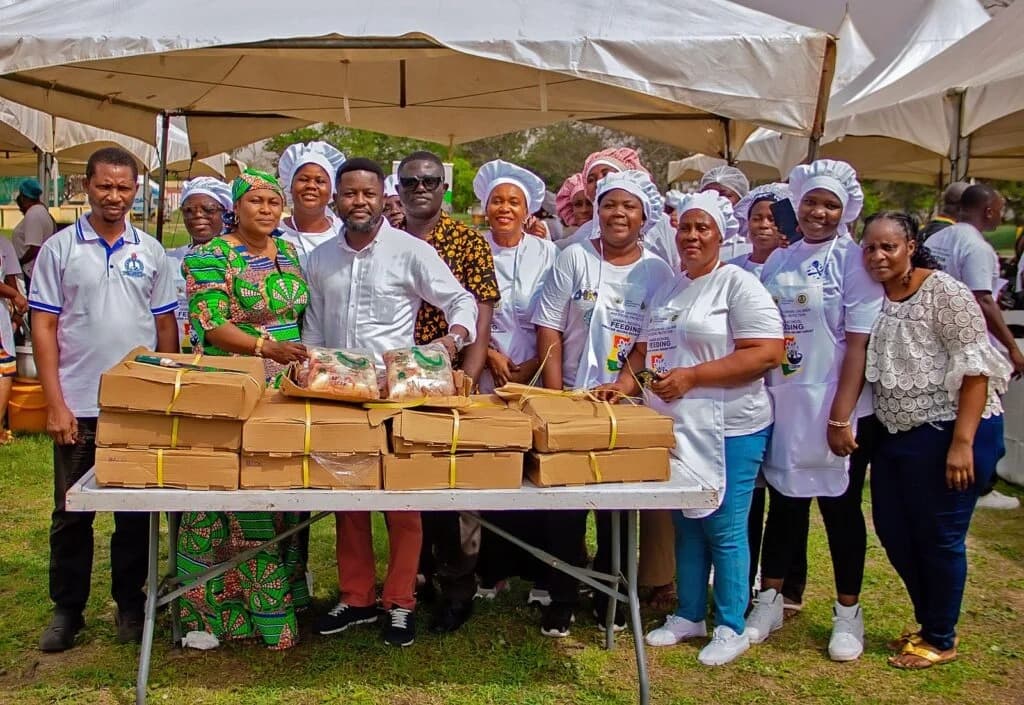
The decision to extend the 'Nkoko Nkitinkiti' initiative to schools is expected to have a positive impact on the nutrition and health of students. According to Dr. Ama Owusu-Ansah, a nutrition expert at the Ministry of Education, "the inclusion of 'Nkoko Nkitinkiti' in the School Feeding Programme will provide students with a reliable source of protein, which is essential for their growth and development." She further noted that "the programme will also help to promote the consumption of locally produced poultry products, which will support the local economy and reduce the country's reliance on imported goods."
Background and Objectives
The 'Nkoko Nkitinkiti' initiative was launched as part of the government's efforts to revitalize the poultry industry and increase the production of locally produced poultry products. The programme provides support to small-scale poultry farmers, including training, financing, and marketing assistance, to help them improve their productivity and competitiveness. By extending the programme to schools, the government aims to increase access to nutritious food, improve the health and well-being of students, and promote the development of the local poultry industry.
According to Mr. Kwame Baah, the Director of the School Feeding Programme, "the extension of the 'Nkoko Nkitinkiti' initiative to schools is a significant milestone in our efforts to improve the nutrition and health of our students. We believe that by providing students with nutritious meals, we can improve their attendance, concentration, and overall academic performance." He noted that "the programme will also help to create jobs and stimulate economic growth in rural areas, where many of the small-scale poultry farmers are located."
"We are excited about the potential of the 'Nkoko Nkitinkiti' initiative to transform the lives of our students and communities. We believe that by working together, we can create a brighter future for our children and our country," said Ms. Akua Mensah, a teacher at a local school.
Implementation and Expected Outcomes
The implementation of the 'Nkoko Nkitinkiti' initiative in schools is expected to be phased, with the initial phase focusing on schools in rural areas. The government has allocated significant resources to support the programme, including funding for the purchase of poultry products, training for farmers and school staff, and infrastructure development. According to Dr. Owusu-Ansah, "the programme is expected to benefit over 1 million students in the first year, with the potential to expand to all schools in the country in the future."
The expected outcomes of the programme include improved nutrition and health outcomes for students, increased access to locally produced poultry products, and the creation of jobs and economic growth in rural areas. The programme is also expected to promote the development of the local poultry industry, by increasing demand for locally produced poultry products and providing support to small-scale poultry farmers.
While the extension of the 'Nkoko Nkitinkiti' initiative to schools is a significant step towards improving nutrition and health outcomes for students, there are also challenges that need to be addressed. According to Mr. Baah, "one of the major challenges is the need to ensure that the programme is sustainable and can be replicated in all schools across the country." He noted that "the government is working closely with stakeholders, including farmers, schools, and communities, to ensure that the programme is successful and can be scaled up in the future."
In conclusion, the extension of the 'Nkoko Nkitinkiti' initiative to schools is a significant step towards improving nutrition and health outcomes for students in the country. The programme has the potential to transform the lives of students and communities, by providing access to nutritious food, promoting the development of the local poultry industry, and creating jobs and economic growth. As the programme is implemented, it is essential to ensure that it is sustainable, replicable, and can be scaled up to benefit all schools and communities in the country. With the support of stakeholders, including the government, farmers, schools, and communities, the 'Nkoko Nkitinkiti' initiative has the potential to make a lasting impact on the lives of students and the country as a whole.