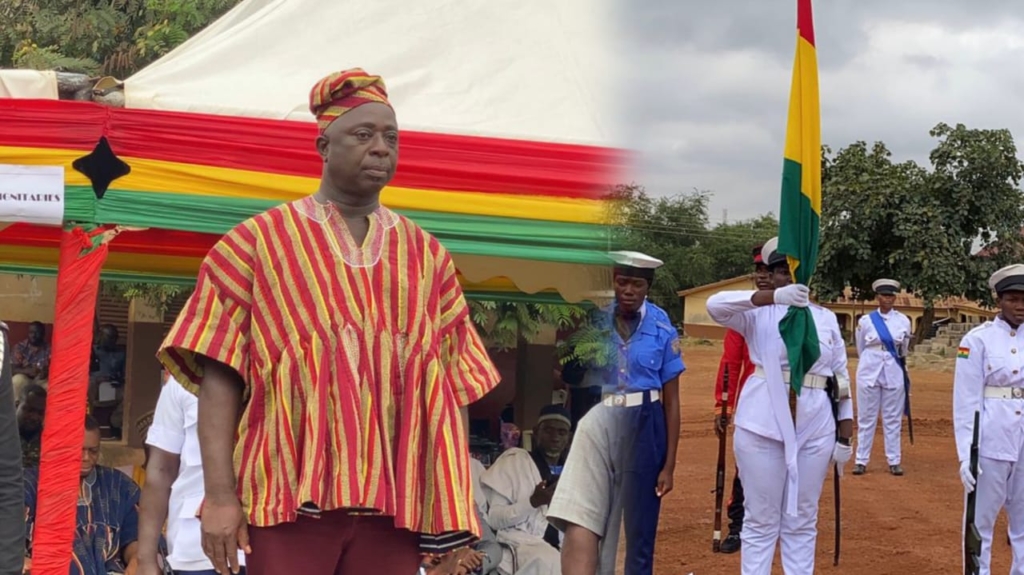
Ghana has marked its 69th anniversary of independence, with the Municipal Chief Executive (MCE) for the Kwadaso Assembly, Eric Assibey, emphasizing the need for the country to leverage its human and natural resources to drive socio-economic transformation. According to Mr. Assibey, Ghana has reached a level of maturity where it can become more self-sufficient, relying less on foreign aid and more on its internal capabilities. This sentiment was expressed during the 69th Independence Day celebration held at Ohwimase-Kwadaso M/A School, where officials, dignitaries, and citizens gathered to reflect on the nation's progress and future prospects.
The Kwadaso MCE's statement highlights a critical aspect of Ghana's development trajectory, as the country seeks to transition from a dependence on external support to a more autonomous and self-reliant economy. This vision is rooted in the belief that Ghana possesses the necessary human and natural resources to propel its own development, without being overly reliant on foreign assistance. As Mr. Assibey noted, "Ghana is now at a stage where we must take charge of our own destiny, utilizing our vast natural resources and the ingenuity of our people to build a prosperous and sustainable future."
Contextualizing Ghana's Development Journey
Ghana's 69 years of independence have been marked by significant milestones, challenges, and opportunities. The country has made notable progress in areas such as education, healthcare, and infrastructure development, but it still faces considerable obstacles, including poverty, inequality, and economic instability.
"As we celebrate our 69th anniversary of independence, we must acknowledge both our achievements and our shortcomings,"said Dr. Ama Pomaa, a development economist at the University of Ghana.
"While we have made strides in certain areas, there is still much work to be done to ensure that the benefits of growth and development are equitably distributed among all Ghanaians."
In recent years, Ghana has implemented various initiatives aimed at promoting economic growth, improving governance, and enhancing the business environment. These efforts have yielded positive results, with the country experiencing a period of relatively stable economic growth and attracting significant foreign investment. However, the challenge remains to ensure that this growth is inclusive and sustainable, benefiting all segments of society and protecting the environment for future generations.
Self-Sufficiency as a Development Imperative
The concept of self-sufficiency is central to Ghana's development discourse, as it implies a shift from dependence on external factors to a more internally driven growth model. This approach recognizes that Ghana's development is ultimately the responsibility of its citizens, leaders, and institutions. By leveraging its human and natural resources, Ghana can reduce its reliance on foreign aid and minimize the risks associated with external shocks, such as fluctuations in global commodity prices or changes in donor priorities.
According to Mr. Assibey, self-sufficiency is not merely an economic imperative but also a matter of national pride and dignity.
"As Ghanaians, we must take pride in our ability to chart our own course and build a brighter future for ourselves and our children,"he emphasized.
"This requires a collective effort, with all stakeholders working together to promote a culture of innovation, entrepreneurship, and civic responsibility."By adopting this mindset, Ghana can unlock its full potential and achieve a more sustainable and equitable development trajectory.
In conclusion, as Ghana marks its 69th anniversary of independence, the call for self-sufficiency serves as a timely reminder of the country's potential for growth and development. With its rich human and natural resources, Ghana is well-positioned to become a beacon of prosperity and stability in the region. As the nation looks to the future, it is imperative that leaders, citizens, and institutions work together to harness this potential, promoting a culture of innovation, entrepreneurship, and civic responsibility that will drive Ghana's socio-economic transformation and ensure a brighter future for all Ghanaians.