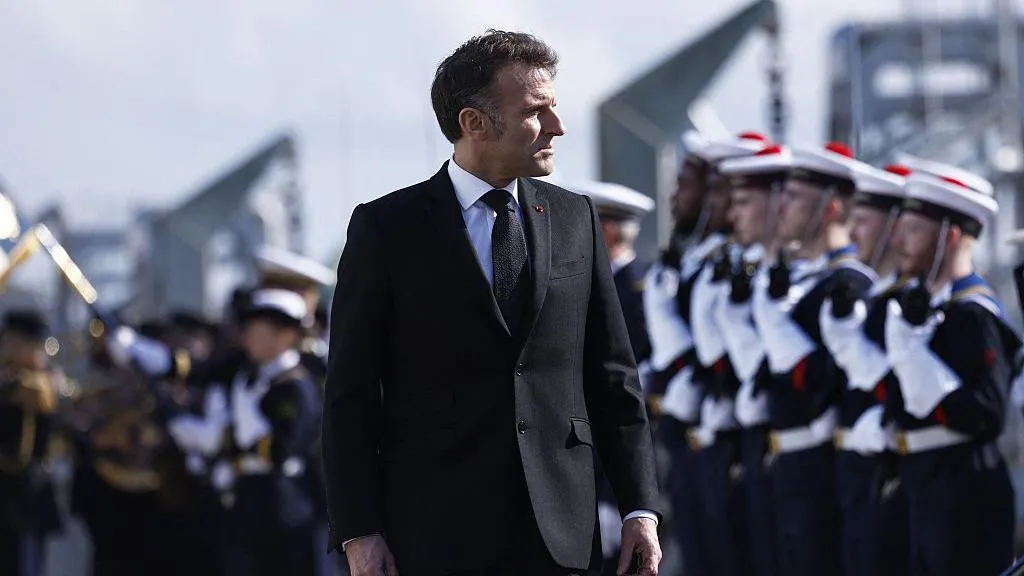
The French government has not disclosed the specifics of the planned expansion, but experts believe it will involve the development of new nuclear-capable missiles and the modernization of existing ones. "The French nuclear arsenal is a cornerstone of our national security, and we must ensure it remains relevant and effective in the face of evolving threats," said Pierre Dupont, a senior official at the French Ministry of Defense. The extension of France's nuclear deterrence to European allies is also expected to involve closer cooperation with neighboring countries on defense and security issues.
Background and Context
France's nuclear defense policy has historically been focused on protecting its own territory and interests. However, the changing security landscape in Europe has prompted a reevaluation of this approach. The conflict in Ukraine and Russia's increasingly assertive behavior have raised concerns among European countries about their security and stability. France's decision to extend its nuclear deterrence to European allies is seen as a response to these concerns and a demonstration of its commitment to regional security. "The security of our European partners is closely tied to our own, and we must work together to address the challenges we face," said Dupont.
Experts believe that France's expanded nuclear deterrence will have significant implications for European security. "This development will send a strong signal to potential adversaries that France is committed to defending its allies and will not hesitate to use its nuclear capabilities if necessary," said Dr. Isabelle Leduc, a researcher at the Paris-based Institute for Strategic Studies. The move is also expected to have implications for NATO's nuclear deterrence policy, as France is a key member of the alliance.
"The extension of France's nuclear deterrence to European allies will require closer cooperation with NATO and other European countries on defense and security issues," said General Jean-Pierre Bolton, a former French military commander.
Reactions and Implications
The announcement has sparked mixed reactions from European countries and other stakeholders. Some have welcomed France's decision as a necessary response to emerging threats, while others have expressed concerns about the potential risks and consequences of nuclear proliferation. "We understand the need for France to maintain a credible nuclear deterrent, but we also believe that this must be done in a way that minimizes the risks of nuclear conflict," said a spokesperson for the German Foreign Ministry. The decision is also expected to have implications for France's relationships with other European countries, particularly Germany and the United Kingdom.
As France moves forward with its plans to enhance its nuclear arsenal and extend its deterrence capabilities, it will be important to monitor the reactions of other European countries and the potential implications for regional security. The development is likely to be a major topic of discussion at upcoming NATO and EU meetings, where member states will seek to clarify the details of France's plans and their potential impact on European security. "We will be working closely with our European partners to ensure that our nuclear deterrence policies are aligned and effective in addressing the challenges we face," said Dupont. As the situation continues to evolve, one thing is clear: France's decision to boost its nuclear arsenal and extend its deterrence to European allies marks a significant shift in its nuclear defense policy, with far-reaching implications for regional security and the global nuclear landscape.
In conclusion, France's decision to enhance its nuclear arsenal and extend its deterrence capabilities to European allies is a major development that will have significant implications for regional security and the global nuclear landscape. As the country moves forward with its plans, it will be important to monitor the reactions of other European countries and the potential consequences of this decision. With the security landscape in Europe continuing to evolve, one thing is certain: France's commitment to its nuclear defense policy will remain a critical component of its national security strategy. As General Bolton noted, "The security of our European partners is a top priority, and we will continue to work together to address the challenges we face and ensure a stable and secure future for our region."