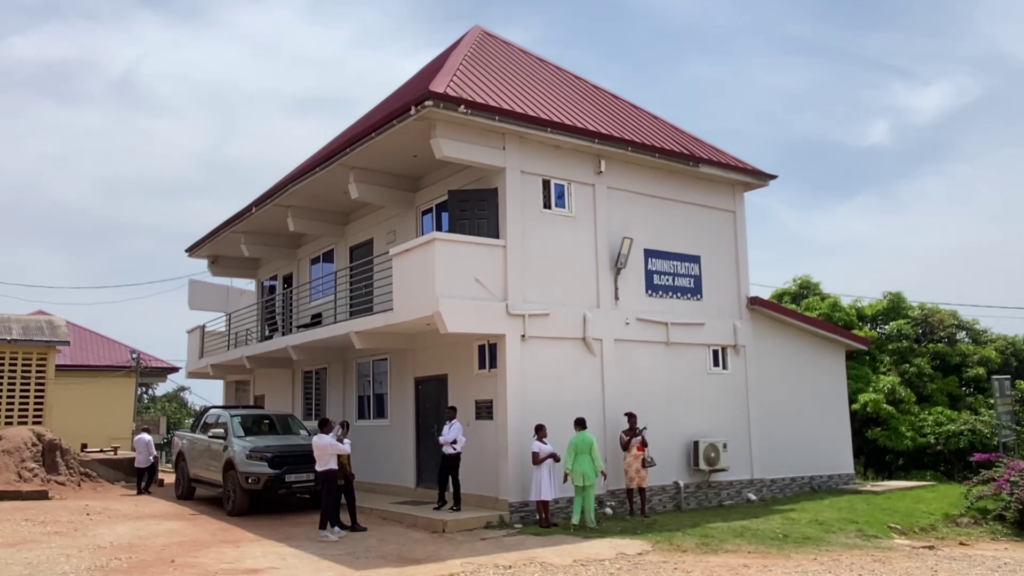
The Evangelical Presbyterian College of Education has sounded the alarm over its growing infrastructure challenges, which have significantly impacted the institution's ability to admit students. According to the college's management, the lack of adequate infrastructure and unreliable water supply have forced the college to turn away a substantial number of applicants, with only about 50 per cent of prospective students being admitted. This development has raised concerns about the institution's capacity to provide quality education and has prompted calls for urgent government intervention.
The college's Principal, Dr Dickson Tsey, has emphasized the need for immediate action to address the infrastructure deficit, which he believes is essential for ensuring the institution's continued growth and development. Dr Tsey noted that the college's current infrastructure is insufficient to cater to the growing number of students seeking admission, resulting in a significant shortfall in the institution's capacity to provide quality education. "We are doing our best with the limited resources available to us, but it is clear that we need more infrastructure to accommodate the increasing number of students who want to study here," Dr Tsey said.
Impact on Academic Activities
The infrastructure challenges facing the college have far-reaching implications for academic activities, with students and faculty members often struggling to access basic amenities such as water and sanitation facilities. The intermittent water supply, in particular, has been a major concern, with students and staff often forced to rely on alternative sources of water, which can be unreliable and unhygienic.
"The lack of reliable water supply is a major challenge for us, as it affects not only the students' health and well-being but also their ability to focus on their studies,"said Dr Tsey. According to Dr Tsey, the college has been forced to invest significant resources in providing alternative sources of water, which has put a strain on the institution's already limited budget.
The college's infrastructure challenges have also affected the institution's ability to attract and retain top talent, with many prospective faculty members often deterred by the lack of adequate infrastructure and resources. Experts have warned that the college's infrastructure deficit could have long-term consequences for the institution's reputation and competitiveness, making it difficult to attract high-quality students and faculty members. "The college's infrastructure challenges are a major concern, as they can impact the institution's ability to provide quality education and attract top talent," said Dr Hannah Agbley, an education expert at a local university. "The government needs to take urgent action to address these challenges and provide the necessary resources to support the college's growth and development."
Call for Government Intervention
The college's management has called on the government to provide urgent support to address the institution's infrastructure challenges. According to Dr Tsey, the government needs to invest in the college's infrastructure, including the construction of new classrooms, dormitories, and water supply systems.
"We are calling on the government to provide us with the necessary resources to address our infrastructure challenges, so that we can provide quality education to our students and support the country's economic development,"Dr Tsey said. The college's management has also appealed to the government to provide funding for the institution's maintenance and upkeep, to prevent further deterioration of the existing infrastructure.
The government has been criticized for its slow response to the college's infrastructure challenges, with many experts arguing that the institution's problems could have been avoided with timely and adequate investment. However, government officials have pledged to provide support to the college, with the Minister of Education promising to allocate funds for the institution's infrastructure development. "We are committed to supporting the college and addressing its infrastructure challenges," said the Minister of Education, Dr Jane Mensah. "We recognize the importance of the college in providing quality education and contributing to the country's economic development, and we will work closely with the institution's management to address its needs."
In conclusion, the Evangelical Presbyterian College of Education's infrastructure deficit is a major concern that requires urgent attention from the government and other stakeholders. The college's management has called for immediate action to address the institution's infrastructure challenges, which are affecting its ability to provide quality education and attract top talent. As the government and other stakeholders work to address these challenges, it is essential to prioritize the needs of the college and its students, to ensure that the institution can continue to provide quality education and contribute to the country's economic development. With the right support and investment, the Evangelical Presbyterian College of Education can overcome its infrastructure challenges and achieve its full potential as a leading institution of higher learning.